In the Colombian market, “black iron” is the trade name for threaded malleable iron fittings supplied without a zinc coating, manufactured to ASME B16.3 in Class 150. The material is cupola malleable iron per ASTM A197/A197M: a heat-treated casting with a minimum tensile strength of 276 MPa (40,000 psi), minimum yield strength of 207 MPa (30,000 psi) and minimum elongation of 5%, properties that let it absorb the wedging action of a tapered NPT thread without fracturing the way gray cast iron would. The dark finish is the iron's own surface oxide, usually covered with a light temporary varnish.
Selection verdict: for fuel gas piping, saturated steam up to 10.3 bar (150 psig) and compressed air, use Class 150 black iron with schedule 40 black steel pipe per ASTM A53; for potable water or permanently damp environments, use galvanized fittings or a plastic system such as PPR; for cold working pressures above 20.7 bar (300 psig), move up to Class 300 malleable iron or Class 3000 forged steel. TECTUL stocks the Class 150 black iron family in sizes from 1/4 to 4 inches: elbow, tee, union, coupling, 45-degree elbow, street elbow, bushing, plug and cap.
The term does not name a different material: it is the same malleable iron used in galvanized fittings, minus the zinc layer. Malleable iron is produced by giving white cast iron a prolonged annealing treatment that converts iron carbide into tempered graphite nodules; the result keeps the castability of an iron casting but accepts plastic deformation, which matters in a threaded fitting that takes the wedging load of a tapered thread. That is why ASME B16.3 requires the castings to be malleable iron per ASTM A197/A197M, not gray iron.
Keep it distinct from three counter neighbors. First, gray cast iron, which is brittle and excluded from fuel gas piping by gas codes. Second, ASTM A105 forged steel used in Class 2000/3000 fittings per ASME B16.11, which covers far higher pressures. Third, ASME B16.9 carbon steel butt-welding fittings, which have no threads. The natural companion of Class 150 black iron is ASTM A53 black steel pipe in schedule 40, threaded NPT per ASME B1.20.1.
Class 150 does not mean “150 psi at any temperature.” ASME B16.3-2021 defines a pressure-temperature curve: the fitting is rated 20.7 bar (300 psig) in cold service, decreasing with temperature down to 10.3 bar (150 psig) at 186 °C (366 °F), the saturation temperature of steam at that pressure. That curve is the origin of the dual commercial marking you will see in catalogs: 300 WOG (water, oil, gas at ambient temperature) and 150 WSP (working steam pressure).
| Service temperature | Class 150 (psig) | Class 150 (bar) |
|---|---|---|
| −29 to 66 °C (−20 to 150 °F) | 300 | 20.7 |
| 93 °C (200 °F) | 265 | 18.3 |
| 121 °C (250 °F) | 225 | 15.5 |
| 149 °C (300 °F) | 185 | 12.8 |
| 186 °C (366 °F, saturated steam at 150 psig) | 150 | 10.3 |
For scale, Class 300 under the same standard is rated between 68.9 and 137.9 bar (1,000 to 2,000 psig) cold depending on size, and 20.7 bar (300 psig) at 288 °C (550 °F). One practical note from the standard: bushings and cored plugs are rated as Class 150 even when the rest of the line is Class 300; only solid malleable plugs may be treated as Class 300.
TECTUL stock covers 1/4 to 4 inches depending on the type. Every fitting conforming to ASME B16.3 must carry the manufacturer's mark and the nominal size cast in relief; a smooth, unmarked fitting is not traceable to the standard and should not enter a gas or steam line.
In Colombia, NTC 2505 (fourth update, ratified in 2006) governs the design, materials, construction and testing of residential and commercial fuel gas installations, and its bibliographic basis is NFPA 54, the National Fuel Gas Code. Three material rules follow from that framework: rigid steel gas pipe must be at least schedule 40; gray cast iron pipe is excluded from gas service because of its brittleness; and threaded malleable iron fittings conforming to the ASME B16 series are accepted. In practice, schedule 40 black steel pipe with Class 150 black iron fittings is the standard assembly for natural gas and LPG indoor piping.
The historical caution against galvanized pipe in gas dates from the era of manufactured gas, which was wet and carried sulfur compounds that attacked zinc and shed flakes able to clog pilots and burner orifices. With dry natural gas that mechanism loses force and NFPA 54 does not prohibit galvanized pipe; even so, many Colombian gas distributors specify black iron in their installation manuals, and that specification rules at the service connection. The mechanical margin is wide: an indoor residential network operates in the millibar range, a tiny fraction of the fitting's 20.7 bar rating; the real demand is thread tightness and the pressure test that NTC 2505 requires before commissioning.
In saturated steam up to 10.3 bar (150 psig), Class 150 black iron works inside its rated curve. Galvanized fittings are not recommended for steam: hot-dip zinc coating has a continuous service limit of about 200 °C according to the American Galvanizers Association, and saturated steam at 150 psig runs at 186 °C; operating at the edge of that limit, with start-stop thermal cycling, promotes zinc flaking that ends up in steam traps, valve seats and strainers. In compressed air, black iron covers typical plant pressures of 7 to 10 bar (100 to 145 psig) with margin; if the network produces permanent condensate, add drains and drying, because internal corrosion of uncoated iron is the dominant failure mode.
The ends are tapered NPT threads per ASME B1.20.1, with a 1:16 taper: the seal comes from flank wedging plus a compatible sealant, not from unlimited torque. For gas, the reference sealant is yellow PTFE gas tape, denser than white plumbing tape and color-coded for fuel lines; wrap it in the threading direction and keep the first thread bare so no fragment migrates toward regulators or burners. Gas-approved paste sealants are also valid. After assembly, the installation must pass the tightness test at the pressures and hold times set by NTC 2505. If you need a refresher on thread geometry, see the guide NPT thread explained.
Without zinc, malleable iron exposed to oxygenated water rusts continuously. That is why black iron does not belong in potable water: besides wall loss, it releases oxide that stains fixtures and alters water color and taste; for that service use the galvanized equivalent, such as the galvanized threaded elbow, or a plastic system selected by design temperature and pressure. Do not bury it unprotected either: underground runs require an anticorrosive coating and wrapping tape, and NTC 2505 mandates corrosion protection for buried gas piping. Outdoors, apply an anticorrosive paint system and renew it at every maintenance cycle. The short rule: black iron for dry fluids or steam; galvanized or plastic wherever water stays in permanent contact.
| Criterion | Class 150 black iron | Class 150 galvanized | Class 300 malleable iron |
|---|---|---|---|
| Standard and material | ASME B16.3 / ASTM A197 | ASME B16.3 / ASTM A197 + hot-dip zinc | ASME B16.3 / ASTM A197 |
| Cold rating (−29 to 66 °C) | 20.7 bar (300 psig) | 20.7 bar (300 psig) | 68.9 to 137.9 bar (1,000 to 2,000 psig) by size |
| Saturated steam | Up to 10.3 bar (150 psig) at 186 °C | Not recommended: zinc at its 200 °C limit | Up to 20.7 bar (300 psig) at 288 °C |
| Fuel gas | Installation standard in Colombia | Subject to the gas distributor's specification | Accepted; oversized for indoor networks |
| Potable water | No: internal corrosion | Yes, within coating life | Not in black finish; galvanized version per project |
| Relative cost | Lowest of the three | Higher than black due to galvanizing | Highest due to wall mass |
If your line demands more pressure or temperature than the Class 150 curve, review the guide to Class 300 malleable iron fittings; if the project calls for forged steel for high pressure, hydrocarbons or process-code piping, see Class 3000 forged fittings.
To quote without ambiguity, specify: fitting type (elbow, tee, union, coupling, bushing, plug), nominal size in inches, Class 150, black finish, fluid, operating pressure and temperature. For gas, confirm that certified personnel will perform the installation and that the assembly complies with NTC 2505, including the tightness test; for steam, verify that working pressure does not exceed 10.3 bar (150 psig) saturated and use unions so traps and valves can be removed for service. At TECTUL you can quote via WhatsApp stating size, quantity and city; we ship to Bogotá, Medellín, Cali, Barranquilla and all of Colombia, with the standard's marking verifiable on every piece.
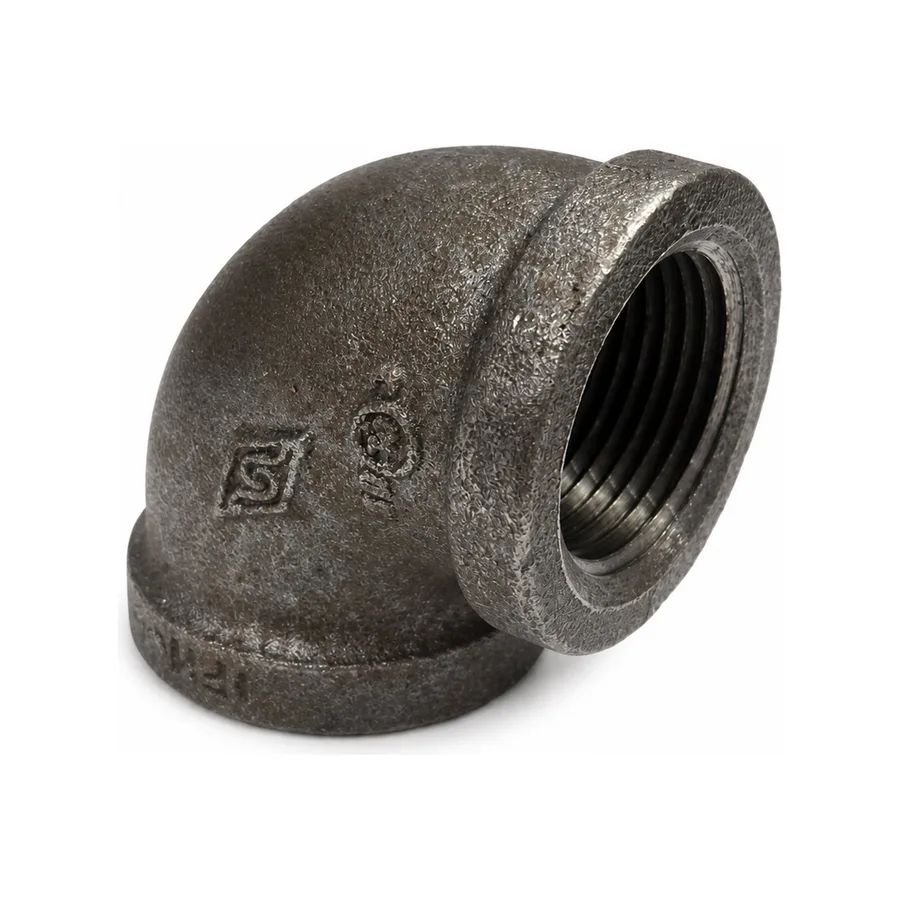 codo hierro negro 150 lb roscado
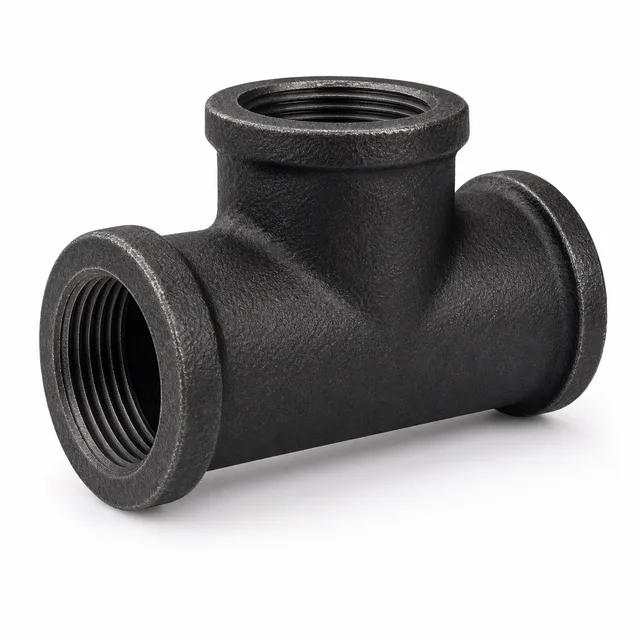 tee hierro negro 150 lb roscada
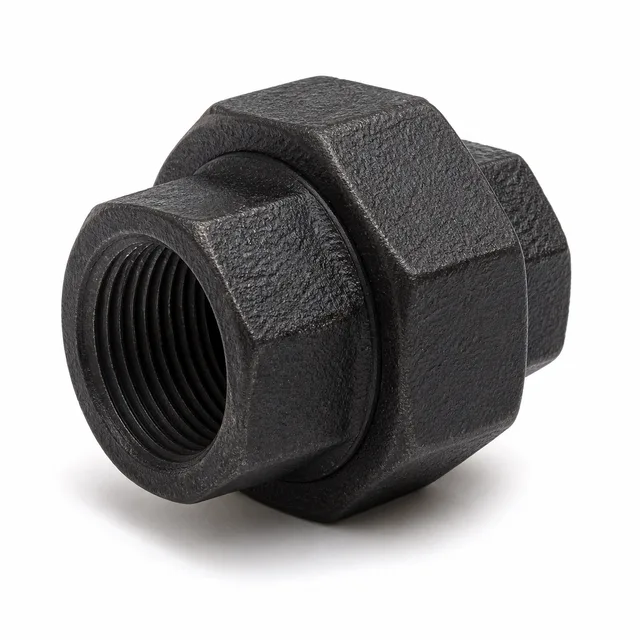 universal hierro negro 150 lb roscada