A valve actuator converts a control signal into mechanical motion to open, close or position a valve; on ball valves, it normally delivers quarter-turn rotation. A pneumatic actuator usually wins when fast fail-safe action is required and instrument air is available; an electric actuator usually wins when there is no air network, simple electrical integration is required or operation is infrequent.
At TECTUL, selection can start from existing assemblies such as the flanged ball valve with pneumatic actuator, the flanged ball valve with electric actuator, the stainless steel ball valve with pneumatic actuator, the stainless steel ball valve with electric actuator, the three-way ball valve with electric actuator and the three-way ball valve with pneumatic actuator.
The decision starts with process safety, not energy preference. If loss of air, power or signal must drive the valve to a defined position, fail-safe design governs. In spring-return pneumatic actuators, stored spring energy can close or open the valve when air is lost, depending on configuration. That capability is a strong reason to choose pneumatic actuation in fuel shutoff, steam, chemicals or lines where a safe position protects people, equipment or product.
An electric actuator may include battery return, supercapacitor or external systems, but fail-safe should not be assumed without verifying the model. Many standard electric actuators stay in last position on power loss. That can be acceptable in auxiliary services, filling, irrigation, process water or valves that are not part of an instrumented safety function. If risk analysis requires fail-close or fail-open, that condition must be written into the request.
| Criterion | Pneumatic | Electric | Practical decision |
|---|---|---|---|
| Energy | Dry compressed air or compatible inert gas | AC or DC power depending on model | Use the energy available and maintainable at site |
| Fail-safe | Simple with spring return | Requires specific design | Pneumatic wins in basic safety |
| Travel time | Can be fast and adjusted with accessories | Depends on motor and gearing | Check hydraulic impact before speeding up |
| Torque | Depends on air pressure and size | Depends on motor, gearbox and supply | Size with valve torque and margin |
| Environment | Check corrosion, moisture and accessories | Check IP rating, temperature and panel | Enclosure must match the site |
| Maintenance | FRL, solenoid, seals, clean air | Wiring, limit switches, motor, board | Compare real skills of the maintenance team |
In pneumatic actuation, double acting means air moves the actuator in both directions. It is used when spring return is not required, when balanced opening and closing torque is desired, or when the control logic manages both chambers. If air is lost, the valve may stay in last position or move according to external loads and circuit design, so it should not be called fail-safe without accessories.
Single acting, or spring return, uses air to move in one direction and springs to return in the other. The correct question is whether the valve must fail closed or fail open. Fail-close protects when flow must stop on energy loss; fail-open protects when the system must relieve, vent, recirculate or avoid overpressure. The answer depends on process analysis, not on a universal rule.
The actuator must exceed the valve torque required under real conditions. That torque includes breakaway, running and closing torque, and it can increase with differential pressure, temperature, deformed soft seats, solids, ageing, time without operation and tight packing. For ball valves, initial torque is often critical after staying closed or open for a long time.
Selection practice uses a service factor or margin above the torque published by the valve manufacturer. The exact value is defined by engineering, manufacturer or service criticality; one number should not be invented for every case. Also, the actuator must not exceed the valve maximum allowable stem torque. An undersized actuator will not move; an oversized actuator can damage the stem, seat or coupling.
ISO 5211:2026 specifies requirements for attaching quarter-turn actuators, with or without gearboxes, to industrial valves. It defines flange dimensions, driving components and reference torque values for interfaces. In purchasing, ISO 5211 does not mean any actuator fits: it means there is a dimensional language for flange and coupling that must match the valve.
TECTUL data sheets for actuated valves report ISO 5211 on several stainless steel and three-way references. That helps request direct mounting or coupling kits, but more data are still needed: F pattern, stem shape and dimension, mounting height, valve torque, rotation direction, normal position, stops, indicator and accessories. If the assembly arrives separated, it should be bench tested before installation in the line.
Pneumatic actuation requires clean dry compressed air, available pressure, filter regulator, solenoid, silencers, hose or tubing, and sometimes a positioner or limit switch box. Pressure drop in the air network can reduce actuator torque. Moisture and oil in air damage seals and accessories. In corrosive environments, enclosure, fasteners and coating also matter.
Electric actuation requires correct voltage, starting current, electrical protection, limit switches, command signal and suitable wiring. IP rating is interpreted with IEC 60529 and should be selected according to dust, rain, washdown, outdoor exposure or temporary immersion declared by the manufacturer. A high IP actuator does not replace correct electrical installation or hazardous area certification where applicable.
A fast actuator can improve productivity, but it can also close a liquid line too quickly. In water, pumping or long lines, abrupt closure increases water hammer risk. With pneumatic actuators, travel time can be adjusted with flow controls, solenoid configuration or accessories. With electric actuators, travel time depends on motor and gearbox unless specific control options are provided.
The ball valve is naturally fast. If the line is sensitive, do not simply request the fastest actuator. Request a closing time compatible with the hydraulics, functional testing and, where required, transient protection. In air or gas services, also review noise, rate of change and downstream effects.
Before ordering, define how position will be confirmed. In a manual valve, the lever is often enough, but in an actuated valve the remote operator needs open, closed or fault feedback. Limit switch boxes, local indicators, positioners and return signals prevent blind operation. On three-way valves, position is even more important because a wrong route can mix, divert or block the process while the actuator is mechanically healthy.
Choose pneumatic when reliable air exists, spring-return fail-safe is required, cycles are fast or pneumatic maintenance is available. Choose electric when there is no air, operation is moderate, electrical control is simpler or panel integration without pneumatic piping is needed. In both cases, TECTUL should receive fluid, pressure, temperature, size, valve type, required torque, air pressure or electric voltage, failure position, travel time, IP rating and control signals.
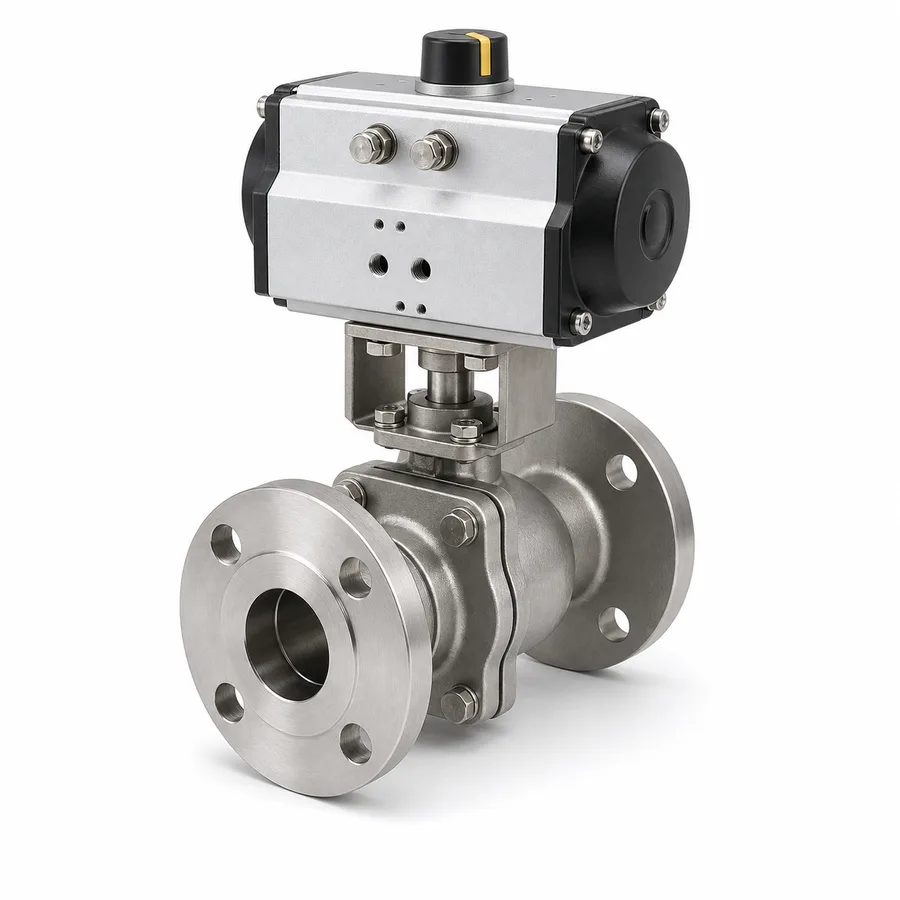 valvula bola bridada actuador neumatico
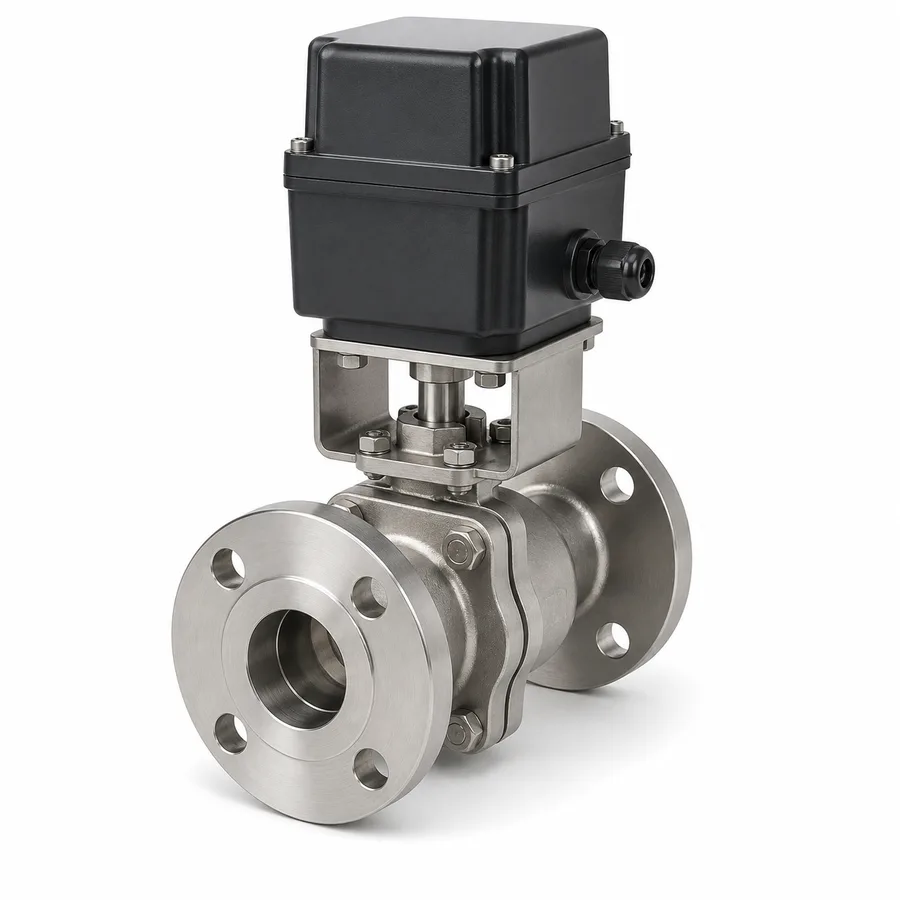 valvula bola bridada actuador electrico
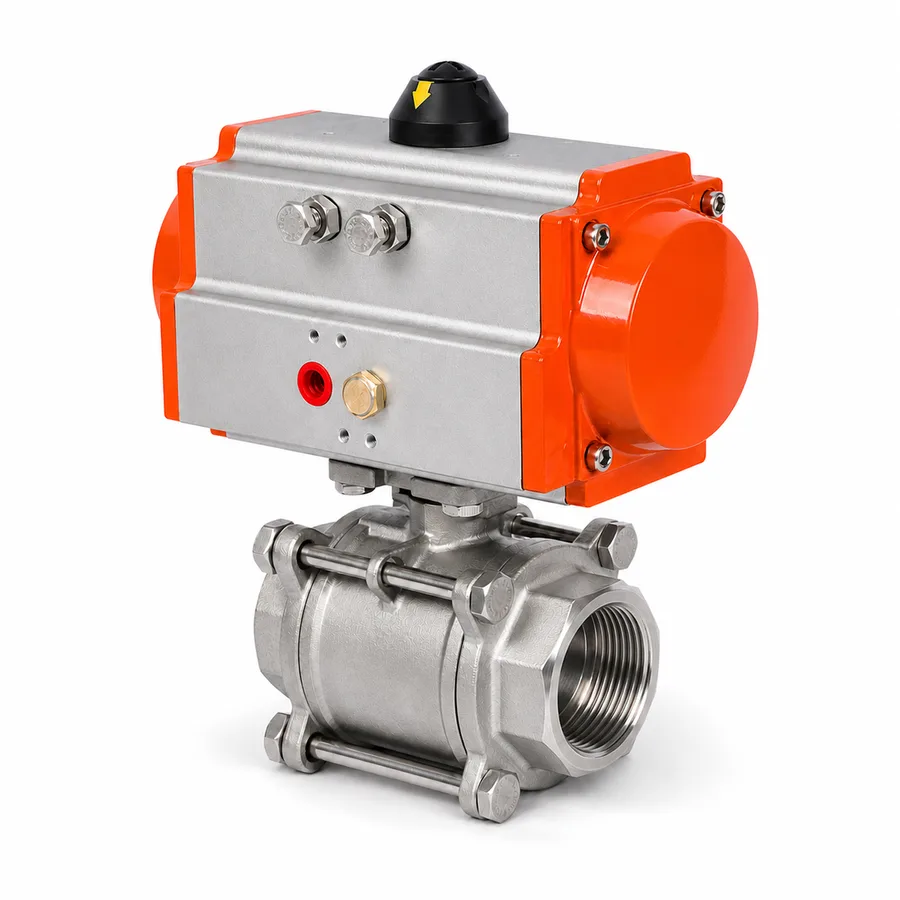 valvula bola inoxidable actuador neumatico