The AWS classification of a covered electrode condenses critical information into a few characters. Reading E6013 or E7018 as if they were only commercial references is a mistake: the letter and numbers identify electrode type, minimum tensile strength of deposited weld metal, welding positions and coating-current characteristics. That reading helps avoid consumables that do not match the joint, position or fabrication code.
This guide focuses on common carbon steel SMAW electrodes: E6010, E6011, E6013, E7018 and E7024. Brands such as ESAB, Lincoln, West Arco, Superon and Stanvac may offer products under these classifications, but selection should be based on AWS A5.1, datasheet, welding procedure and base metal. TECTUL recommends purchasing by classification, diameter, lot, package and application, not only by a familiar name.
The letter E identifies an electrode. In four-digit carbon steel classifications, the first two numbers indicate minimum tensile strength of deposited weld metal in thousands of psi: 60 means 60 ksi and 70 means 70 ksi. The third digit indicates welding positions. The final digit relates to coating type, penetration, current and polarity. Extended classifications may include suffixes for impact toughness, diffusible hydrogen or chemical composition.
| Electrode | Basic AWS reading | General behavior | Frequent applications |
|---|---|---|---|
| E6010 | 60 ksi, all positions, high-cellulose sodium, DC+ only | Forceful arc, deep penetration, thin slag | Pipe root, field work, difficult access when procedure allows |
| E6011 | 60 ksi, all positions, high-cellulose potassium, AC or DC+ | Similar to E6010, more suitable for AC machines | Maintenance, repair, root passes and less-than-perfect surfaces |
| E6013 | 60 ksi, all positions, rutile potassium | Smooth arc, easy slag, moderate penetration | Sheet metal, light fabrication, repair, appearance-sensitive welds |
| E7018 | 70 ksi, all positions, low-hydrogen iron powder | Stable arc, good toughness, controlled storage required | Structures, machinery and higher-responsibility joints |
| E7024 | 70 ksi, flat and horizontal fillet, high iron powder | Very high deposition, heavy slag, not all-position | Long shop fillets, thick plates in favorable position |
A 70-series electrode deposits weld metal with higher minimum tensile strength than a 60-series electrode, but that does not mean E7018 replaces every E60 product. In an open-root pipe joint, E6010 or E6011 may be selected for penetration and puddle control. On thin sheet, E6013 may be easier to handle and reduce burn-through risk. In a designed structure, E7018 may be mandatory because of strength, toughness and hydrogen control, provided storage is controlled.
Electrode strength must match base metal, joint design and code. Overmatching without checking ductility, procedure or preheat can introduce problems. Undermatching can violate design requirements. When a project specification exists, the required AWS classification is not negotiable for inventory convenience.
In E6010, E6011, E6013 and E7018, the “1” indicates all-position capability under the classification. In E7024, the “2” restricts use to flat and horizontal fillet positions. This matters: E7024 can deposit metal very quickly, but using it in vertical or overhead welding outside its range is not technically defensible. Purchasing must match actual job position with the consumable position rating.
Cellulosic electrodes such as E6010/E6011 produce deep penetration and a puddle useful for roots, but they require skill. E6013 is rutile, with a friendly arc and clean appearance; it suits general work, light sections and sheet. E7018 is low-hydrogen with iron powder, suitable for higher-responsibility joints; its benefit depends on keeping it dry. E7024 contains high iron powder for high deposition in favorable positions and is useful for long shop fillets.
Compatibility with AC, DC+ or DC- depends on classification and manufacturer datasheet. Do not rely only on memory of the last digit: products may have specific diameter ranges and recommendations. If the plant uses AC transformers, small inverters or engine drives, confirm that the electrode in that diameter starts and runs with the available power source.
Diameter is selected by thickness, position, joint preparation, available amperage and heat control. A large diameter deposits more metal but needs more current and may overheat thin parts or make position welding difficult. A small diameter improves control in roots, vertical welding or thin parts but reduces productivity. The manufacturer datasheet provides amperage ranges; the welder adjusts inside that range based on arc, position and joint.
Low-hydrogen electrodes such as E7018 require packaging, ovens or handling according to procedure. If they absorb moisture, diffusible hydrogen risk increases in the weld metal. In thick, restrained or higher-strength steels, that hydrogen may contribute to delayed cracking. E6013 and E6011 are not handled in the same way, but they also need protection from extreme moisture, oil and mechanical coating damage.
The first mistake is asking for “the strongest electrode” without checking base metal and position. The second is replacing E7018 with E6013 because both start easily on the available machine. The third is buying large diameters to save time and then creating excessive heat input, undercut or poor fusion on thin parts. The fourth is ignoring storage: a wet low-hydrogen electrode does not behave as a low-hydrogen electrode in critical service.
Mixing lots without control should also be avoided in code work. If a job requires traceability, package, lot, certificate and consumption records must be documented. In light maintenance this may be unnecessary, but in structures, piping or responsible machinery it is part of quality control.
For a gate, light support or sheet repair, E6013 can provide a smooth arc and adequate appearance. For outdoor repair with AC equipment and base metal that is not perfectly clean, E6011 is often more tolerant. For a structural plate with a restrained joint, E7018 may be the correct selection if procedure, preheat and storage are controlled. For long flat shop fillets, E7024 can increase deposition, but only when position and interpass cleaning allow it.
When the application changes from sheet to plate, from shop to field or from non-critical part to structure, selection must be reviewed again. The same electrode that works on a metal door may not be acceptable on a beam, equipment support or pressurized line.
For purchasing, record the reason for the chosen classification. That note helps future buyers repeat the correct decision instead of substituting by habit.
For general repair and sheet work, E6013 is often easy to run. For field maintenance and penetrating roots, E6011 is versatile, especially when AC equipment is present. For structures and higher-responsibility joints, E7018 is a strong reference when it is kept dry and the procedure requires it. E7024 is a productive tool for long flat or horizontal fillets, not a universal electrode. For TECTUL support, provide base metal, thickness, position, machine and work standard so electrode selection is technically grounded.
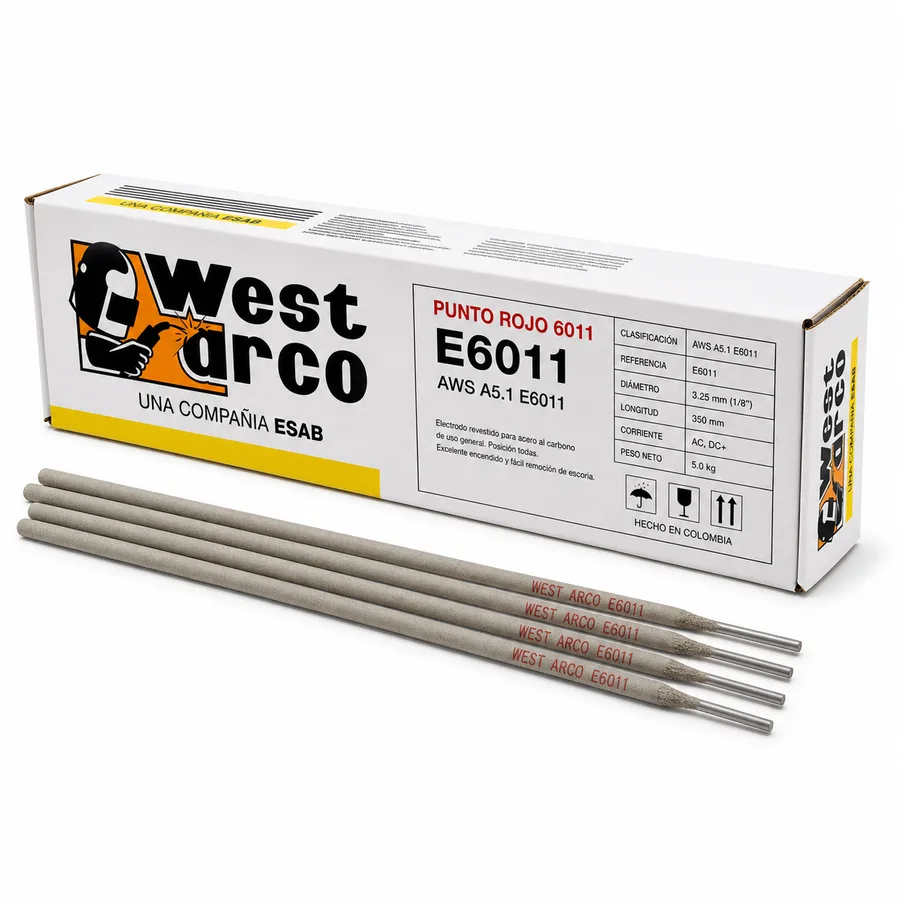 electrodo e6011 acero carbono west arco
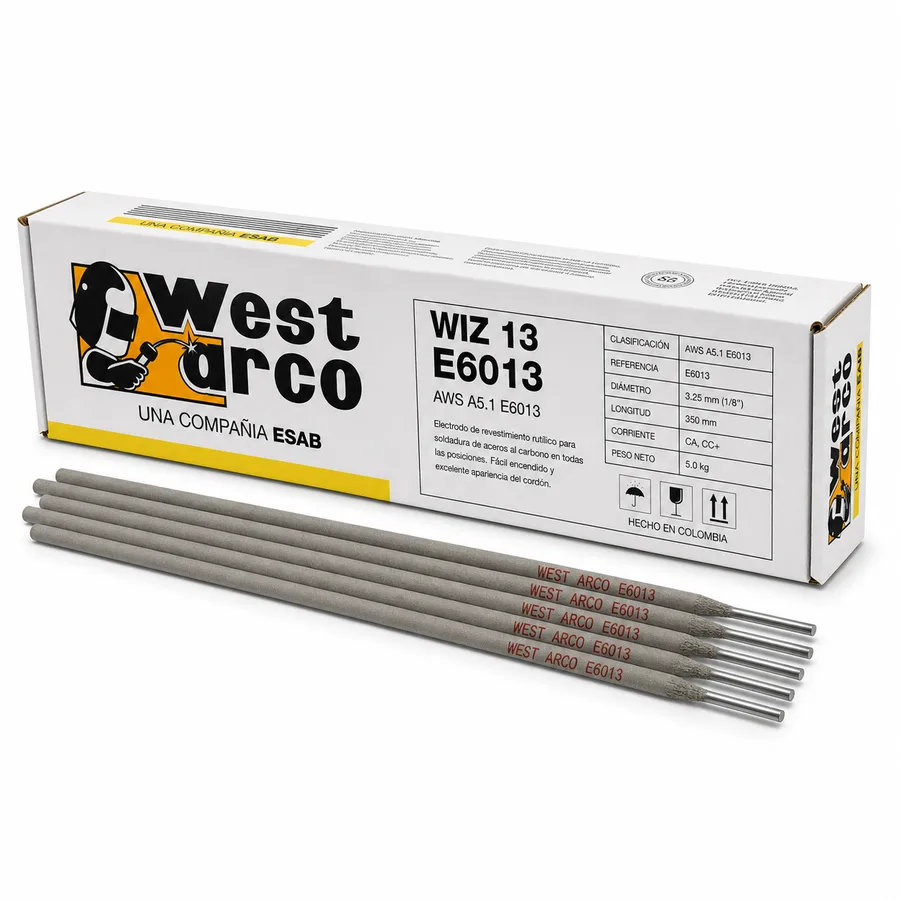 electrodo e6013 acero carbono west arco
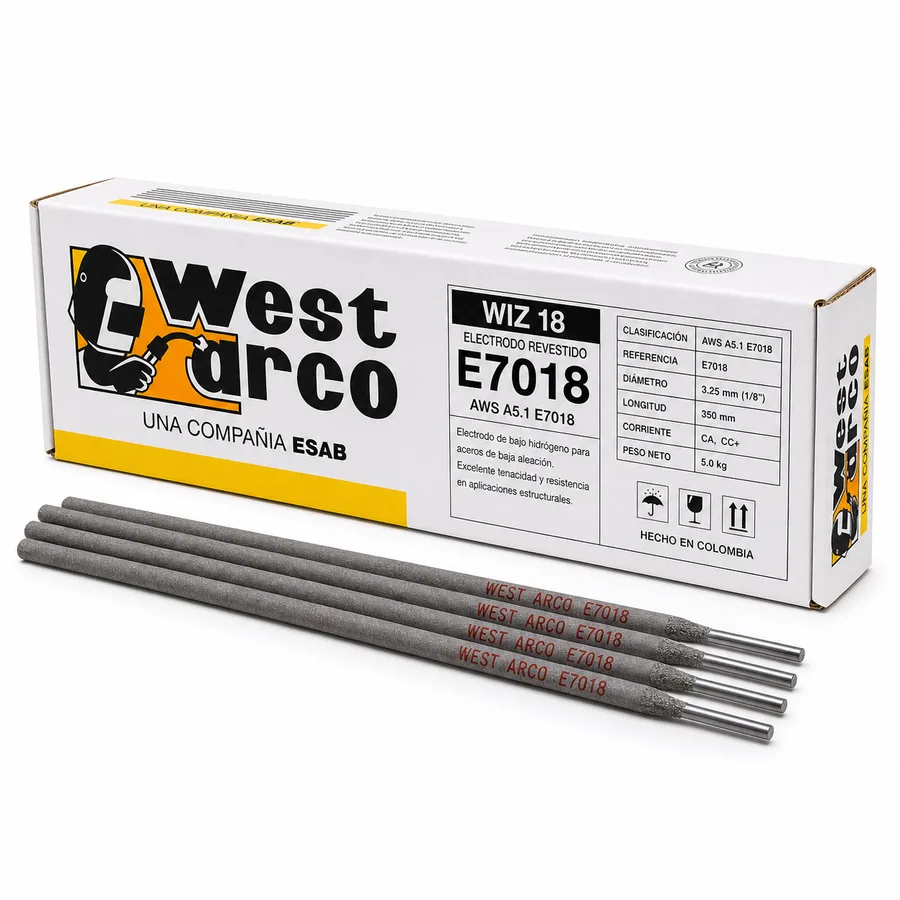 electrodo e7018 estructural west arco