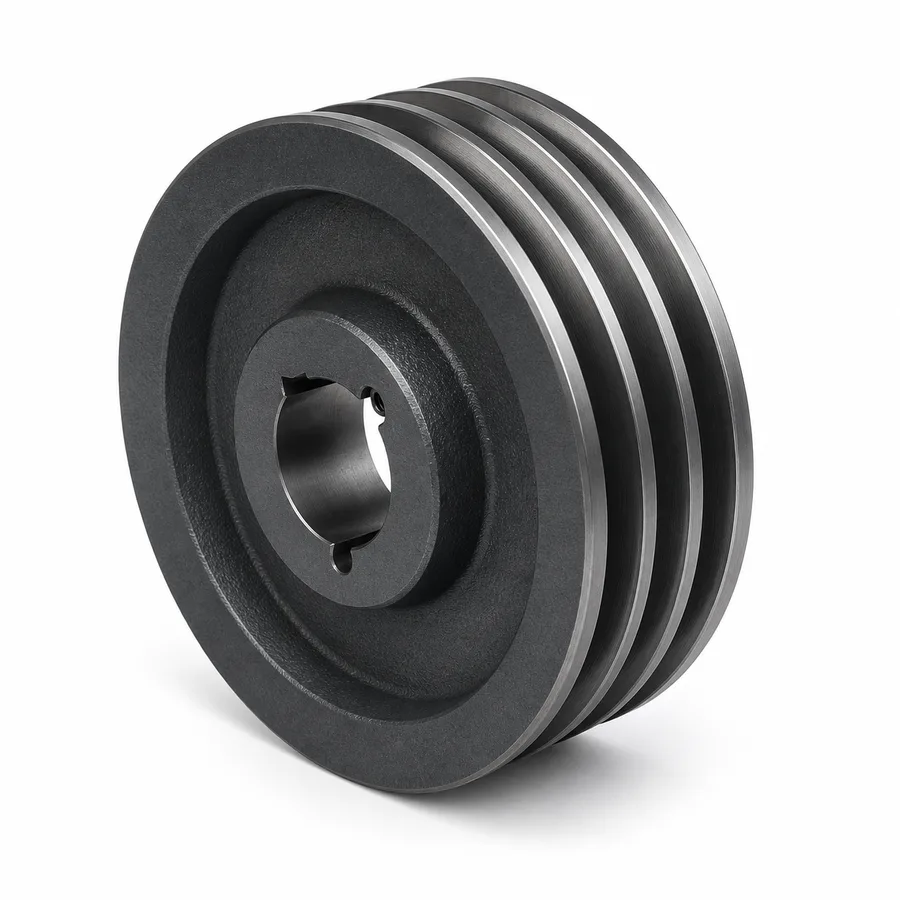
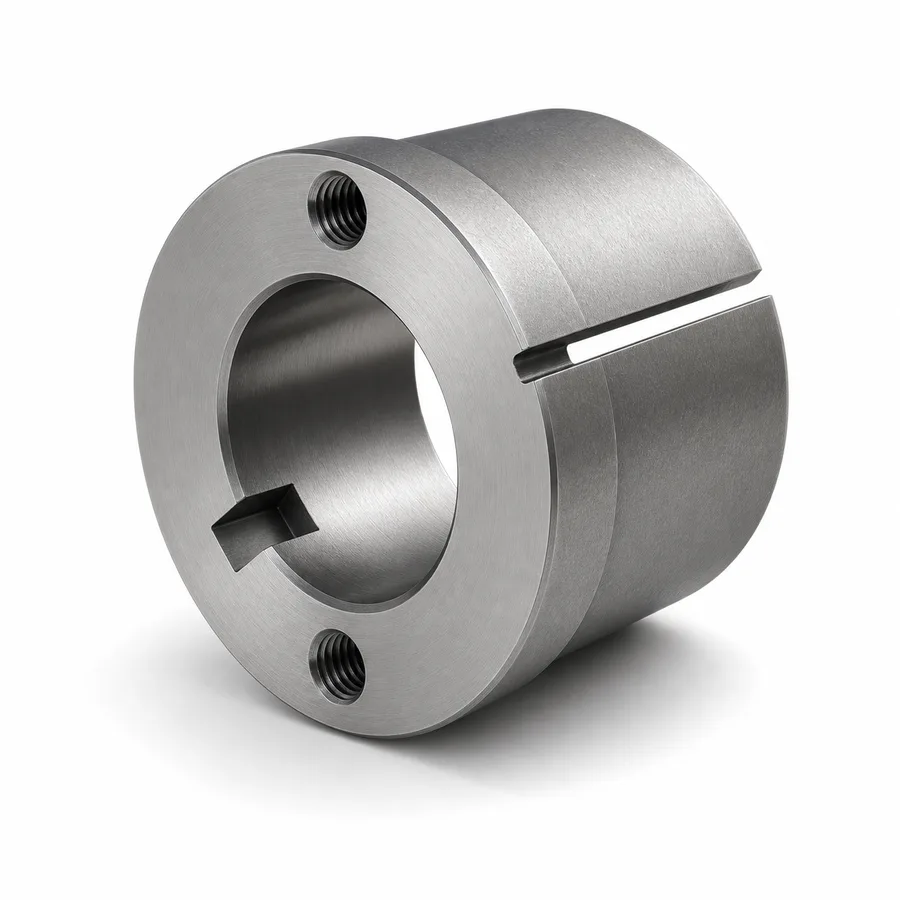
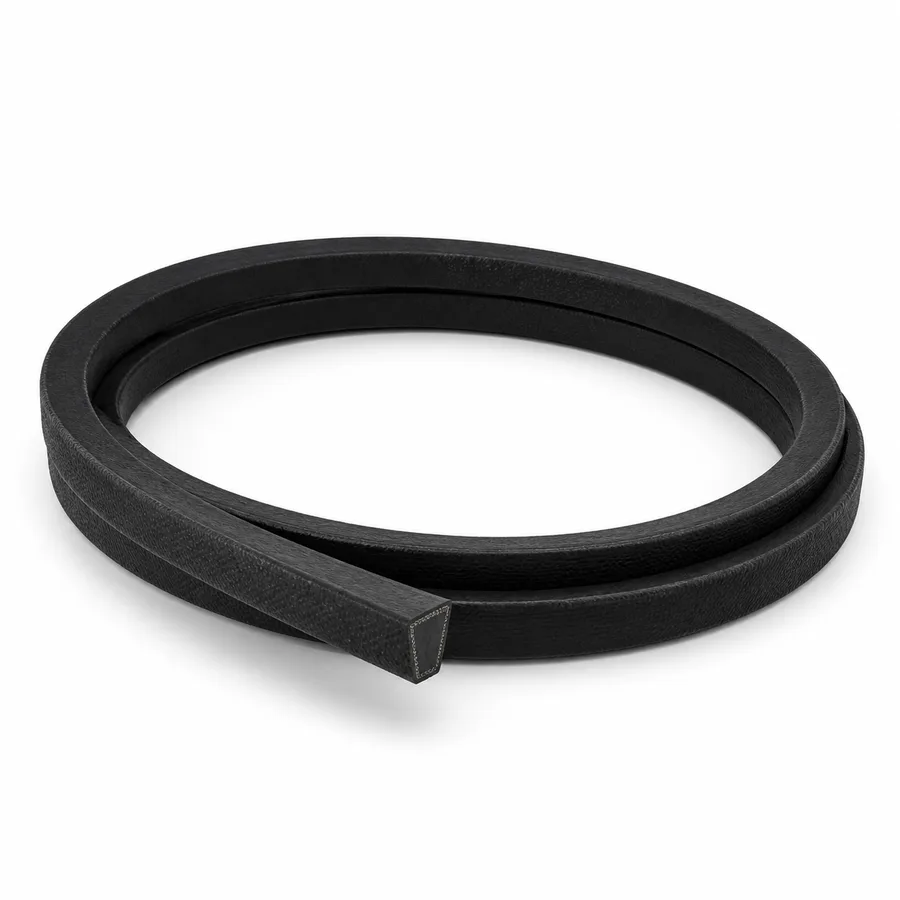
Measuring a V-belt pulley helps replace it, diagnose wear or confirm whether a belt is working in the correct groove. Measurement must separate outside diameter, datum or pitch diameter, groove width, angle, number of grooves and bushing. TECTUL supplies V-belt pulleys, V-belts and taper-lock bushings for industrial maintenance and mounting.
Verdict: to identify a used pulley, first measure outside diameter, top groove width and number of grooves; then use a known A, B, SPA or SPB belt to confirm seating. For purchasing, do not report outside diameter only: specify groove profile, datum diameter or catalog designation, groove count and bushing or bore type.
Use a caliper, rigid ruler, flexible tape, gauges if available and a belt of known profile. Clean the pulley before measuring; stuck rubber, rust or thick paint can alter the apparent groove width. If the pulley is installed, lock out the machine and apply safety procedures before removing guards or belts.
Required precision depends on size. On small pulleys, a 1 or 2 mm error can lead to the wrong reference. On large pulleys, outside diameter may be measured with a tape, but groove profile confirmation remains critical.
| Measurement | How to take it | Instrument | Purpose |
|---|---|---|---|
| Outside diameter | Edge to edge across the widest point | Caliper or tape | Preliminary identification |
| Top groove width | Between upper lips of the groove | Caliper | Distinguish A/B/SPA/SPB |
| Groove depth | From top edge to bottom | Depth caliper | Detect wear or wrong profile |
| Number of grooves | Count equal grooves | Visual inspection | Define number of belts |
| Bore or bushing | Shaft diameter or bushing reference | Caliper | Shaft mounting |
Outside diameter is the visible dimension measured at the pulley lips. Pitch or datum diameter corresponds to the line where the belt works. In a V-belt that line sits inside the section, so the effective drive diameter does not exactly match the outside diameter.
If the pulley has a catalog marking, that marking is usually more reliable than an isolated outside measurement. If there is no marking, report outside diameter as observed data and request catalog verification. For rpm calculations, use datum or pitch diameter when the manufacturer indicates it.
Profile is identified by groove geometry and by the belt that seats correctly. The correct belt must contact the flanks, not the groove bottom. If the belt bottoms out, it does not transmit by wedging and will slip; if it sits too high or too deep, the profile may be wrong or the groove may be worn.
| Belt profile | Nominal top width | Family | Visual signal in pulley | Measurement use |
|---|---|---|---|---|
| A | Approx. 13 mm | Classical | Groove for light classical belt | Replacement in existing equipment |
| B | Approx. 17 mm | Classical | Wider groove than A | Larger section in older drive |
| SPA | Approx. 12.7 mm | Narrow | Similar width to A but different geometry | Do not confuse with A |
| SPB | Approx. 16.3 mm | Narrow | Similar width to B but narrow section | Do not confuse with B |
V-belt pulley grooves are manufactured with standardized angles that may vary by profile and diameter. Industrial families commonly use values around 34, 36 and 38 degrees depending on pulley diameter and system. Do not declare angle from a phone app; use a gauge or confirm by catalog.
More important than guessing the angle is checking wear. A groove shiny only at the bottom, rounded walls, broken lips or belts running at different heights indicate a damaged pulley. Installing new belts on worn pulleys reduces the life of the complete set.
If the pulley uses a taper-lock bushing, look for the marking on the bushing and measure shaft diameter. Also check keyway, useful length and screw position. If the pulley has a fixed bore, measure inside diameter and keyway; do not assume the shaft is nominal only from the motor nameplate.
In taper-lock systems, the bushing and pulley must match each other. Two pulleys of similar diameter may use different bushings. For purchasing, state pulley reference, bushing reference, shaft diameter and groove count.
A worn pulley can mislead measurement. With use, groove walls open, polish or lose their original geometry; then the measured top width no longer represents the factory profile. The belt may sit lower, bottom out and lose wedging action. If a new pulley is purchased by copying a heavily worn part, the error can be repeated in the selected reference.
Check whether all grooves have the same working height. In multi-groove pulleys, one worn groove carries less load and another carries more; the belt set does not share power equally. Also look for cracks near the hub, broken lips, deformed keyway and slip marks between bushing and pulley.
When there are two or more grooves, belts must have the same profile, length and condition. Measuring only one groove can hide uneven wear. Measure each groove and compare. If the difference is clear, the pulley should be replaced or evaluated as a complete part, not simply fitted with new belts.
When replacing multiple belts, buy compatible sets and avoid mixing one new belt with used belts. A new belt stays tighter and takes more load; used belts remain loose and slip. The result is heat and short life even when the pulley has been correctly identified.
The driver and driven pulleys work as a set. Changing the diameter of only one pulley changes equipment rpm, belt linear speed and required tension. Before accepting a “similar” pulley, confirm drive ratio and center distance. In pumps and fans, a small rpm change can affect flow, pressure, noise and consumption.
If the reference is unknown, measure both pulleys, installed belt length, approximate shaft center distance and tensioning base position. With those data, the drive can be reconstructed more reliably and the new pulley will not leave the belt without adjustment travel.
A technical request should include estimated profile, outside diameter, groove count, bushing type or fixed bore, shaft diameter, keyway, material if known and clear photos. If the equipment is critical, add power, motor rpm, equipment rpm and service type. That information turns a visual identification into a defensible selection and reduces the risk of stopping the machine because the spare does not align with the existing belt.
To replace a V-belt pulley, take photos of the part, stamped marking, grooves, bushing and shaft. Give TECTUL the measured outside diameter, estimated profile, groove count, bushing reference and application. If the pulley is worn, do not treat that geometry as absolute truth: confirm with the correct belt or catalog before purchasing.