The 11018 electrode usually means E11018-M under AWS A5.5/A5.5M: a low-alloy SMAW covered electrode with low-hydrogen coating and deposited weld metal tensile strength in the 110 ksi minimum class. It is not a “stronger E7018” for every repair; it is a consumable for high-strength steels and procedures that require metallurgical control.
This guide consolidates the search “11018 welding” and explains when to use it, how to handle it and what purchasing should specify. TECTUL offers references such as West Arco E11018-M, ESAB E11018-M, Lincoln E11018-M, Superon E11018-M and Stanvac E11018-M. Brand choice must be checked against WPS, certificate and datasheet.
The letter E identifies an electrode. 110 indicates deposited weld metal minimum tensile strength of 110 ksi under the classification. 1 indicates all-position capability. 8 corresponds to a low-hydrogen iron-powder coating. The M suffix identifies low-alloy requirements for military or high-strength applications, with chemistry and properties controlled by AWS A5.5/A5.5M.
The designation should not be shortened to “11018” in technical purchasing. Write E11018-M and add diameter, packaging condition, accepted brand, certificate, diffusible hydrogen level if required and WPS requirements. E11018-M should not be replaced by E11018-G or by a lower-strength electrode without engineering approval.
| Classification | Nominal minimum strength | Coating type | Indicative use |
|---|---|---|---|
| E7018 | 70 ksi | Low hydrogen | General carbon steel structural work |
| E9018-G | 90 ksi | Low-hydrogen low alloy | High strength according to manufacturer chemistry |
| E11018-M | 110 ksi | Low-hydrogen low alloy | High-strength quenched and tempered steels |
| E8018-C3 | 80 ksi | Low hydrogen with nickel | Low temperature and compatible steels |
E11018-M is used on high-strength steels, especially quenched and tempered or low-alloy steels where the procedure requires a 110 ksi deposit. In literature and datasheets it is associated with HY-80, T-1 type steels and demanding structures, as well as military, bridge, heavy equipment and repair work where strength and toughness are essential variables.
The key word is compatibility. If the base metal has high strength, prior heat treatment or cracking sensitivity, the electrode must deposit compatible weld metal without introducing hydrogen or unacceptable hardness. Using it on ordinary steel without need can increase cost and risk without real benefit.
E11018-M belongs to the low-hydrogen family, but that condition is preserved only if it is handled correctly. The coating must remain dry, packaging must be protected and exposed electrodes must follow baking, holding and exposure rules defined by the manufacturer and WPS. Hydrogen cracking can appear after welding, when the bead already looked acceptable.
In high-strength steels, the error margin is narrower than in common repair work. Moisture, contamination, long arc, insufficient preheat or rapid cooling can combine to produce delayed cracks. Purchasing should coordinate with welding and quality so consumables are not issued without traceability and controlled handling.
The welder should use a short arc, interpass cleaning and datasheet parameters. The classification calls for DC electrode positive (DCEP), with AC where the datasheet allows it; amperage depends on diameter and product, and there is no responsible universal amperage for all E11018-M electrodes. When the WPS requires preheat, interpass temperature or postheat, those variables are measured and recorded on the workpiece, not estimated visually.
The electrode should remain separated from E7018, E9018 and similar references. In the field, package and quiver identification matter because a visually small substitution can change strength, chemistry, diffusible hydrogen and procedure approval. For auditable work, request a lot certificate.
| Variable | What to define | Why it matters |
|---|---|---|
| Base metal | Grade, thickness and heat-treated condition | Controls preheat and compatibility |
| Diameter | By joint, position and WPS | Affects heat input and access |
| Hydrogen | Packaging, oven and exposure | Reduces delayed cracking risk |
| Certificate | Lot and classification | Provides traceability |
| Brand | Approved by engineering | Datasheets can differ in chemistry and range |
Do not use it as a universal maintenance electrode. Do not use it to compensate for poor joint design, unknown base metal or missing procedure. Do not replace it with E7018 because both are low hydrogen, or with E9018 because it looks similar. Nominal strength is only part of selection; chemistry, toughness, hydrogen and heat treatment may be just as important.
In quenched and tempered steels, preheat is defined by the WPS, not by habit. Its function is to reduce cooling rate, help hydrogen diffuse and limit critical hardness in the heat-affected zone. If the base material cools too fast, cracking risk increases, especially in thick sections or highly restrained joints. Preheat should be measured with a suitable instrument near the joint and maintained during the welding sequence.
Heat input also has to be controlled. Too little heat input may increase rapid cooling and lack of fusion; too much can affect the heat-treated condition of high-strength steel and degrade properties. Technique, diameter and current are therefore selected within a qualified procedure. When the steel manufacturer limits interpass temperature, that limit must be respected even if the electrode could continue welding.
E11018-M should be received with legible identification of classification, diameter, brand and lot. If the project requires a certificate, the document must match the physical lot and remain with the order. In the store room, high-strength electrodes should be separated from E7018 and E9018 to avoid substitutions by appearance. If packages are split, the secondary container should repeat classification, diameter and lot.
Traceability continues to the work station. A welder should not receive mixed electrodes or leftovers of unknown origin for a critical joint. When portable ovens are used, record opening, baking, issue and return according to the procedure. That control may seem excessive in minor maintenance, but in 110 ksi steels it is part of weld quality.
A clear order prevents substitutions. Include “E11018-M according to AWS A5.5/A5.5M”, diameter, package, accepted brand or approved equivalents, certificate requirement, hermetic packaging condition, hydrogen level if required by the WPS and quantity by lot. If the job is code work, add that suffix substitutions are not accepted without written approval.
It is also useful to state the base metal and application. Saying the electrode will be used on quenched and tempered steel, heavy equipment repair or critical structure helps prevent the supply from being treated as a generic consumable. The supplier does not replace the WPS, but can flag when the requested reference does not match the declared need.
After welding, inspection should match the criticality of the joint. Visual inspection checks bead profile, undercut, arc strikes, crater filling and cleaning between passes. Where the code or procedure requires it, magnetic particle, ultrasonic or radiographic examination may be added. Delayed hydrogen cracking is the specific concern, so inspection timing can matter; some procedures require waiting before final acceptance.
Repairs should follow the same discipline as the original weld. Grinding out a defect and rewelding with unknown preheat or exposed electrodes can create a larger problem than the indication being repaired. Keep records of consumable lot, welder, parameters and thermal control when the structure or customer requires traceability.
Buy E11018-M only when the WPS, drawing or engineering requires it. In the request, include AWS A5.5/A5.5M, diameter, accepted brand, lot, certificate, packaging condition and handling requirements. For HY-80, T-1 or high-strength steel work, treat hydrogen control as a critical variable, not a secondary recommendation. TECTUL can help compare available brands without changing the required classification.
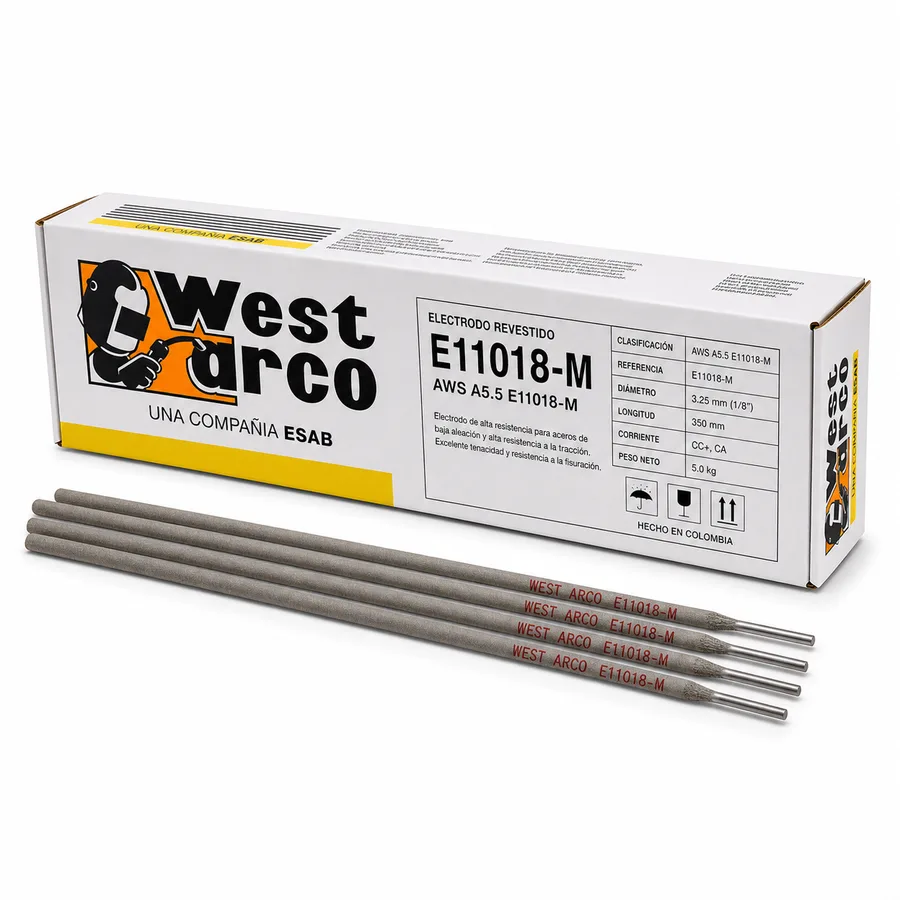 electrodo e11018 m alta resistencia west arco
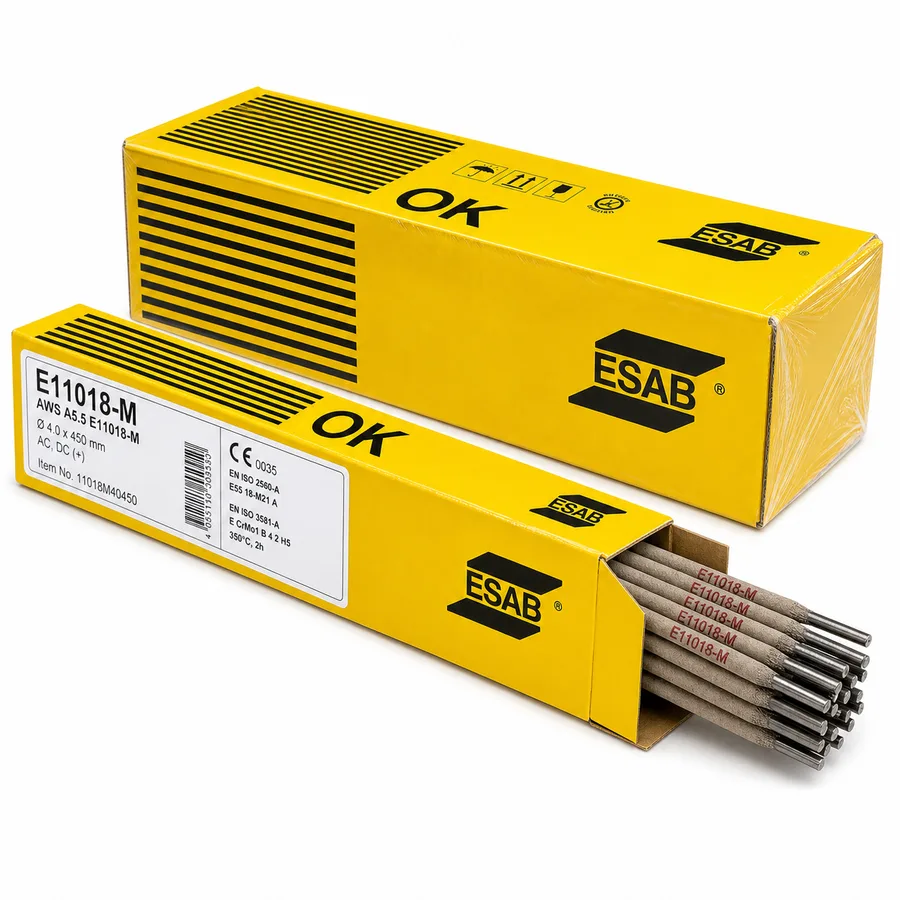 electrodo e11018 m alta resistencia esab
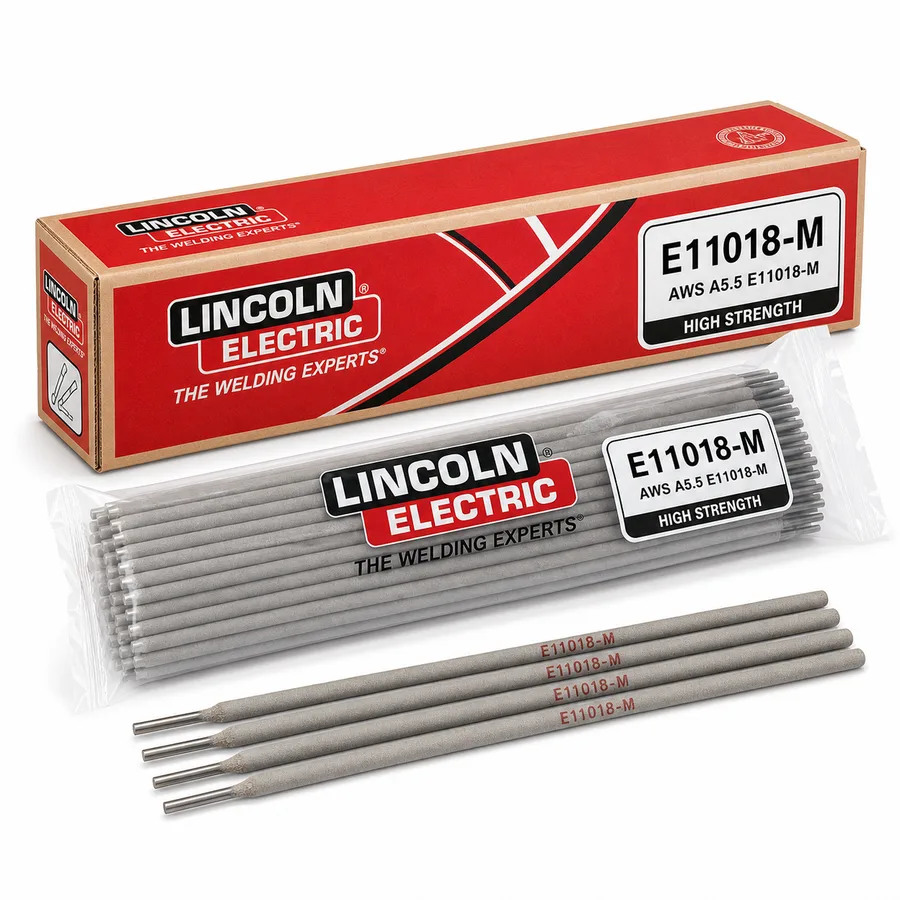 electrodo e11018 m alta resistencia lincoln