The 7024 electrode is used to deposit weld metal quickly in SMAW, mainly in flat position and horizontal fillets. Its high iron-powder coating enables higher deposition rates than general-purpose electrodes, so it is used in shop fabrication, repetitive work, long fillets and plates where position supports a fluid puddle and heavy slag.
It is also often purchased incorrectly. The search “7024 welding” tends to confuse high productivity with versatility. The E7024 high-deposition electrode does not replace a structural E7018 when the procedure requires low hydrogen in all positions, nor a root electrode. TECTUL recommends specifying it by AWS A5.1 classification, diameter, current, position and applicable WPS.
The letter E indicates electrode. The first two digits, 70, indicate deposited weld metal in the 70 ksi minimum tensile strength series. The third digit, 2, limits use to flat and horizontal fillet positions. The last digit, 4, identifies a high iron-powder coating, commonly suitable for AC or DC depending on the manufacturer datasheet, with a smooth arc and heavy slag.
The critical point is position. An E7024 electrode is designed so gravity helps support the slag and puddle. In vertical or overhead welding, the fluid metal and slag are difficult to control and the classification does not support it as an all-position electrode.
| Characteristic | E7024 | Purchasing implication |
|---|---|---|
| Classification | AWS A5.1, carbon steel | Verify package and certificate |
| Position | Flat and horizontal fillet | Do not specify for vertical or overhead |
| Coating | High iron powder | High deposition and heavy slag |
| Use | Long fillets and fill passes in favorable position | Good for shop work, not open roots |
| Control | Interpass cleaning and stable amperage | Prevents slag inclusions |
E7024 is useful when productivity is the priority in long accessible welds. In bases, frames, supports, secondary structures, thick plates and horizontal fillet joints, it can reduce time compared with lower-deposition electrodes. The arc is generally stable, slag coverage is strong and appearance can be uniform when travel speed is consistent.
It is not the best electrode for deep penetration, dirty repair, pipe root or forced positions. It should not be used to “improve” a structural specification without checking the WPS. If the job requires low hydrogen, specific toughness, impact properties or chemistry, the classification stated by the procedure must be used.
The workpiece should be free from grease, paint, loose scale and moisture. Because slag is heavy, preparation and interpass cleaning are decisive. The electrode is run with a moderate drag angle, short arc and uniform travel. In horizontal fillets, bead size should be controlled so slag does not run ahead of the arc or become trapped in the toes.
Amperage ranges depend on brand and diameter. Datasheets from leading manufacturers show small diameters running at medium currents and larger diameters requiring higher currents; for rigor, the exact value must be taken from the datasheet of the purchased product. If the power source cannot maintain stable current, the high-deposition benefit is lost through spatter, lack of fusion or overly convex beads.
Shops often choose larger diameters to increase deposition, but diameter must match thickness, joint and power-source capacity. An electrode that is too large can create an excessive puddle, poor fusion at the fillet root or overheating. One that is too small reduces productivity. Correct selection combines fillet size, weld length, position and machine duty cycle.
| Diameter | Indicative use | Recommendation |
|---|---|---|
| Small | Moderate fillets and thinner parts | Use the datasheet amperage range |
| Medium | General flat-position fabrication | Balances control and deposition |
| Large | Thick plate and long fillets | Requires enough current and duty cycle |
Slag inclusion is the defect most associated with poor E7024 use. It results from wrong travel, oversized beads, poor interpass cleaning or fillet geometry that traps slag. Lack of fusion at the edges may also appear if the welder focuses on depositing metal and does not wash the puddle into both faces.
Another frequent error is using it in the field for speed when the real position changes during assembly. If the part cannot be positioned flat or horizontal, it is better to select an all-position electrode, such as E7018 when the procedure allows it, or redesign the fabrication sequence.
| Electrode | Strength | Difference versus E7024 |
|---|---|---|
| E7014 | Iron powder and broader handling | Lower deposition than E7024 |
| E7018 | Low hydrogen and broad structural use | More storage-sensitive, all-position |
| E6013 | Smooth arc in light work | Lower strength and productivity |
| E7024 | High deposition in favorable position | Not for vertical or overhead |
E7024 works best when the joint is designed to deposit metal without fighting gravity. In fillets, both faces must allow the arc to fuse the root and wet both sides. If there is excessive gap, laminated rust or paint, high deposition may cover the problem without fusing it. Cleaning with brush, grinder or suitable tool before welding and between passes is part of the process, not cosmetic finishing.
Technique should avoid wide weaving. A stringer bead or limited movement usually controls slag better. If the bead is too convex, reduce amperage, diameter or travel speed as allowed by the datasheet and joint. If slag runs ahead, adjust angle and travel. In production, make an initial sample, break or inspect it according to the quality plan, and lock parameters before repeating long welds.
Although E7024 is not purchased as a low-hydrogen electrode like E7018, it must be kept dry and with intact coating. Damaged, damp or flaked electrodes create erratic arc behavior and defects. Visual control should check undercut, profile, fillet size, slag cleaning and continuity. If the work is structural or code governed, acceptance is defined by the code and procedure, not by a shiny bead appearance.
E7024 should not be used when the part cannot be positioned flat or horizontal, when access forces overhead welding, when the joint requires deep penetration, or when the specification calls for controlled low hydrogen. In field repairs with contaminated material, old paint or irregular geometry, high deposition can hide defects instead of solving them. If the joint has structural responsibility, the procedure must explicitly approve the classification.
It is also not the best option for short welds, tack welds or fit-up work where the arc is started and stopped repeatedly. The benefit of E7024 appears in continuity: long welds, repeatable preparation and a welder working with defined parameters. If the operation cannot provide that repeatability, a more versatile electrode may produce less rework.
Use E7024 when you have long fillets, comfortable access, flat or horizontal position and a real productivity need. Do not buy it for roots, improvised repair or variable positions. In the request include diameter, available power source, current type, thickness, fillet size and whether a WPS exists. TECTUL can compare it with E7014 or E7018 so a deposition improvement does not become a quality problem.
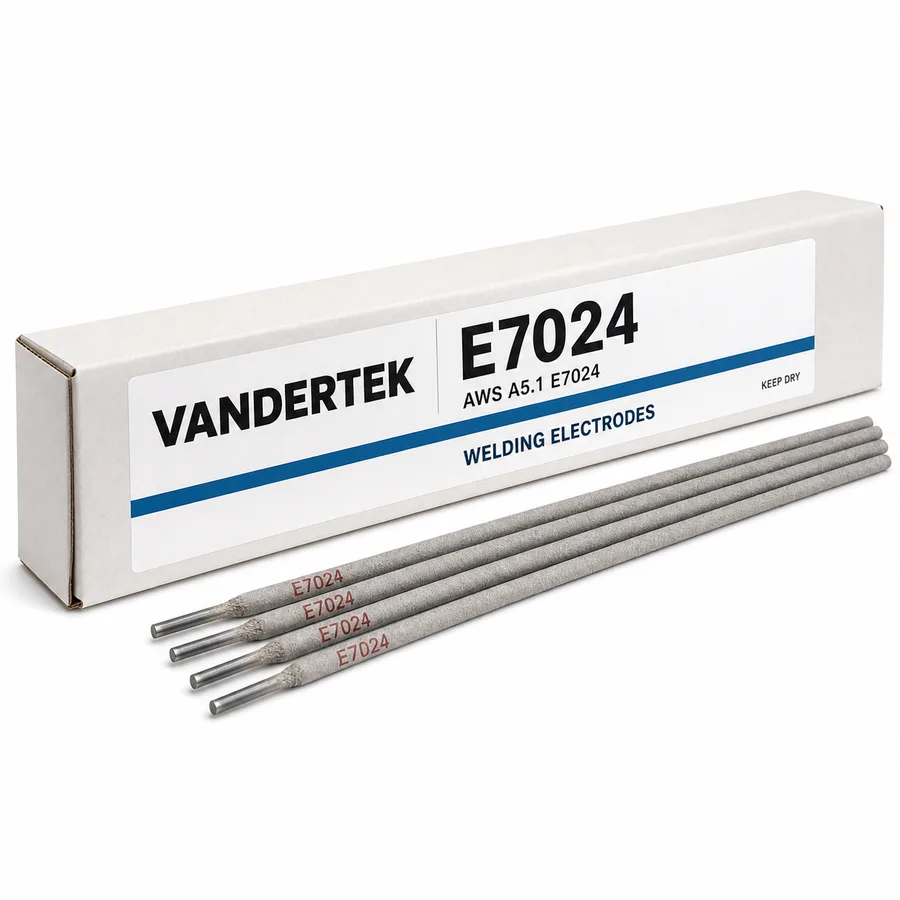 electrodo e7024 alto rendimiento generico
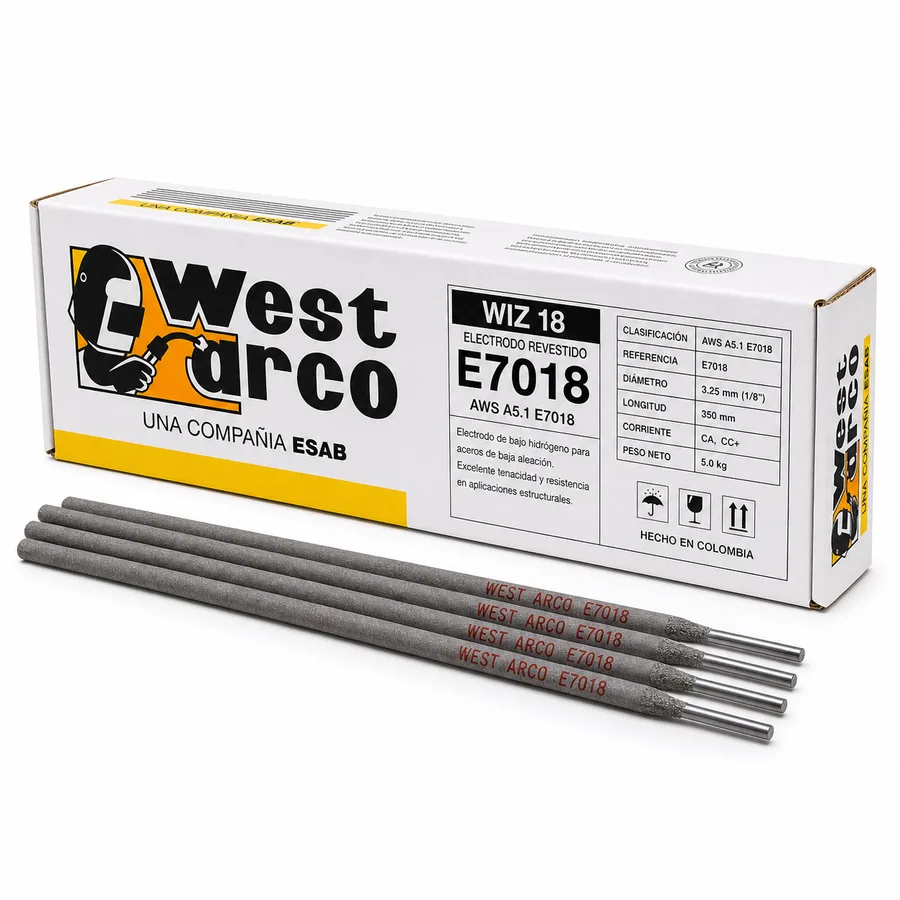 electrodo e7018 estructural west arco
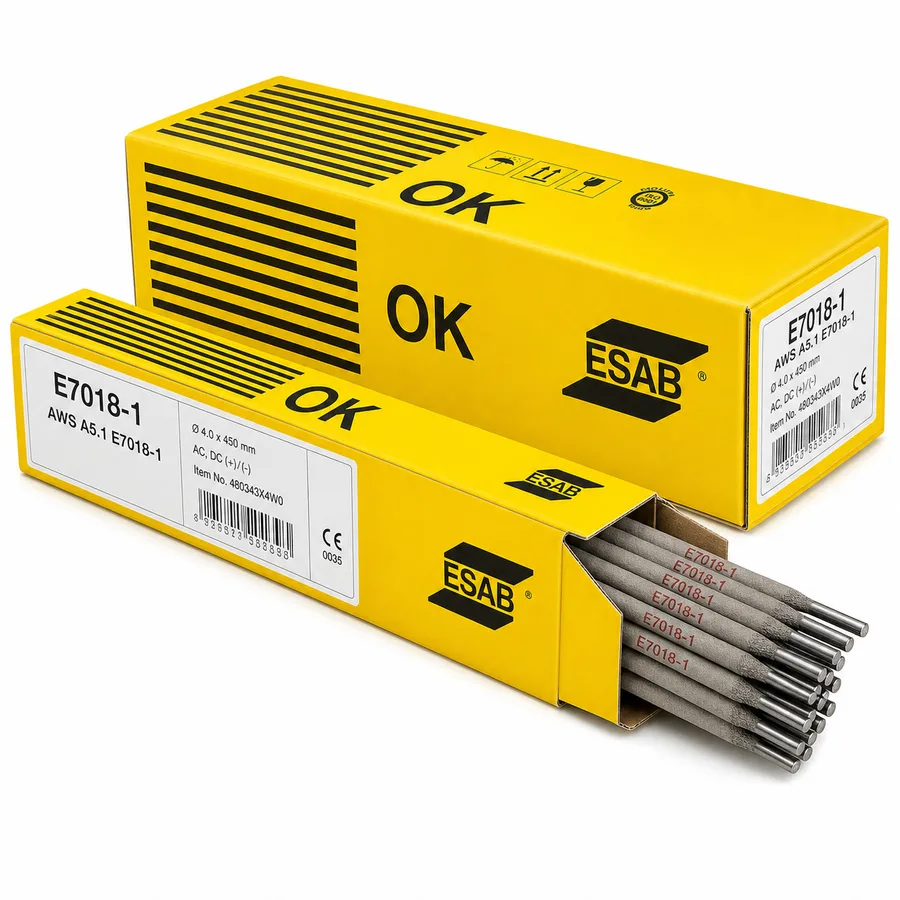 electrodo e7018 1 bajo hidrogeno esab