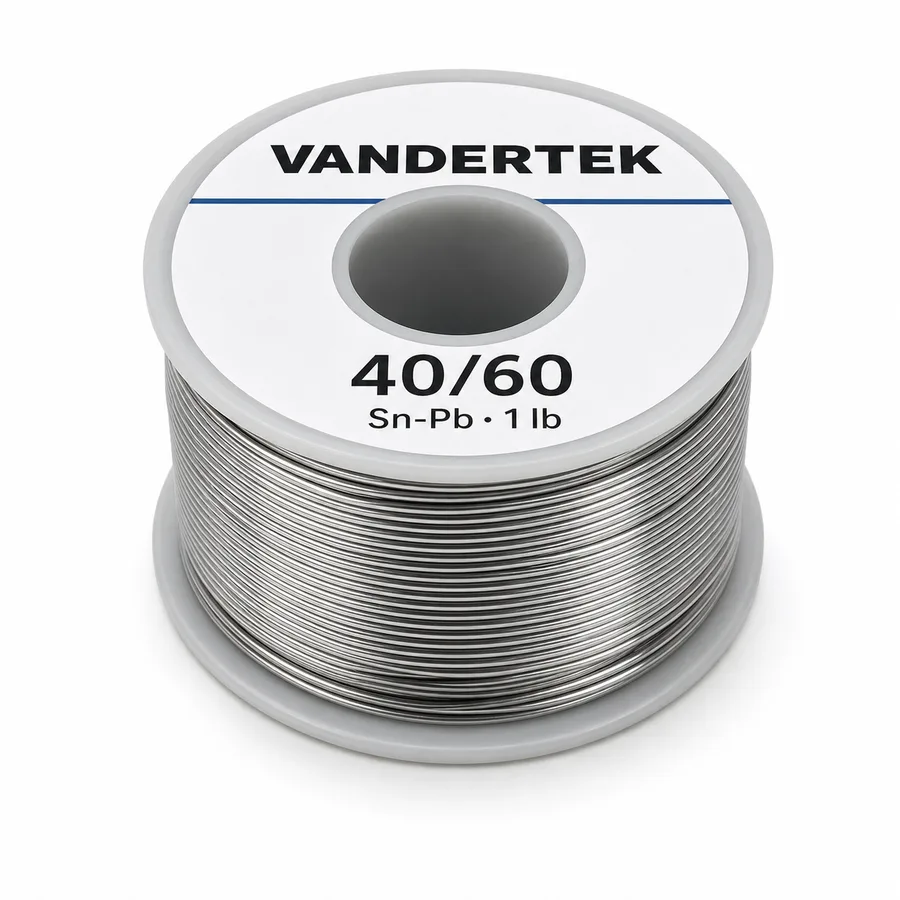
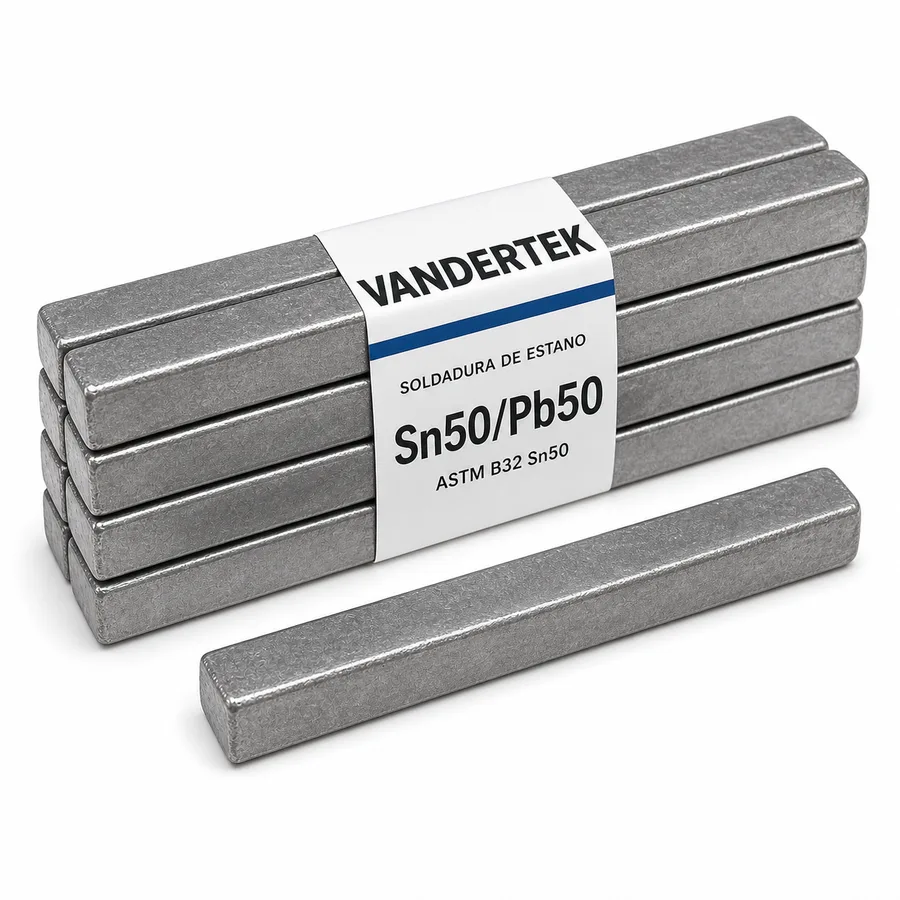
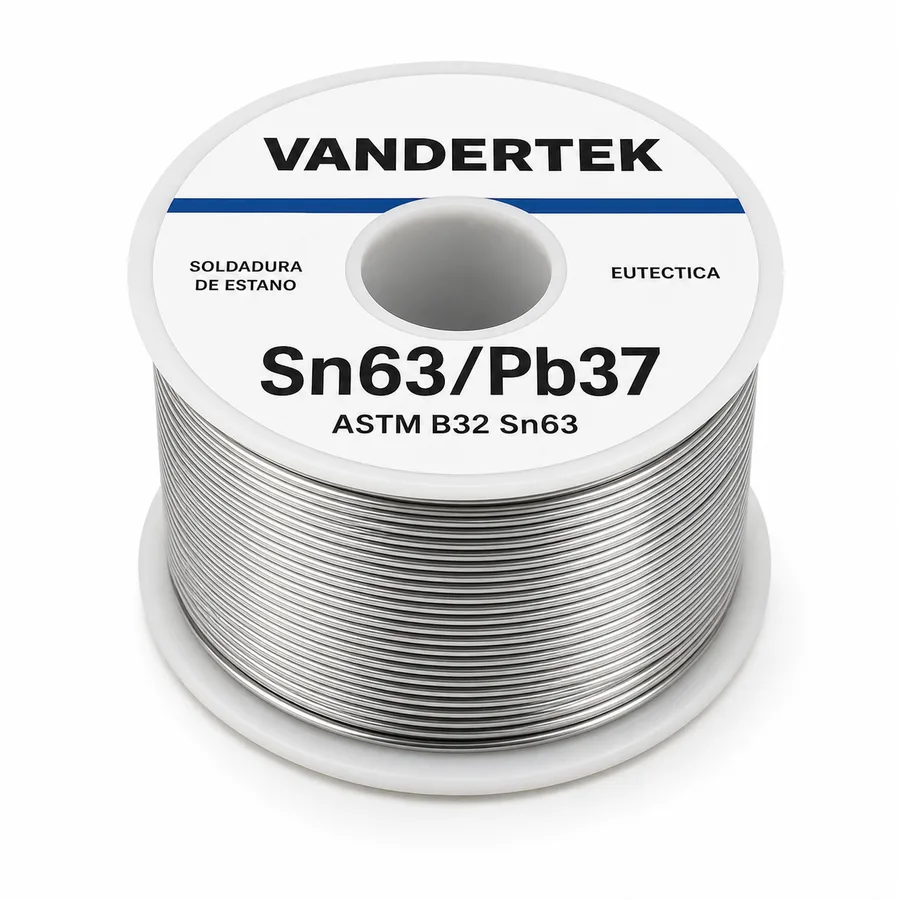
40/60 solder is a tin-lead soft solder, normally understood as Sn40/Pb60: 40 percent tin and 60 percent lead by mass. It is used in sheet metal work, radiator repair, low-temperature metal joining and repairs where a wider pasty range is useful compared with eutectic electronic solders.
TECTUL carries it as 40/60 tin solder, along with alternatives such as 50/50 solder, 63/37 solder, 95/5 tin-silver and 99/1 tin-copper. Selection must separate plumbing, sheet metal and electronics, because they do not require the same behavior.
ASTM B32 covers solder metal and includes tin-lead alloys such as Sn40. In practical nomenclature, 40/60 indicates approximate tin and lead percentages. Unlike Sn63/Pb37, which is eutectic and changes from solid to liquid at a defined temperature near 183 °C, Sn40/Pb60 has a melting range: it starts melting around the eutectic temperature and finishes liquefying at a higher temperature, with a pasty zone useful for certain manual work.
That pasty zone allows the operator to work, fill and shape the solder before it flows completely. In fine electronics, that feature is often a disadvantage because it increases the risk of cold joints if the part moves during solidification. In sheet metal or radiator repair, it can be an advantage when the operator needs to control the deposit with torch and suitable flux.
| Alloy | Typical composition | Behavior | Indicative use |
|---|---|---|---|
| Sn40/Pb60 | 40% Sn, 60% Pb | Wide pasty range | Sheet metal, radiators, non-potable low-temperature work |
| Sn50/Pb50 | 50% Sn, 50% Pb | Narrower pasty range | General compatible metal work |
| Sn60/Pb40 | 60% Sn, 40% Pb | Near eutectic | Traditional electronics and assemblies |
| Sn63/Pb37 | 63% Sn, 37% Pb | Eutectic | Electronics with rapid transition |
| Sn95/Ag5 or Sn99/Cu1 | Lead-free | Higher temperature than Sn-Pb | Alternatives when lead-free is required |
40/60 solder is used for soft soldering compatible metals when service temperature and mechanical demand are moderate. It is common in sheet metal work, radiator repair, sheet joints, noncritical connections and jobs requiring wetting with flux. It is not a structural material: the joint depends on cleanliness, capillary action, contact area and preparation.
Lead-containing alloys were historically used in plumbing, but today they must not be used in drinking water systems. For water intended for human consumption, use lead-free alloys and components that meet applicable drinking water requirements, such as those of the U.S. Safe Drinking Water Act, with certifications such as NSF/ANSI/CAN 372 (lead content) and NSF/ANSI/CAN 61 where required. Lead is a technical and health warning, not a minor detail.
The surface must be clean, deoxidized and properly fitted. Compatible flux is applied, the workpiece is heated rather than only the wire, and the solder is allowed to flow by capillary action or wet the metal. If the base metal is not hot enough, the solder clumps on the surface. If it is overheated, flux burns, oxide forms and joint quality drops.
Ventilation and fume control are mandatory. The material contains lead and flux can generate irritating fumes. Use protective equipment, avoid eating or smoking during work and wash hands after handling the product. Waste should not be mixed with clean materials or enter drinking water lines.
The main difference is the pasty range. Sn63/Pb37 is eutectic: it changes from solid to liquid without a wide pasty zone, which supports clean electronic joints when the process is controlled. Sn60/Pb40 has a small interval and was also widely used in traditional electronics. Sn40/Pb60 keeps a pasty phase longer, useful for wiping, filling or forming beads in manual metal work.
For that reason, choosing 40/60 for modern electronics is usually not the best decision unless the procedure specifies it. For circuit boards, fine connectors or electronic repair, review alloy, flux, diameter, cleaning and environmental restrictions. For sheet metal work, the criteria change: uniform heating, part fit-up and bead control matter more.
Flux is not an optional accessory. Its function is to remove oxides, protect the surface during heating and allow solder to wet the metal. It must be compatible with the base metal, process and post-cleaning. An active flux may help in sheet metal work, but its residues can be corrosive if trapped. In electronics, fluxes are selected by residue, activation and board compatibility.
After soldering, remove residues according to the flux recommendation. On general metal parts, cleaning prevents corrosion around the joint. On electrical components, residues can affect insulation, create leakage currents or interfere with coatings. In all cases, a shiny solder joint does not guarantee chemical cleanliness; inspection should include surface, wetting and absence of contamination.
Soft solder works better through capillary action and contact area than through large external beads. A joint with proper clearance allows the alloy to flow between surfaces and form a continuous bond. If the gap is excessive, filler metal occupies volume, but strength and tightness may be poor. If the gap is too tight or dirty, solder does not penetrate.
The actual strength of a Sn40/Pb60 joint depends more on design than on an isolated material number. Service temperature, vibration, fatigue, corrosion, preparation and overlap length modify performance. That is why 40/60 solder should not be specified for structural loads, safety supports or pressure vessels. It is a low-temperature joining material for compatible and moderate applications.
Lead requires controlled handling, ventilation and disposal. It should not be sanded, heated or melted without suitable extraction or ventilation. Operators should avoid hand-to-mouth contact and keep the material away from food, drinks and clean areas. Offcuts and leftovers should be handled as lead-containing waste according to company procedure and applicable regulation.
The drinking water restriction should be written in the purchase order, store room and work station. If a repair involves potable water networks, cafeterias, hospitals, schools or sanitary systems, do not use Sn40/Pb60. Select a lead-free alloy and confirm compatibility with flux, working temperature and required certifications.
Package form affects the process. Thin wire allows better dosing on small parts; thicker rod adds material quickly on sheet metal or radiator work. Diameter does not change the alloy, but it changes feed rate and the risk of overheating the area. If the workpiece is thin, too much heat distorts the sheet before it improves the joint.
Heat control is learned by watching flux behavior and wetting. Solder should flow toward the hot workpiece, not drip as molten metal onto a cold surface. If the bead looks dull, grainy or raised, review cleaning, temperature and movement during solidification. In repetitive repairs, standardize torch tip, distance, heating time and sequence to reduce variation between operators.
Use 40/60 solder for sheet metal, radiators and non-potable soft soldering where the procedure benefits from its pasty range. For electronics, compare with 60/40 or 63/37; for drinking water, select certified lead-free alloys. In the request, state composition, diameter, package, required flux and use restriction. TECTUL can help choose between 40/60, 50/50, 63/37 and lead-free options according to service.