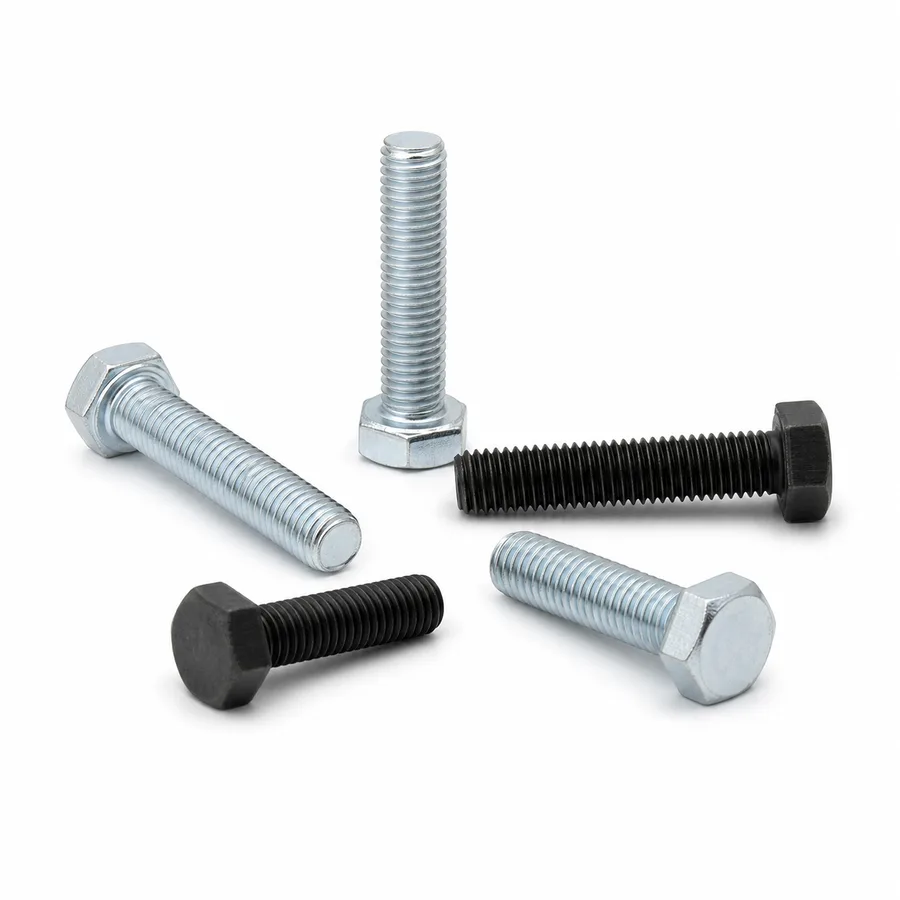
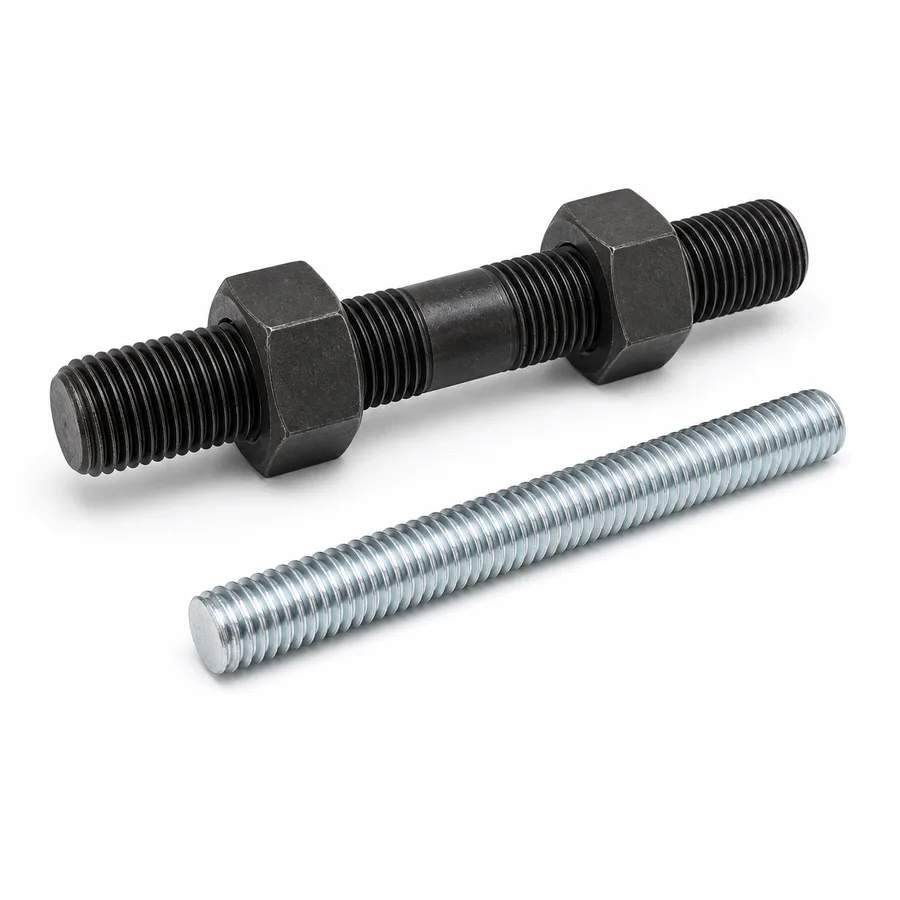
Bolt grades are not one universal scale where a higher number is always better for every joint. SAE grades 2, 5 and 8 belong to one family; ISO 8.8, 10.9 and 12.9 to another; ASTM F3125 grade A325 is used for structural joints; ASTM A193 B7 is specified for studs and bolts in pressure and temperature service. Mixing them by appearance can lead to failure, loss of preload, nut incompatibility or project non-compliance.
This guide explains head markings, tensile strengths and applications. At TECTUL, useful references include galvanized ASTM A325 hex bolt and B7 stud. A correct purchase must include standard, grade, diameter, length, thread, coating, nut and compatible washer.
Grade summarizes mechanical and material requirements defined by a standard. It may include minimum tensile strength, yield or proof load, hardness, heat treatment, composition, diameter range and marking. Saying “hardened bolt” or “high strength” is not enough. Two bolts can look similar and behave very differently under load, temperature or corrosion. Head markings help identify the family: radial lines in SAE, numbers in ISO and specific marks in ASTM.
| Family | Common marking | Minimum tensile strength indicated by standard | Typical use |
|---|---|---|---|
| SAE G2 | No grade lines or manufacturer mark | About 74 ksi in smaller diameters under SAE J429 | Low-demand general joints |
| SAE G5 | Three radial lines | About 120 ksi in smaller diameters under SAE J429 | Machinery and more demanding supports |
| SAE G8 | Six radial lines | About 150 ksi under SAE J429 | High-strength mechanical assemblies |
| ISO 8.8 | 8.8 | 800 MPa nominal minimum tensile strength for the main ISO 898-1 range | Common metric installation |
| ASTM F3125 A325 | A325 | 120 ksi minimum for ½ to 1½ inch diameters under ASTM F3125 (legacy A325 allowed 105 ksi above 1 inch) | Structural steel joints |
| ASTM A193 B7 | B7 | 125 ksi minimum in usual diameters covered by ASTM A193 | Flanges, pressure and temperature service |
SAE J429 covers mechanical and material requirements for inch-series externally threaded fasteners. Grade 2 is low or medium carbon steel for general use. Grade 5 is commonly medium carbon steel, quenched and tempered in many ranges, with higher strength than grade 2. Grade 8 is medium carbon alloy steel, quenched and tempered for high strength. Do not substitute grade 5 with grade 8 without reviewing the joint: a stronger bolt may be less ductile, require different torque, need a compatible nut and behave differently under fatigue.
ISO 898-1 defines property classes for metric carbon and alloy steel bolts, screws and studs. The first number relates to nominal tensile strength in hundreds of MPa; the second relates to the ratio between yield and tensile strength. Metric purchasing is not just converting inches to millimetres. Thread, pitch, property class, finish and nut must all match. Classes 10.9 and 12.9 provide higher strength, but they are more sensitive to coating and tightening controls.
ASTM A325 was incorporated as a grade under ASTM F3125/F3125M for high-strength structural bolts. These bolts use heavy hex geometry and are used in structural steel joints, with assembly and pretension requirements addressed by specifications such as RCSC. The galvanized ASTM A325 hex bolt should be purchased as part of a structural assembly when the project calls for it.
ASTM A193 B7 is a heat-treated alloy steel specification for bolts, studs and threaded rod in high-temperature or high-pressure service. It is common in flanges, valves and pressure equipment with compatible nuts. The B7 stud should be specified with diameter, total length, thread, number of nuts, finish, certificate and nut standard.
For general inch-series joints, identify SAE G2, G5 or G8 by standard and marking, not by colour. For metric fasteners, specify ISO 8.8, 10.9 or 12.9 with pitch and finish. For structures, use ASTM F3125 A325 when drawings require it. For flanges and pressure service, use ASTM A193 B7 with compatible nuts. At TECTUL, a technical order should state full standard, grade, diameter, length, thread, finish and nut-washer assembly.
The bolt does not work alone. The nut must have compatible strength and thread; the washer must distribute load without embedding; finish changes friction; lubrication changes the relationship between torque and tension. A high-strength bolt with the wrong nut can strip before reaching expected preload. A soft washer can deform and relax the joint. In flanges, the gasket also participates: if tightening is uneven, leakage can appear even when the stud material is correct.
Torque is not a universal property of grade. It depends on diameter, pitch, lubrication, coating, thread condition, grip length and target preload. Critical joints use procedures, sequences and calibrated tools. In structures, assembly specifications define installation methods; in flanges, tightening procedure and cross pattern are as important as B7 material or the matching nut.
Zinc plating, hot-dip galvanizing, phosphate, black oxide and stainless material are not equivalent. Coating protects against corrosion, but also changes dimensions, friction and nut compatibility. In high-strength bolts, some coating processes require controls to avoid hydrogen embrittlement. Critical fasteners should not be sent for coating without confirming standard, hardness, process and post-treatment.
Outdoors, corrosion protection must match the environment. In chemical atmospheres, a coating may fail even if it works for normal weathering. In contact with aluminium, copper or other metals, galvanic couples may appear. With stainless steel, mechanical strength should not be assumed equal to an SAE or ASTM high-strength bolt; it must be specified by standard and class.
Tensile strength does not tell the whole story. In machinery, supports and structures, a bolt may work in shear, alternating tension, vibration, bending or combined loads. Grip length, thread position relative to the shear plane and initial tightening influence joint life. A stronger bolt does not always improve fatigue if the joint loses preload or if the thread is located where it should not be.
In structural joints, drawings define diameter, length, hole type, washer, nut and installation method. In flanges, length must provide enough thread engagement in both nuts without excess interfering with assembly. In maintenance, cutting threaded rod, changing a nut or replacing a washer may look simple, but it can alter the design condition. Complete specification prevents improvisation.
Receiving inspection should compare marking, dimensions, thread, coating, quantity and certificate against the order. If the fastener is A325, B7, 8.8 or grade 8, marking must match. If the project requires lot, heat or certificate, documentation should arrive before installation. When packaging mixes references, separate and label them. Traceability is not paperwork for its own sake; it supports failure investigation and audit compliance.
When in doubt, keep the original grade and assembly until engineering approves a change. The cost difference between similar fasteners is usually small compared with downtime, rework, leakage, structural nonconformance or an incident caused by an undocumented substitution.
That discipline also helps inventory teams separate maintenance stock from project-controlled fasteners, reducing accidental mixing during urgent repairs.