The correct size of an industrial clamp is defined against the real outside diameter of the pipe, hose or tube it will hold. In purchasing, it is common to ask for a “one inch clamp” and receive a part that does not close, sits loose or damages the line. The confusion comes from mixing nominal diameter, outside diameter, tightening range and clamp type. In NPS pipe, for example, the nominal number is not the outside diameter for smaller sizes; dimensions must be checked in standards such as ASME B36.10M or ASME B36.19M.
This guide explains how to size U-bolts, omega clamps, worm-drive clamps, sanitary clamps and heavier industrial supports. At TECTUL, buyers can compare products such as galvanized U-bolt clamp, galvanized omega clamp, stainless worm-drive clamp and sanitary clamp. Final selection must confirm outside diameter, load, vibration, temperature, corrosion exposure and installation method.
Nominal pipe size is a system designation. In NPS metallic pipe, outside diameter remains fixed for a nominal size while wall thickness changes by schedule. Two pipes with the same NPS may therefore use the same external clamp even though their internal diameters are different. Sanitary tubing, metric tube, hose and conduit may follow different conventions: some are purchased by outside diameter, others by line size and others by tightening range. The reliable approach is to measure or specify outside diameter in millimetres or inches, state tolerance and define whether the clamp guides, carries weight, resists vibration or seals a joint.
| Clamp type | Sizing basis | Typical use | Risk if misselected |
|---|---|---|---|
| U-bolt | Pipe outside diameter and usable thread length | Fastening to plate, channel, structure or base | May ovalize pipe, leave play or run out of thread |
| Omega | Outside diameter and clearance against wall or surface | Light fixing and line organization | May restrict expansion or provide insufficient support |
| Worm-drive | Minimum and maximum tightening range | Hoses, flexible ducts and auxiliary connections | May cut hose or lose tension under vibration |
| Sanitary clamp | Ferrule standard and compatible sanitary size | Cleanable hygienic joints | Will not seal if ferrule, gasket and clamp do not match |
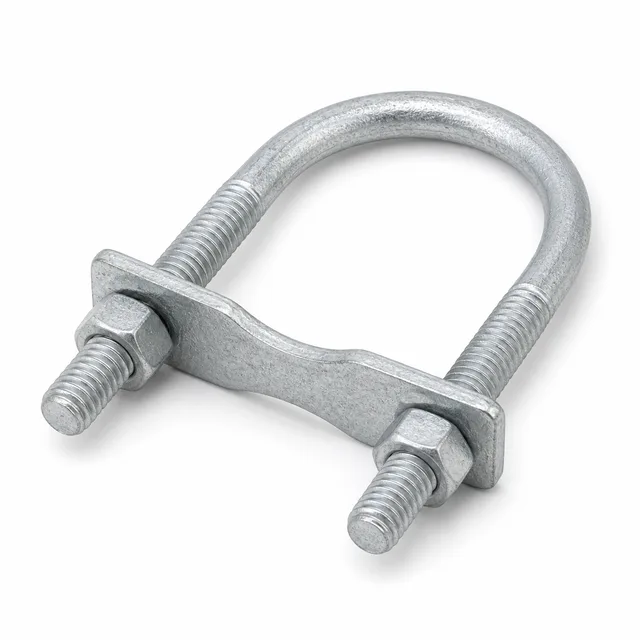
A U-bolt wraps around the pipe and is secured with nuts to a base. It is useful when the installation needs a simple, strong and economical fastening point. To specify it correctly, state pipe outside diameter, rod diameter, thread length, usable height, material, coating and whether nuts or washers are required. A U-bolt should not be tightened until it deforms the pipe. In lines with temperature, expansion or vibration, the point must be defined as a guide, anchor or support in the design.
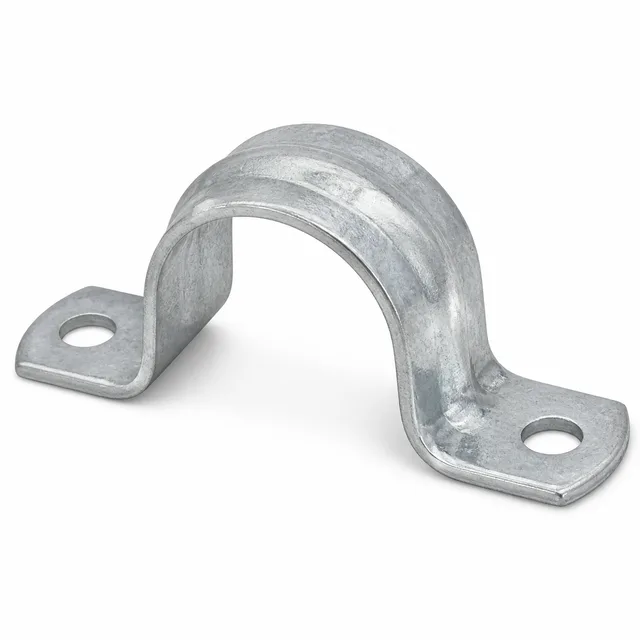
Omega clamps are often used to fasten pipe against walls, sheets or bases. Their shape is practical for small and medium lines where load is moderate. A galvanized omega clamp fits dry or moderately corrosive environments; stainless steel should be evaluated for washdown or aggressive atmospheres. If the line is heavy, vibrates, carries hot fluid or needs axial movement, the design should include guides, sliding supports or hangers.
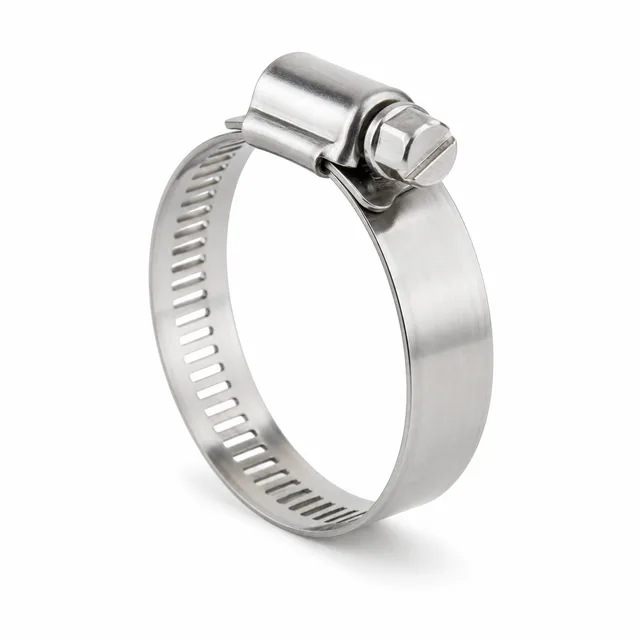
A worm-drive clamp is purchased by range. That range must cover the hose outside diameter after the hose is installed on the fitting, not only the nominal hose size by itself. Wall thickness, reinforcement and fitting geometry change the real dimension. In wet environments, food-adjacent areas, mild chemicals or washdown, the stainless worm-drive clamp reduces corrosion risk on the band and screw. For critical service, check band width, screw material, edge shape, torque guidance and hose compatibility.
Sanitary clamps are not selected like simple support clamps. They work with ferrules and gaskets to create a removable hygienic joint. Standards such as ISO 2852 and ASME BPE define dimensions and expectations for hygienic connections. The stainless sanitary clamp is appropriate when frequent disassembly, cleanability and sanitary line compatibility are required. It should not be used to compensate for damaged ferrules, wrong gaskets or misalignment.
Hot-dip galvanizing protects steel with a zinc layer. It is a sound option for moderate industrial environments, general supports and cost control. It is not universal protection against chemicals, high temperature, strong salinity or aggressive washdown. Stainless steel is selected for corrosion resistance, cleanability and appearance. Not every stainless grade behaves the same: 304 and 316 have different limits in chloride and cleaning-chemical exposure. In sanitary clamps, stainless is normally expected.
For general metallic pipe, start with real outside diameter and select U-bolt or omega style according to load and mounting. For hoses, buy worm-drive clamps by real range over the fitting. For hygienic lines, treat the clamp as one part of a complete sanitary joint: ferrule, gasket and clamp must match. A strong TECTUL request includes outside diameter, line type, environment and mechanical function; that prevents buying a clamp that closes but does not work correctly.
The first mistake is buying from a nominal diameter written on an old invoice without checking what line is actually installed. Plants with expansions, repairs and supplier changes may combine NPS pipe, sanitary tubing, industrial hose and electrical conduit in the same area. Each family uses a different sizing logic. If the buyer does not confirm outside diameter, the clamp can arrive oversized or too small. The second mistake is ignoring coating: paint, galvanizing, insulation, sanitary jackets or corrosion protection change the dimension seen by the clamp.
The third mistake is specifying stainless as a generic word. For a sanitary clamp, stainless is usually linked to cleaning and disassembly; for a support clamp, grade and finish must respond to the environment. In chemical washdown, coastal exposure or food-adjacent areas, the specification should state material and cleaning conditions. The screw must also be checked: a stainless band with a lower-grade screw can fail by localized corrosion at the point carrying the highest load.
A clamp should not solve with force what should have been solved by sizing. If the diameter is below range, installers tend to overtighten; if it is above range, the clamp works at its limit or does not close. On hoses, excessive tightening can cut the elastomer, deform reinforcement or create leakage near the fitting. On thin metallic pipe, an overtightened U-bolt can mark or deform the wall. On plastic lines, the support must distribute load and allow system expansion.
When the line vibrates, initial tightening is not the only criterion. Review whether the clamp needs an insert, liner, locknut, double fixing or anti-vibration support. On hot piping, a rigid clamp can block expansion and transfer loads to valves, pumps or nozzles. On cold piping with condensation, clamp material and surface contact can encourage corrosion under support if drainage and protection are not controlled.