Searching for welding sizes may mean three different things: covered electrode diameter, MIG wire diameter or TIG filler rod diameter. In industrial purchasing, these sizes should not be chosen by habit. They depend on process, workpiece thickness, welding position, available amperage, joint type, productivity target and AWS classification. An electrode that is too large can overheat sheet metal; one that is too small can make a structural fillet unnecessarily slow.
This guide consolidates commercial diameters and typical manufacturer ranges for common consumables. At TECTUL, buyers can compare West Arco E6013 electrode, West Arco E7018 electrode, E6011 electrode, ER70S-6 MIG wire and ER308L TIG rod. The ranges are selection guidance; WPS and current lot datasheets govern code work.
In SMAW, the most common queried sizes are 3/32, 1/8 and 5/32 inch. Their approximate metric equivalents are 2.4 mm, 3.2 mm and 4.0 mm. In Colombia, they are also purchased directly as 2.5 mm, 3.2 mm and 4.0 mm depending on brand. AWS A5.1 classifies the electrode type, but amperage range is defined by the manufacturer for each product and diameter.
| Imperial size | Approximate metric | Common use | Comment |
|---|---|---|---|
| 3/32 in. | 2.4 to 2.5 mm | Sheet, root passes, light repair, out-of-position work | More control, lower deposition |
| 1/8 in. | 3.2 mm | General fabrication, profiles, medium fillets | Balance between control and productivity |
| 5/32 in. | 4.0 mm | Plate, larger fillets, favorable positions | Needs more amperage and heat control |
The West Arco datasheets reviewed show E6013 at 3.2 mm in 80-120 A and 4.0 mm in 120-160 A. For E7018, 3.2 mm is listed at 95-140 A and 4.0 mm at 130-200 A. These ranges illustrate a practical rule: amperage rises with diameter, but coating, position and polarity also matter. E7018 usually requires controlled storage and short arc length; E6013 prioritizes ease of use and appearance in lighter work.
| Consumable | Diameter | Datasheet amperage range | Indicative application |
|---|---|---|---|
| E6013 | 3.2 mm | 80-120 A | Sheet, light profiles and general fabrication |
| E6013 | 4.0 mm | 120-160 A | Fillets and beads on thicker parts |
| E7018 | 3.2 mm | 95-140 A | Structures, machinery and medium-responsibility joints |
| E7018 | 4.0 mm | 130-200 A | Plate and fillets in favorable positions |
For thin sheet, smaller diameters reduce burn-through risk and make the puddle easier to control. For medium thickness, 3.2 mm is often the starting point in general fabrication. For thick plate, 4.0 mm can increase deposition if the power source supplies enough amperage and position allows it. In vertical and overhead welding, diameter is often reduced to control slag and heat.
There is no single table valid for every case. Groove preparation, root opening, number of passes, preheat, restraint and base metal all change the decision. If a WPS, AWS D1.1 code requirement or customer procedure exists, purchasing must follow it.
In GMAW/MIG, frequent commercial diameters for carbon steel are 0.8 mm, 0.9 mm, 1.0 mm and 1.2 mm. The reviewed ER70S-6 datasheet reports 0.8 mm at 60-140 A, 0.9 mm at 80-220 A and 1.2 mm at 110-340 A. Gas, transfer mode, voltage, wire feed speed and position modify the real operating window. ER70S-6 under AWS A5.18 is widely used because its silicon and manganese support deoxidation on carbon steels.
| MIG wire | Datasheet range | Typical use | Caution |
|---|---|---|---|
| 0.8 mm | 60-140 A | Sheet and light fabrication | Good control, lower deposition |
| 0.9 mm | 80-220 A | General shop work, profiles and repair | Very versatile with short circuit transfer |
| 1.2 mm | 110-340 A | Plate, production and long welds | Needs suitable power source, feeder and gas |
In GTAW/TIG, the filler rod is fed manually or mechanically, and diameter is chosen by thickness, required deposition and puddle control. The reviewed ER308L datasheet lists 1.6 mm at 50-110 A, 2.4 mm at 100-190 A and 3.2 mm at 140-250 A. For stainless steel, AWS A5.9 classifies rods such as ER308L and ER309L by composition. Shielding gas, cleaning and internal purge on stainless pipe are as important as diameter.
The first error is buying everything in 1/8 because it “works for everything”. It works for many jobs, but it does not replace small diameters on sheet or larger diameters in production. The second is replacing E7018 with E6013 because it starts easily, ignoring low-hydrogen requirements. The third is buying MIG wire without confirming drive rolls, contact tip, liner and power-source capacity. The fourth is buying TIG rod without confirming stainless grade or base-metal compatibility.
Thickness is not read in isolation. Thin sheet in a lap joint may tolerate a different consumable than an open-root butt joint. In vertical-up welding, the puddle requires smaller diameters and more controlled technique than flat position. In repair work, paint, rust and limited access also matter; sometimes a smaller consumable is chosen for control even if productivity decreases.
Heat input is managed through amperage, travel speed, arc length and number of passes. A large diameter at high current can create distortion, undercut or an excessive heat-affected zone. A diameter that is too small can produce lack of fusion if the welder compensates with slow travel and cold beads. In critical work, the WPS defines limits and should not be replaced by a commercial table.
For covered electrodes, buy by AWS classification, brand, diameter, package and storage condition. E7018 and other low-hydrogen electrodes require stricter handling than E6013; if the package is opened and the procedure requires an oven, purchasing must coordinate with production. MIG wire should arrive dry, clean and protected from dust. TIG rods should remain identified so stainless grades or aluminum fillers are not mixed.
When the job requires inspection, record lot, certificate and consumption. In light maintenance, controlling brand and diameter may be enough, but in structures, piping or loaded equipment, traceability prevents rework and quality disputes.
For light repair and sheet, start with a small E6013 or thin MIG wire if the process is available. For structures and restrained parts, E7018 should be selected with procedure and storage control. For MIG production, wire diameter must match power source, gas and thickness. For TIG, select rod by grade, diameter and cleanliness requirements. At TECTUL, state process, base metal, thickness, position, equipment and work standard; then welding size becomes an engineering choice instead of a guess.
To close a technical purchase, record service condition, requested standard, quoted reference and any installation restriction. That traceability prevents substitutions by appearance when shifts, suppliers or maintenance urgency change. At receiving, compare physical marking with the purchase order and keep the datasheet when the line is critical for safety, production or compliance.
If the product is installed in an existing network, document what was removed, what was installed and what test was performed. A photo of the marking, a pressure note or a material confirmation often saves hours during future shutdowns. At TECTUL, this information supports technically sound equivalents and rejects changes that only appear compatible.
The ranges shown are datasheet windows, not a substitute for training, eye protection, ventilation, electrical safety or a qualified procedure. If galvanized steel, paint, used vessels, confined spaces or unknown materials are present, review hazards before welding. For pressure piping, vessels or structural work, do not improvise from a table.
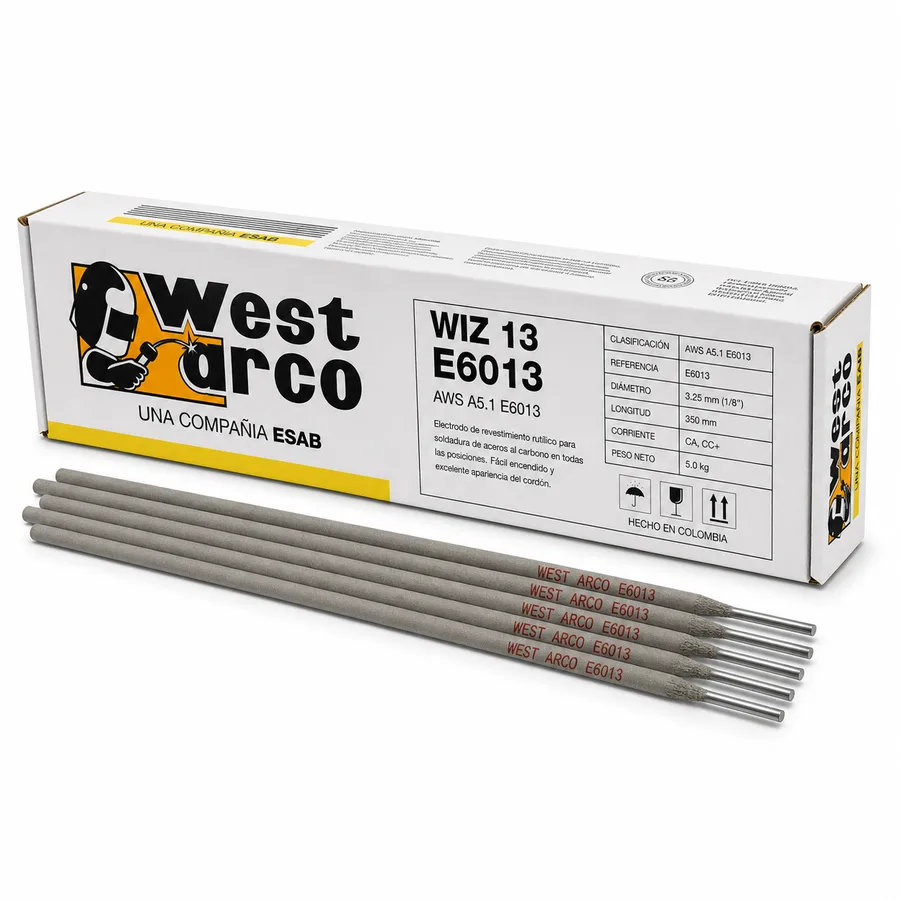 electrodo e6013 acero carbono west arco
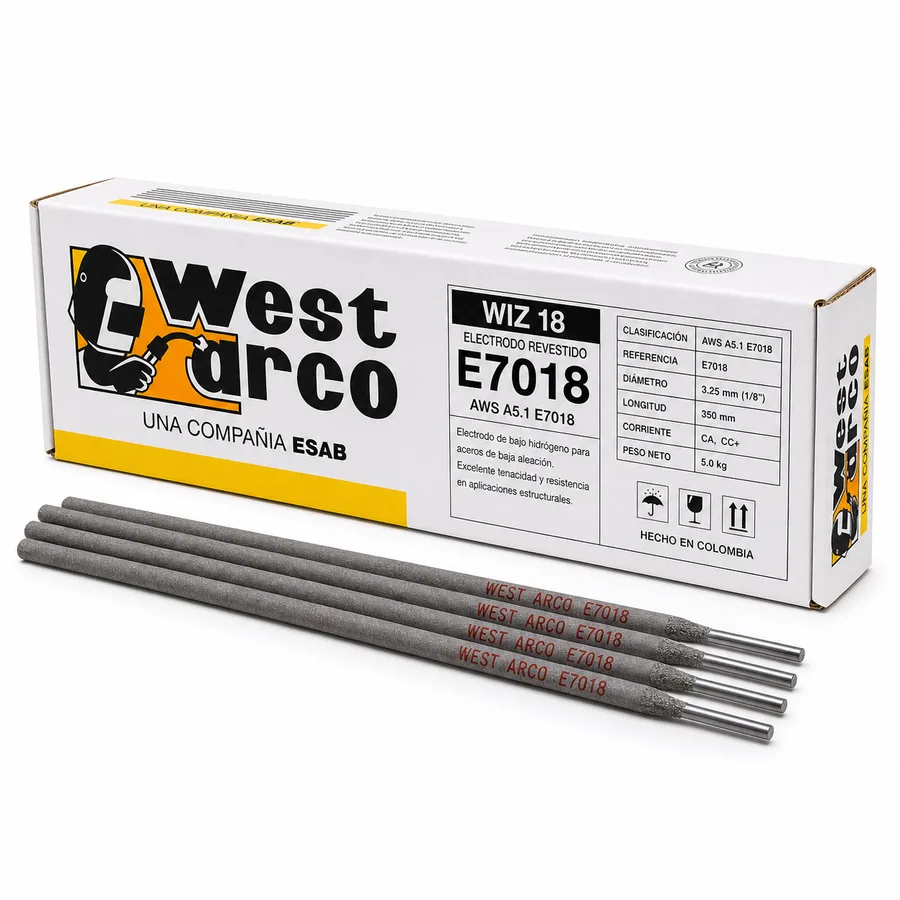 electrodo e7018 estructural west arco
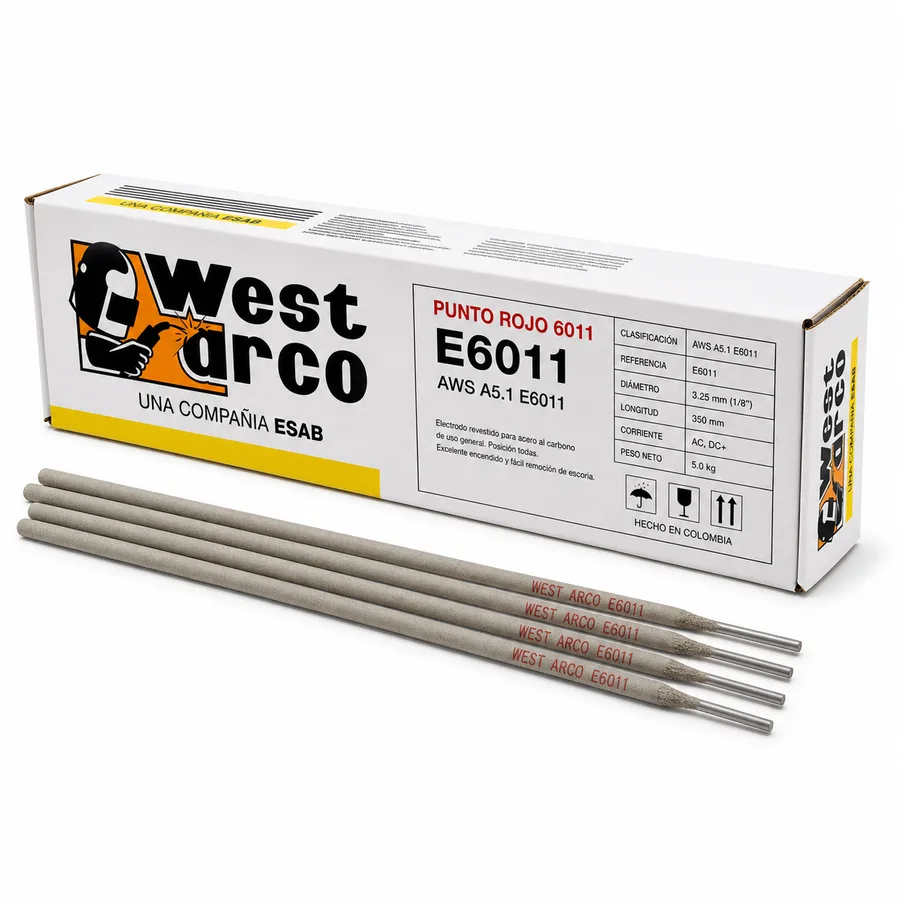 electrodo e6011 acero carbono west arco