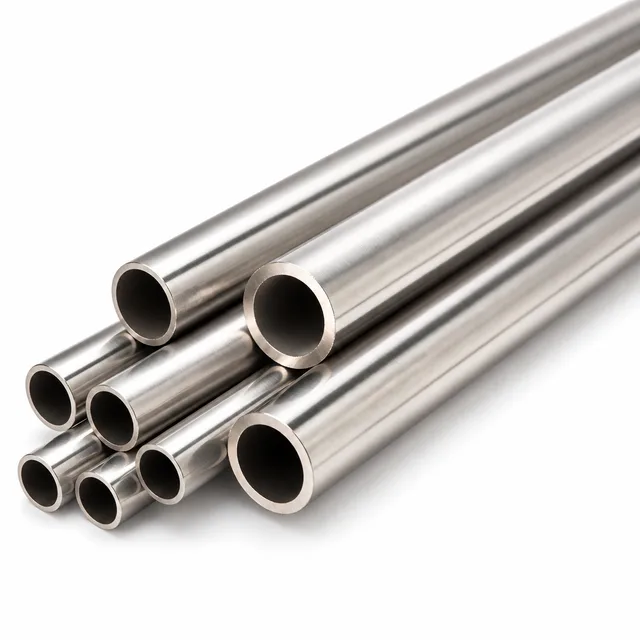
Stainless tubing is purchased by actual outside diameter, not by NPS. That is the idea that prevents most errors: 1/2 inch tubing must match compression fittings for 1/2 inch OD, while NPS 1/2 pipe belongs to another dimensional system. In instrumentation, pneumatics, gases and control lines, this difference determines whether the assembly seals.
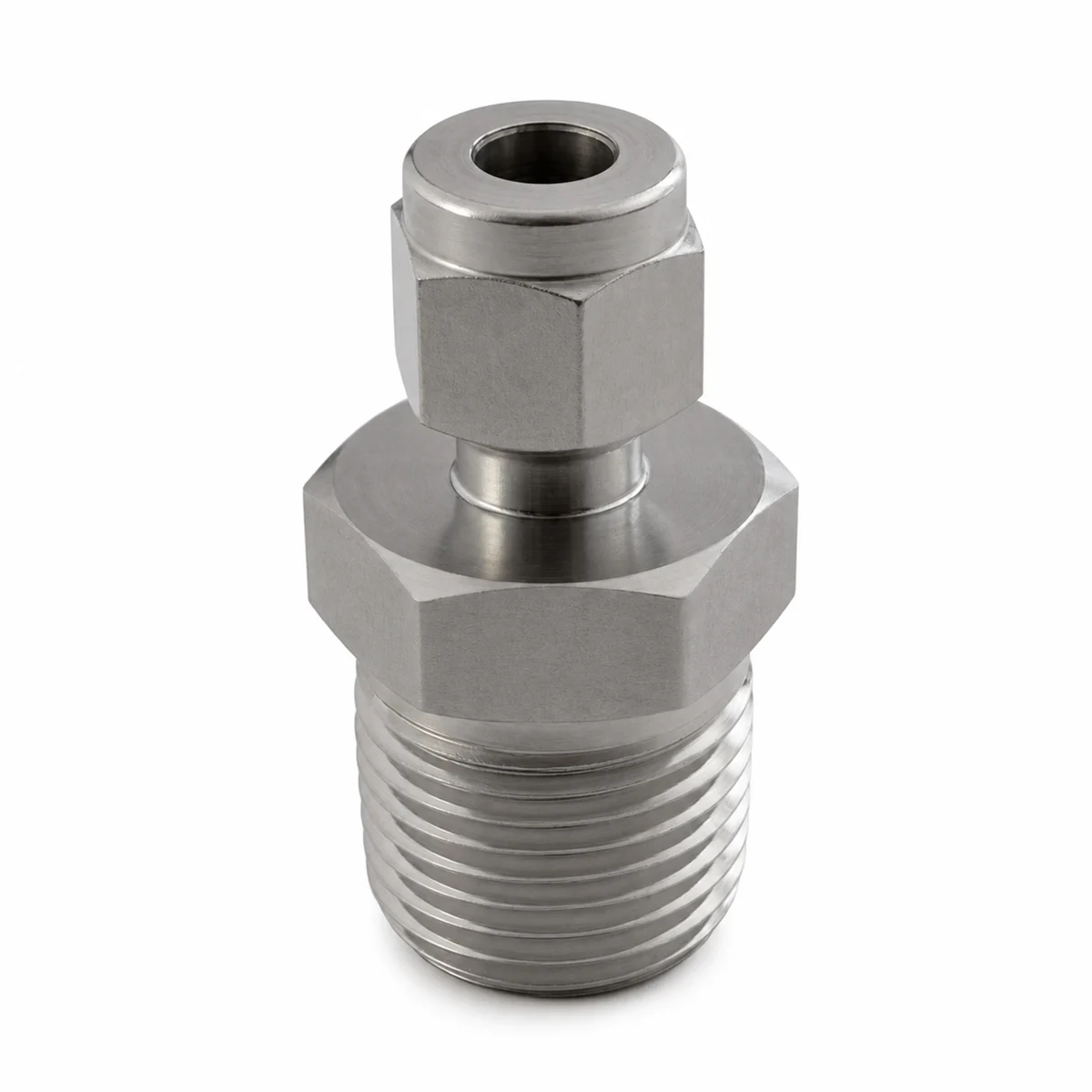
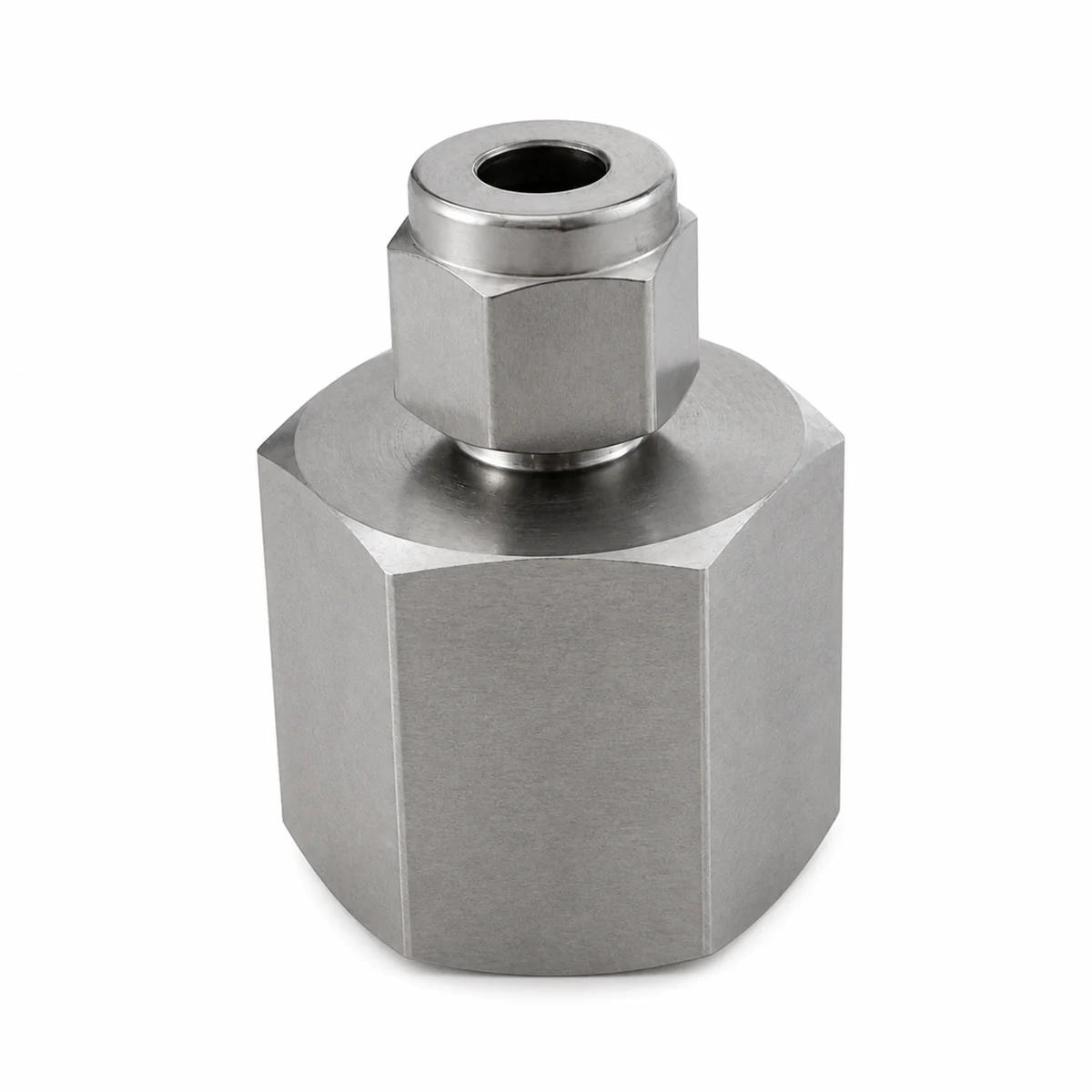
This guide consolidates the search “stainless steel tubing size table”. TECTUL offers stainless steel tubing and related fittings such as stainless male instrumentation fitting, stainless female instrumentation fitting, stainless instrumentation union and stainless ferrule set.
In fractional tubing, common instrumentation sizes run from 1/8 to 1 inch OD. OD is the dimension gripped by the fitting; wall thickness defines approximate inside diameter, rigidity, allowable pressure and bending ease. If the drawing only says “1/2 tubing”, information is missing: wall, alloy, standard and condition must be added.
| Nominal OD | Decimal OD | Indicative common walls | Typical use |
|---|---|---|---|
| 1/8 in | 0.125 in | 0.020 to 0.035 in | Signals, analyzers, low demand |
| 1/4 in | 0.250 in | 0.028 to 0.049 in | General instrumentation |
| 3/8 in | 0.375 in | 0.035 to 0.065 in | Air, gases, small lines |
| 1/2 in | 0.500 in | 0.035 to 0.083 in | Control and light process lines |
| 3/4 in | 0.750 in | 0.049 to 0.095 in | Higher flow or rigidity |
| 1 in | 1.000 in | 0.065 to 0.120 in | Main instrumentation lines |
Some suppliers express wall in decimal inches and others by gauge. For technical purchasing, decimal inch is clearer because it goes directly into calculations, pressure tables and fitting selection. Gauge can vary by system and material, so it must be confirmed against a manufacturer table or product sheet. Do not accept “18 gauge” as the only data if the assembly is critical.
Heavier wall increases rigidity and can increase allowable pressure, but it also makes bending harder and raises cost. Thinner wall allows compact routing, but reduces margin against pressure, vibration and mechanical damage. Selection should consider support, bend radius, temperature, fluid and line condition.
ASTM A269/A269M covers welded and seamless austenitic stainless steel tubing for general service. It is a common reference for instrumentation and low-to-medium demand conveyance when the fitting manufacturer permits it. ASTM A213/A213M covers seamless ferritic and austenitic tubes for boilers, superheaters and heat exchangers; it may appear when the application requires more specific thermal or manufacturing conditions.
The standard alone does not define working pressure. Alloy, OD, wall, tolerances, temperature, surface quality, joining method and design factor also matter. In code lines, ASME B31.3 or another piping code may impose additional criteria.
Tubing working pressure should not be copied from a generic table without checking conditions. Leading manufacturer catalogs calculate or publish ranges by OD, wall thickness, material, temperature and safety factor. A 316 stainless 1/4 inch tube with heavier wall can have a very different allowable pressure from a 304 stainless 1/2 inch tube with lighter wall. With the same wall, larger OD normally reduces relative pressure capability.
If the system handles gases, vibration, thermal cycling or pulsation, nominal pressure is not enough. Review support, clamp spacing, ferrule compatibility, internal cleanliness and leak testing. For hazardous gases or critical service, use the engineering procedure rather than a verbal selection.
A double-ferrule system compresses a front ferrule and a back ferrule onto the tubing OD. The seal depends on correct OD, suitable hardness and finish, full insertion and tightening according to the manufacturer instructions. Scratched, oval, overly hard or incompatible-wall tubing can leak even when the fitting is correct.
| Element | What to verify | Risk if omitted |
|---|---|---|
| OD | Exact match with fitting | No seal or ferrule damage |
| Wall | Compatible with pressure and bending | Collapse, leakage or excessive rigidity |
| Alloy | 304, 316 or required grade | Corrosion or incompatibility |
| Cut | Square and deburred | Ferrule damage and turbulence |
| Tightening | By manufacturer instructions | Under-tightening or over-tightening |
Tubing often fails less from static pressure than from poor installation. A bend radius that is too tight can ovalize the tube, thin the wall or mark the surface where the ferrule later works. Use a bender compatible with the OD and follow manufacturer recommended radii. If the route requires repeated bends, define at purchasing whether the tubing should be annealed and finished for bending.
Vibration requires supports. Long lines without clamps can fatigue near fittings, valves or rotating equipment. A poorly located support can also concentrate stress. In gases and pulsation, wall rigidity, support spacing and the mass of connected valves or instruments are part of selection. It is not enough for the fitting to seal during the initial test.
The cut should be square and clean. An internal burr can release particles, create turbulence or prevent full insertion into the fitting. An external burr can damage the ferrule. After cutting, deburr without contaminating the inside and keep ends capped if the line requires cleanliness. In instrumentation, small particles can affect valves, regulators and transmitters.
Cleanliness depends on service. Instrument air, oxygen, special gases or analytical samples may require conditions different from a water or oil line. If the line has a cleanliness requirement, state it in the order; do not expect to solve it later with informal purging. Initial tubing cleanliness and field handling must be consistent.
304 and 316 are common alloys, but they are not equivalent in every environment. 316 is often selected when chlorides or more aggressive corrosion are present, although it is not immune to every service. Compatibility must include internal fluid, external environment, temperature, cleaning and possible tool contamination. Using clamps or supports that create galvanic corrosion or iron contamination can reduce system life.
Tubing and fitting must also be compatible. Fitting manufacturers usually publish hardness limits, minimum wall thickness and approved materials. If tubing of unknown origin, ovality or out-of-range hardness is purchased, the double-ferrule seal may not behave as designed. For critical services, buy tubing and fittings with sufficient traceability.
When receiving tubing, verify OD, wall, alloy, surface condition, visible ovality, end cleanliness and marking. If the material arrives in coils, confirm there are no flattened areas; if it arrives in straight lengths, check dents and longitudinal scratches. A deep mark exactly where the ferrule will grip can become a leakage path. Keep ends protected until assembly.
Receiving inspection should also compare the tubing with the fitting family that will be used. Metric and fractional parts can look similar in the store room, but they are not interchangeable. Label opened bundles, avoid mixing cut lengths from different lots and keep certificates attached to the project when traceability is required.
To choose tubing sizes, start with the fitting and OD, then define wall, alloy and standard. Do not mix NPS with actual OD. If the line works under pressure, request the manufacturer table for that exact combination and validate temperature, fluid and support. TECTUL can help match stainless tubing with instrumentation fittings and available ferrule sets.