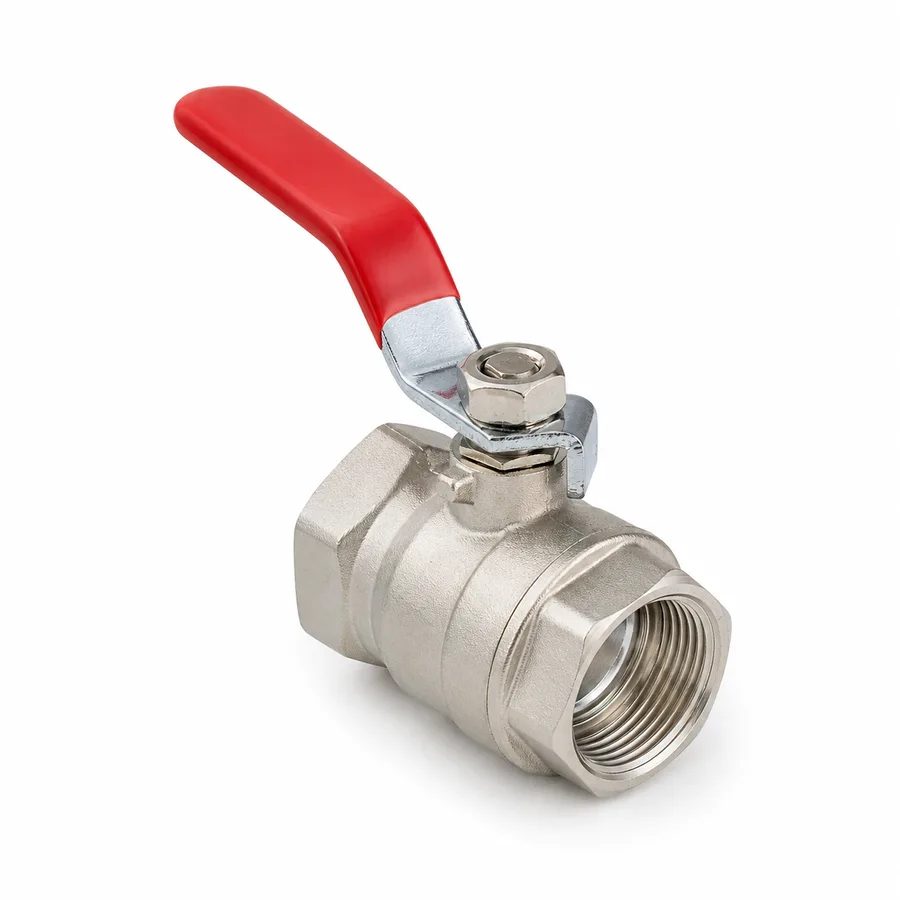
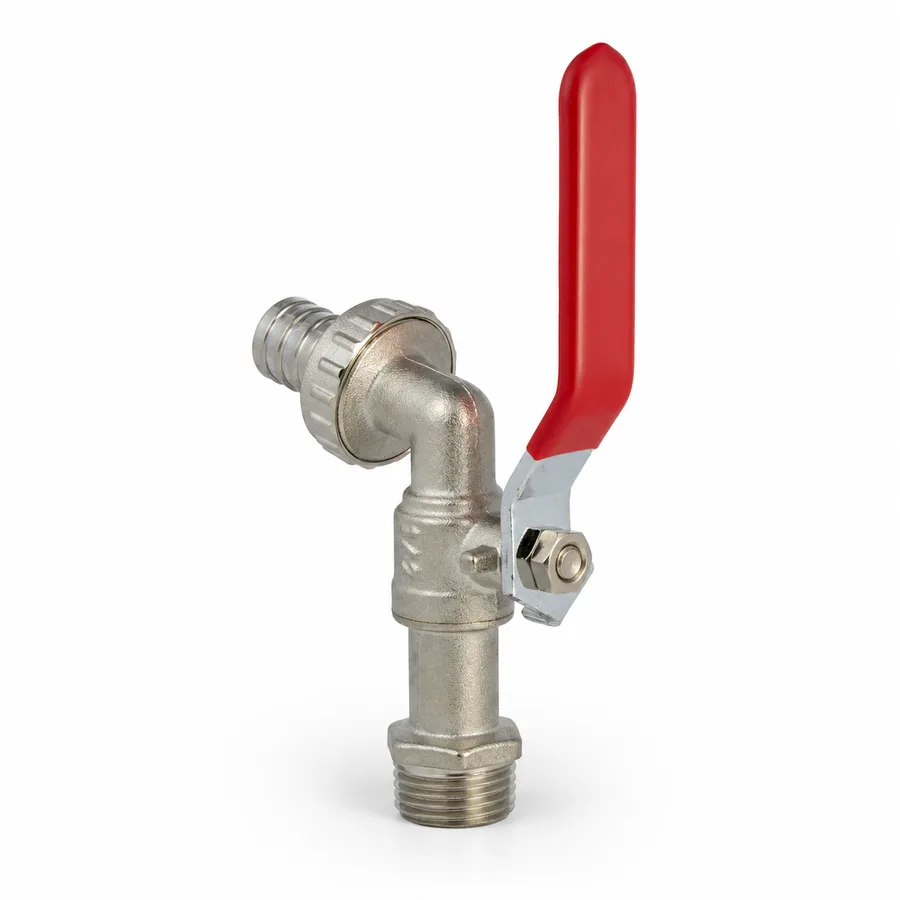
600 WOG on a valve means a nominal pressure for water, oil and gas at ambient or cold temperature, according to the manufacturer's marking practice; it does not mean ASME Class 600 and it does not automatically authorize steam service. The real allowable pressure always depends on material, seat, temperature, design standard and manufacturer data sheet.
This guide explains how to read the marking without inventing equivalencies. At TECTUL, pressure may appear in the product name or may need confirmation by data sheet on valves such as the Napoli bronze ball valve, the Grinaca bronze terminal ball valve, the Napoli terminal ball valve, the yellow-handle ball valve and the mini female-female ball valve.
WOG is an industrial abbreviation for water, oil, gas. In marking practice, it corresponds to a pressure for water, oil or gas at ambient temperature, not to a complete pressure-temperature curve. ANSI/MSS SP-25-2018, with 2023 errata, recognizes commonly used symbols such as WOG, WO, WSP, SWP, CWP and others within the marking system. That recognition helps read the body, but it does not turn WOG into a universal design standard.
In purchasing terms, WOG is a clue for cold or ambient capability. If the valve will be used with cold water, air or compatible oil within the manufacturer's range, it can guide initial selection. If the valve will operate hot, with steam, regulated fuel gas, aggressive chemical, vacuum, thermal cycling or pulsating pressure, the WOG marking alone is insufficient. A technical data sheet and applicable standard must be requested.
WOG does not mean ASME class. A 600 WOG marking is not equivalent to ASME B16.34-2025 Class 600. ASME class is a pressure-temperature designation associated with materials, groups and tables; it is not one fixed pressure. Also, a Class 150, 300 or 600 valve can have different limits depending on material and temperature, and a commercial WOG valve may not be designed under ASME B16.34.
WOG also does not mean steam service. Steam combines temperature, stored energy, condensate, erosion and seat requirements that are not solved by a marking for water, oil and gas at ambient temperature. If steam is required, look for WSP or SWP marking, manufacturer steam data and seat compatibility. If that information does not exist, do not use the valve in steam.
| Marking | Technical reading | Should not be assumed | What to request |
|---|---|---|---|
| 600 WOG | Pressure for water, oil and gas at ambient/cold condition | ASME Class 600 or steam | Data sheet with pressure-temperature and seat |
| CWP | Cold working pressure | Hot use without derating | Manufacturer temperature range |
| WSP/SWP | Working steam pressure or steam working pressure | General chemical compatibility | Maximum steam pressure and temperature |
| Class 150/300 | Class designation under applicable standard | One fixed pressure for every material | Material, group and pressure-temperature table |
| 1000 psi | Commercial pressure declared by product or manufacturer | Automatic ASME equivalence | Standard, temperature and test |
CWP means cold working pressure. ANSI/MSS SP-25-2018 defines CWP as the maximum pressure rating allowed under normal ambient temperature conditions, usually understood as -20 °F to 100 °F (-29 °C to 38 °C), and notes that certain codes and standards use a different range, so the exact limit comes from the applicable code, standard or manufacturer technical data. In that same note, SP-25 groups WOG, WO, OWG, GLP, WWP and W as symbols that correspond to CWP; that is why 600 WOG reads as a cold pressure for compatible fluids. Temperature is therefore the first filter: as temperature increases, the seat, packing and body may lose margin.
The critical point is that printed pressure does not travel alone. A brass valve with PTFE seats, a bronze valve with another seat and a carbon steel valve do not respond to heat in the same way. Even if all display a cold pressure, their pressure-temperature curves may differ. If the data sheet does not publish a curve, do not extrapolate. In industrial purchasing, operating pressure must be compared against the allowable value at actual temperature.
WSP and SWP are used for steam working pressure. MSS indicates that these terms are interchangeable in marking practice. The difference from WOG is service: WSP/SWP refers to steam and therefore implies maximum allowable pressure and temperature for that condition. Not every manufacturer marks WSP/SWP on ball valves; when the body shows only the cold pressure, the steam limit can be confirmed only from the manufacturer's data sheet.
If the buyer sees 600 WOG and 150 WSP on the same valve, those are two different limits, not a conversion. The steam limit is often lower because of temperature and seat behavior. If only 600 WOG is visible and no WSP/SWP or steam data sheet exists, the prudent selection is not to use it in steam. For industrial steam, the order should state saturated or superheated steam, pressure, temperature, design standard, seat and test.
ASME B16.34-2025 establishes pressure-temperature classes for valves within its scope. Class 150 or Class 300 labels are not interchangeable with WOG because they belong to a standards system with materials and tables. A Class 150 flanged valve can have one allowable pressure at ambient temperature and a lower one at elevated temperature; those values should not be invented in a blog or copied across materials.
API Standard 608:2025 relies on classes and requirements for metal ball valves in industrial service. When a TECTUL data sheet reports ANSI 150 on a flanged ball valve, that guides the commercial flange pattern and class, but final validation requires confirming flange standard, valve standard, body material, seat and temperature. WOG is read as cold product pressure; ASME class is read as a standardized pressure-temperature designation.
Start with manufacturer or brand, because without traceability there is no serious way to request data. Then read body material if marked, nominal size, flow direction if present, pressure or class, and any special limit. On small bronze or brass valves, 600 WOG, CWP, WSP, size and brand may appear. On industrial steel valves, class, material, heat number, standard or trim may appear depending on construction and size.
Missing marking does not always mean noncompliance, because standards allow omissions due to size or shape, but it does mean the buyer should request documentation. If the body says 600 WOG and the data sheet gives another value at a different temperature, the data sheet and applicable standard govern, not a quick interpretation. For replacement, take clear photos of both sides of the body, lever, nameplate and connection.
For receiving inspection, keep the marking record with the purchase file. A photo of the body mark, the quoted data sheet and the operating condition should agree before installation. If the replacement valve has the same thread and handle but different marking, do not treat it as automatically equivalent. Pressure vocabulary is part of traceability, and traceability matters most when the system later changes temperature, fluid or duty cycle.
Use WOG marking as an initial cold reference, not as universal authorization. For compatible water, oil or gas at ambient temperature, confirm that working pressure, material and seat match the manufacturer's data sheet. For steam, elevated temperature or critical service, require WSP/SWP or pressure-temperature curve, design standard and test. At TECTUL, send a photo of the marking, fluid, pressure, temperature, size, connection and whether the valve replaces an existing one; this avoids buying a valve that looks equivalent but is not.