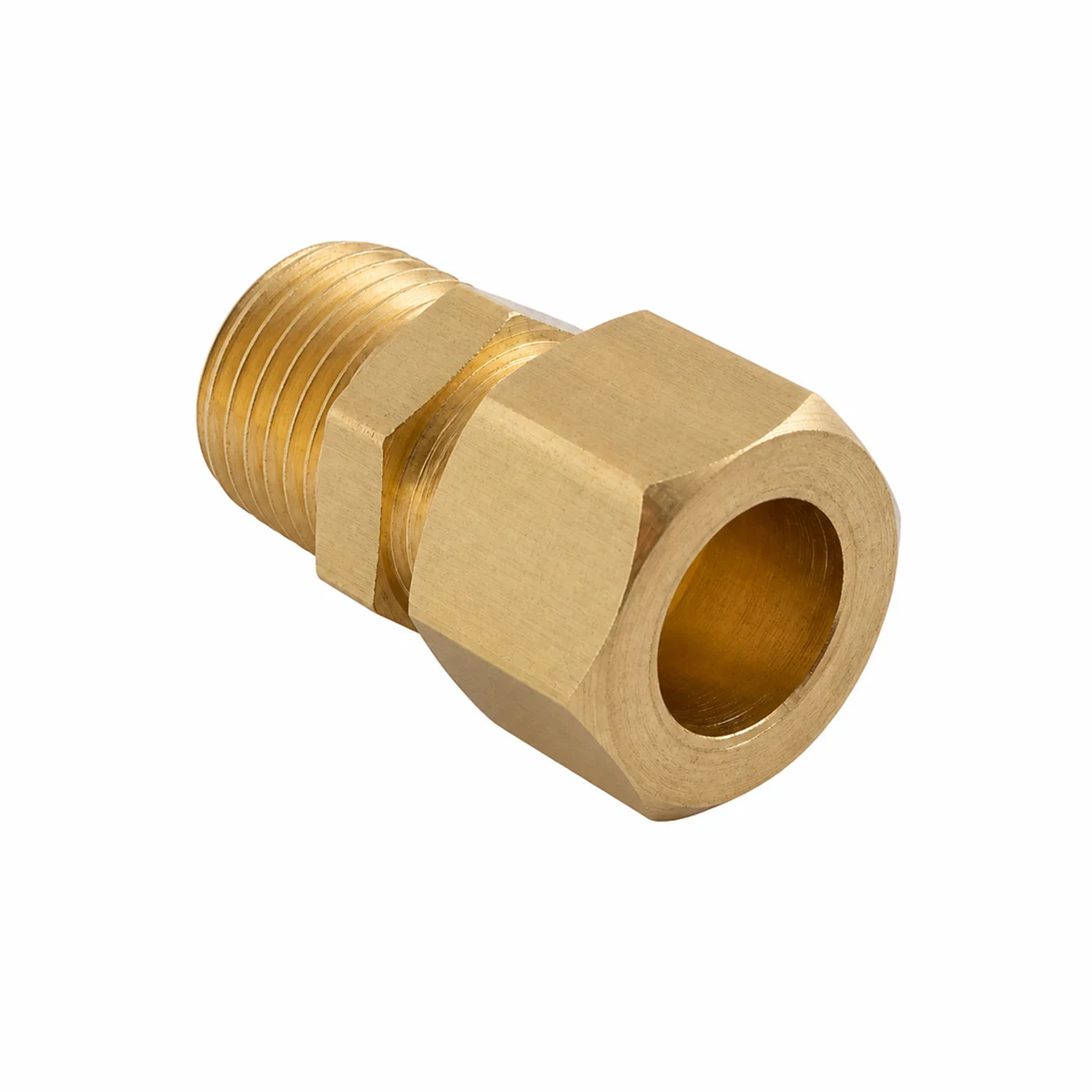
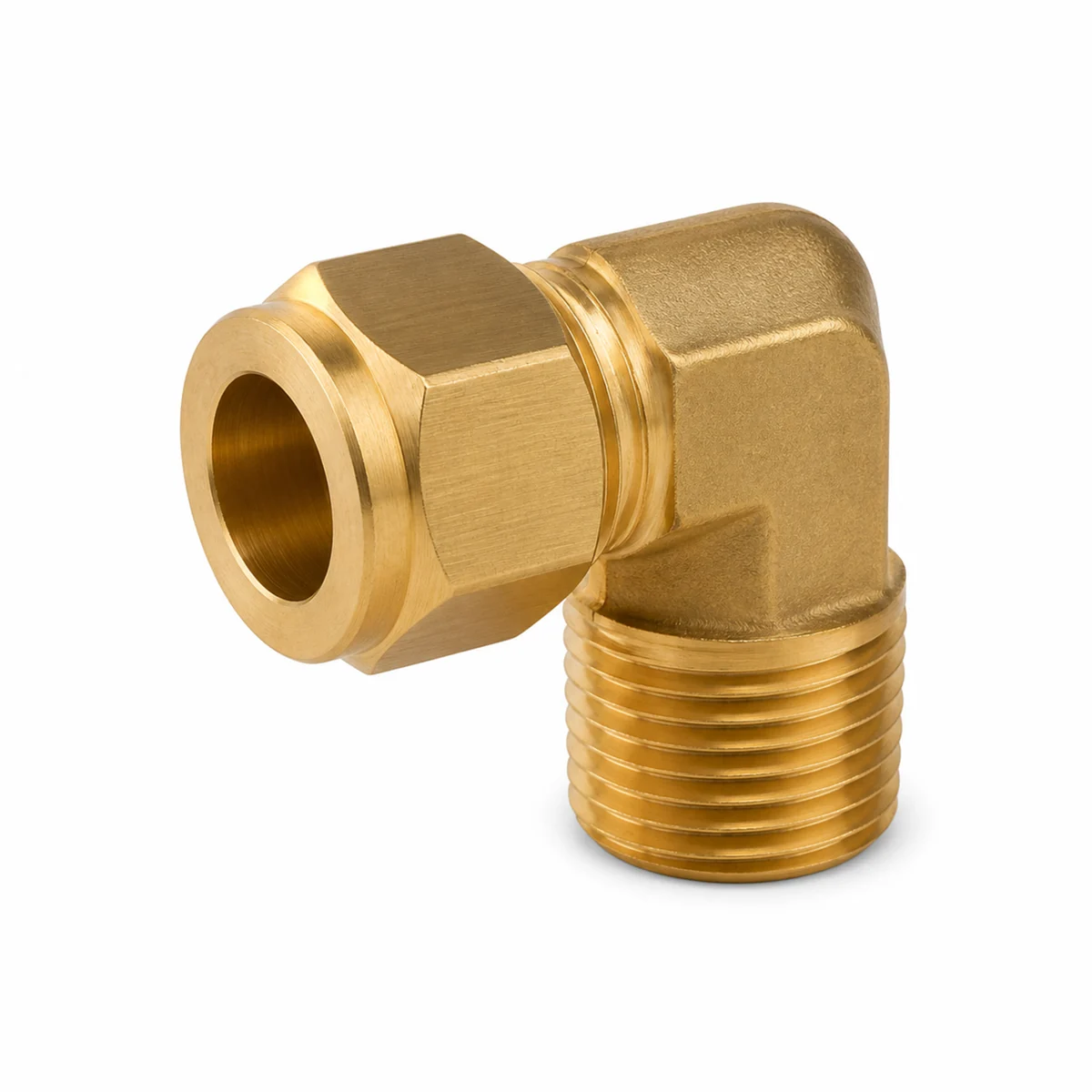
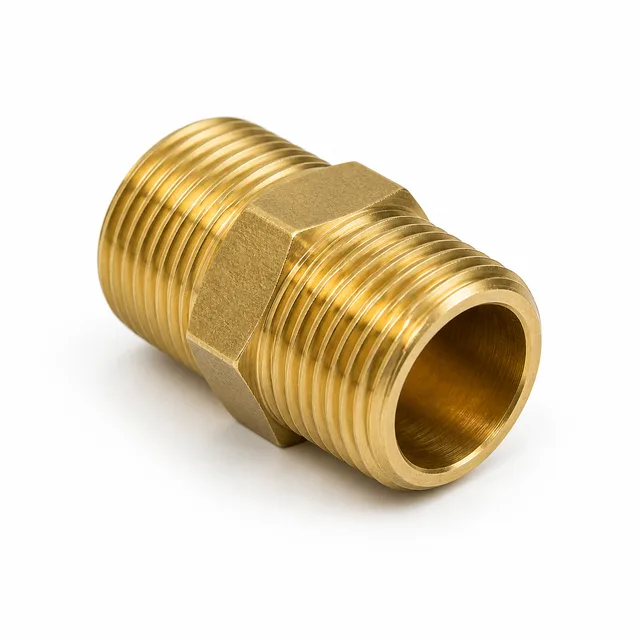
NPT thread is found on valves, fittings, nipples, instruments, nozzles and threaded pipe accessories. The buyer usually wants a direct answer: will a 1/2, 1/4 or 1 inch thread fit, seal and match the installed equipment? The technical answer is more precise: NPT is a tapered pipe thread standardized by ASME B1.20.1, with a 1:16 taper, 60 degree thread form and nominal sizes that are not the measured outside diameter.
For industrial purchasing, correct thread selection prevents leaks, damaged valve bodies, crossed threads and downtime. TECTUL can supply threaded fittings such as male OD by NPT fitting, OD by NPT elbow, bronze hex nipple, galvanized threaded plug and galvanized threaded union, but selection must confirm standard, nominal size, material and service fluid.
NPT means National Pipe Taper. It is a tapered pipe thread used widely in North American systems and in many imported industrial components. Tapered is the key word: diameter changes along the thread length. The standardized taper is 1:16, meaning the diameter changes one unit for every sixteen units of length. As male and female threads tighten, their flanks wedge and create mechanical interference.
Interference does not automatically make the joint leak-tight. General-purpose NPT under ASME B1.20.1 normally requires a compatible sealing compound, PTFE tape or anaerobic sealant. A practical seal comes from correct thread form, engagement, reasonable tightening torque and sealant matched to the fluid. More torque is not always better: it can crack bronze, PVC or malleable iron fittings, damage instruments or leave the fitting misoriented.
| Nominal NPT size | Threads per inch | Typical industrial use | Purchasing note |
|---|---|---|---|
| 1/8 | 27 | Instrumentation, small gauges, drains | Do not confuse with measured outside diameter |
| 1/4 | 18 | Air, lubrication, sensors, small fittings | Very common in pneumatics and instrumentation |
| 3/8 | 18 | Auxiliary connections and low-flow lines | Can be visually confused with 1/4 or 1/2 |
| 1/2 | 14 | Water, air, valves and general accessories | One of the most frequent maintenance sizes |
| 3/4 | 14 | Water, air and compatible fuel services | Check material and accessory rating |
| 1 | 11 1/2 | Threaded pipe, valves and nipples | Sealing requires clean preparation and alignment |
| 1 1/4 to 2 | 11 1/2 | Medium threaded networks | Higher torque; avoid forcing fragile bodies |
NPTF is known as Dryseal and is defined by ASME B1.20.3. Its crest and root geometry is adjusted to reduce the spiral leakage path and create metal-to-metal sealing under controlled conditions. That does not mean any NPTF joint can be assembled casually or that NPT and NPTF are universally interchangeable. In real maintenance, many manufacturers still specify compatible sealant, especially with vibration, hazardous fluids or thermal cycling.
The practical purchasing rule is to respect the equipment thread. If the datasheet says NPT, buy NPT. If it says NPTF, confirm that both fitting and port belong to the same family or that the manufacturer permits the combination. Do not buy by appearance: two threads may start together and fail at final tightening because of tolerance, root form or thread depth.
BSPT belongs to the ISO 7 family and is also tapered, but it uses a 55 degree Whitworth form and a different dimensional series. BSPP belongs to ISO 228; it is parallel and does not seal by thread interference, but by gasket, washer, seat or front seal depending on design. Even if some sizes appear to engage for a few turns, NPT, BSPT and BSPP should not be treated as compatible. Mixing them can damage the female port, create slow leakage or leave an instrument apparently tight but not reliably sealed.
A frequent error is installing a gauge, valve or fitting from imported equipment without identifying the standard. If a part comes from European, Asian or hydraulic equipment, check whether markings show G, R, Rp, NPT or NPTF. G usually indicates BSPP; R usually indicates tapered BSPT. NPT markings often include MNPT and FNPT for male and female threads.
PTFE tape is common because it lubricates and helps fill small gaps. It should be wrapped in the tightening direction and kept off the first thread to prevent fragments entering valves, nozzles or instruments. For oxygen, gas, food, steam, chemicals or elevated temperature, do not assume any tape is acceptable: the sealant must match fluid, pressure, temperature and material.
Anaerobic sealants cure without air and in contact with metal. They work well on many metallic threaded joints, but may behave differently on plastics or passive metals if the datasheet calls for an activator. Paste sealants are useful on larger sizes and maintenance work when compatible. On PVC and other polymers, excess sealant or torque can induce cracking; follow the fitting manufacturer's instructions.
The first mistake is asking for “half inch” without stating NPT male, NPT female, BSP, metric or hose size. The second is mixing incompatible materials: carbon steel, galvanized steel, stainless steel, bronze, aluminum and PVC behave differently in corrosion, torque and fluid compatibility. The third is assuming pipe schedule defines the thread; NPT is selected by nominal thread size, while schedule defines pipe wall thickness.
Reusing heavily marked threaded fittings is also risky. A thread that is dented, ovalized or contaminated with hardened sealant may not seal even when the standard is correct. On lines with vibration, temperature or pulsating pressure, review sealant, support and whether flanged, welded or instrumentation connections would be better.
Before assembling an NPT connection, clean male and female threads, remove old sealant and check for dents, burrs or deformation. A new thread should engage by hand for a few turns before tools are needed; if it binds immediately, the cause may be cross-threading, wrong standard or damage. On instruments, do not use the gauge or transmitter body as a lever. Use the wrench flats and support the line so vibration does not load the port.
After assembly, the test should match system risk. Cold-water utility service may only require controlled visual inspection; gas, steam, chemicals or compressed air require a defined test procedure, test medium and acceptance criteria from engineering. A small threaded leak is not always fixed by tightening. Often the right correction is disassembly, cleaning and reassembly with fresh compatible sealant.
When buying NPT components from TECTUL, state nominal size, male or female configuration, material, fluid, working pressure, temperature, whether NPT or NPTF is required, and whether the connection goes to instrumentation, pipe or hose. Do not approve BSPT or BSPP substitutions without explicit technical validation. A correct threaded joint starts smoothly, tightens progressively, reaches orientation without abusive torque and seals with a compatible product.
To close a technical purchase, record service condition, requested standard, quoted reference and any installation restriction. That traceability prevents substitutions by appearance when shifts, suppliers or maintenance urgency change. At receiving, compare physical marking with the purchase order and keep the datasheet when the line is critical for safety, production or compliance.
If the product is installed in an existing network, document what was removed, what was installed and what test was performed. A photo of the marking, a pressure note or a material confirmation often saves hours during future shutdowns. At TECTUL, this information supports technically sound equivalents and rejects changes that only appear compatible.