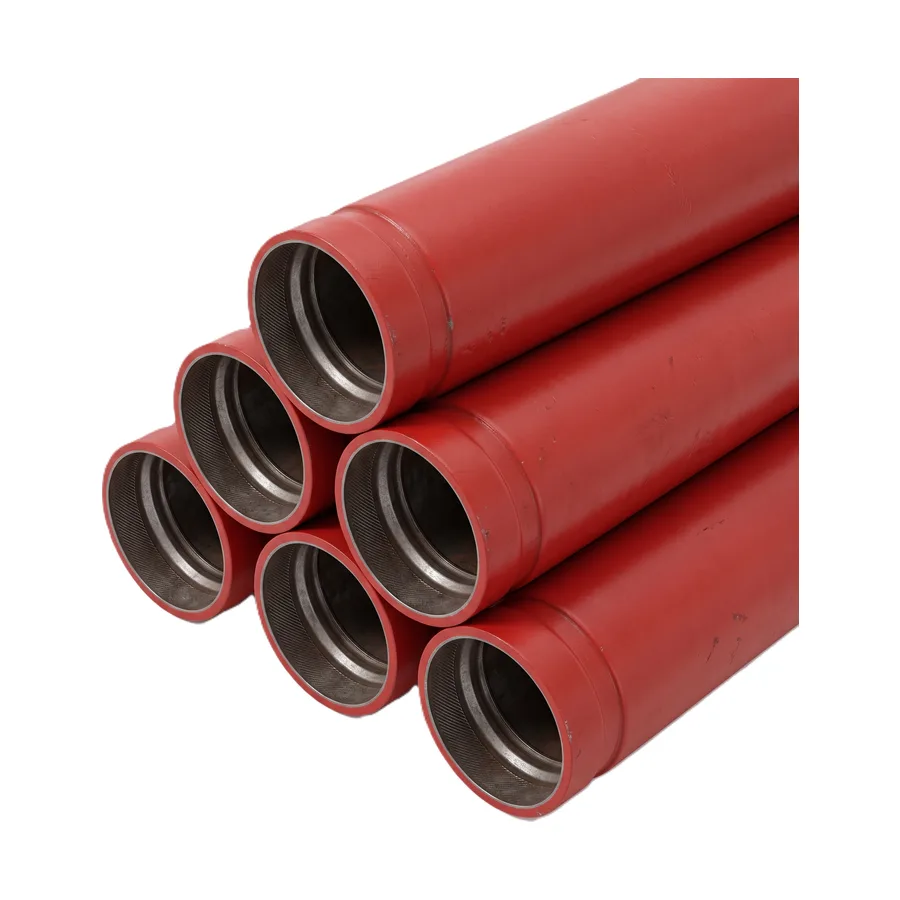
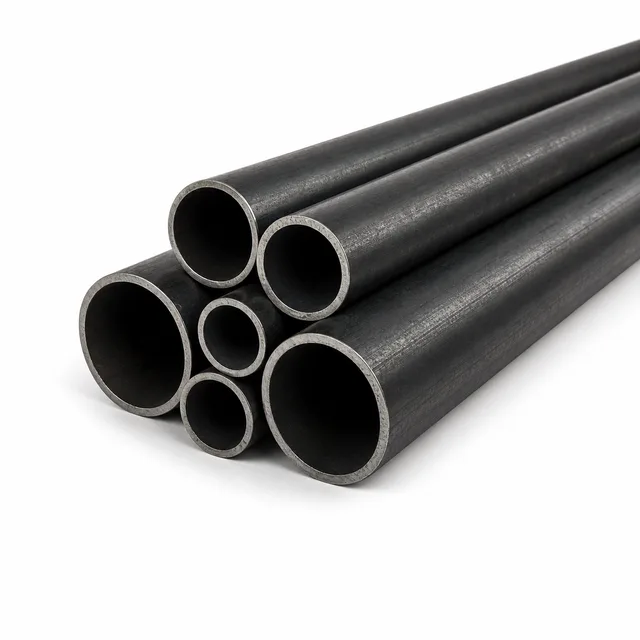
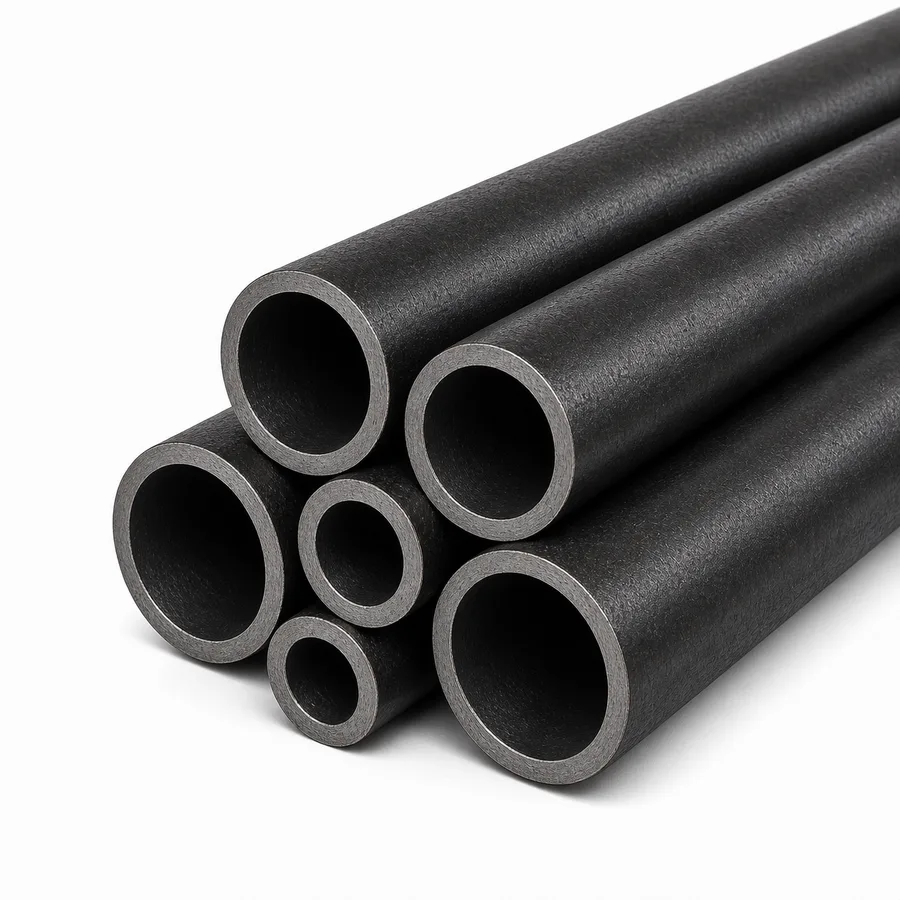
SCH 10, SCH 40, SCH 80 and SCH 160 are not fixed pressure ratings. They are wall thickness designations for standardized pipe. The same schedule can handle very different pressures depending on diameter, material, temperature, corrosion allowance, joint efficiency, joining method and design code. A commercial table saying “SCH 40 handles this many PSI” without service conditions is not enough for an industrial purchase.
For buyers, the correct approach is to separate dimensions from strength. ASME B36.10M defines dimensions for welded and seamless wrought steel pipe, including carbon steel; ASME B36.19M covers stainless steel pipe. Products such as carbon steel SCH10 pipe, carbon steel SCH40 pipe, carbon steel SCH80 pipe and carbon steel SCH160 pipe must be selected against real operating conditions.
Schedule, abbreviated SCH, identifies a wall thickness series associated with a nominal pipe size. For the same NPS, outside diameter remains fixed while wall thickness increases as schedule increases. Higher wall thickness reduces internal diameter, increases weight per length and changes mechanical capacity. Schedule alone does not define steel grade, manufacturing process or allowable pressure. In stainless steel pipe, the letter S appears frequently, such as 10S or 40S, because ASME B36.19M uses stainless dimensional series.
| Schedule | Technical reading | Effect on the line | Typical qualitative use |
|---|---|---|---|
| SCH 10 | Thin wall compared with SCH 40 and SCH 80 | Lower weight, larger relative internal diameter, lower mechanical margin | Low mechanical demand when design permits |
| SCH 40 | Very common intermediate series | Balance of availability, stiffness and installation practicality | General service when calculated |
| SCH 80 | Heavier than SCH 40 | More weight, smaller internal diameter and greater robustness | Threading or higher mechanical exposure |
| SCH 160 | Heavy wall | High weight, reduced internal diameter and more demanding installation | Severe services defined by engineering |
Allowable pipe pressure is determined by design rules, not by the SCH label alone. In process piping codes such as ASME B31.3, calculations consider allowable material stress at temperature, effective wall thickness, outside diameter, code coefficients and applicable factors. Nominal wall is also reduced by manufacturing tolerance, corrosion allowance, threading or grooving when relevant. Two SCH 40 lines can behave very differently if material, temperature, joint or tolerance changes.
In NPS pipe, nominal size does not necessarily match outside diameter in smaller sizes. Standardized outside diameter enables compatibility with fittings, flanges, supports and clamps. Internal diameter results from subtracting twice the wall thickness. Moving from SCH 10 to SCH 80 in the same NPS may keep external fit-up similar while changing flow area and pressure loss.
ASTM A53 is used for black and galvanized welded or seamless pipe in common mechanical and pressure applications. ASTM A106 covers seamless carbon steel pipe for high-temperature service. ASTM A312 covers austenitic stainless steel pipe. System pressure capability also depends on the joint: threaded, welded, grooved or flanged. Robust pipe can be limited by lower-capability flanges, gaskets, bolts, grooves or welds.
Use SCH 40 as a starting discussion point for general service only when design does not require something else. Consider SCH 10 when weight and cost matter and engineering confirms low demand. Consider SCH 80 for threading, mechanical abuse or validated extra margin. Reserve SCH 160 for severe services defined by calculation. At TECTUL, the strongest purchase request provides material, diameter, temperature, fluid and joint type so the complete system can be selected.
In a technical purchase, the wall that matters for pressure is not only the nominal wall in the dimensional table. Design must consider manufacturing tolerance, future corrosion, erosion, threading, grooving, machining and any reduction allowed by the applicable code. Two pipes with the same schedule can therefore have different margins if one carries clean water and another carries condensate, chemicals or solids-bearing fluid. When service is corrosive, increasing schedule may add life, but it does not replace correct material selection or coating control.
Corrosion allowance is defined by engineering according to fluid, temperature, velocity, plant history and design life. Thermally insulated lines also require corrosion-under-insulation review. Buried lines involve external protection, coating, soil moisture and stray currents. Compressed-air networks can corrode internally when condensate is not controlled. Schedule is only one visible part of the problem.
Moving from SCH 40 to SCH 80 may look like a direct improvement, but it reduces internal diameter and increases weight. In a short line this may be irrelevant; in a long network it can increase friction loss, change velocity, affect pumps or alter filling and draining times. In steam, internal diameter influences velocity, condensate carryover and noise. In compressed air, it influences pressure drop and energy efficiency. Substitutions must therefore review strength and hydraulics together.
Installation also changes. Heavier pipe requires suitable supports, lifting and anchors. Threaded joints require proper tooling and technique; welded joints require procedure, bevel and control. Fittings must match the same service class. Buying SCH 160 pipe and connecting it to weak fittings does not increase actual system capability. The weakest component limits the assembly.
Test pressure should not be confused with continuous operating pressure. Many projects test a line under controlled conditions to verify integrity, but that does not mean the pipe can operate indefinitely at that pressure. Testing depends on code, test fluid, temperature, fitting limits and personnel safety. Pumps, fast valve closure and thermal changes can also create transients above normal operation. If those events are foreseeable, they must be part of the design basis.
It is also useful to separate design pressure, maximum operating pressure, relief setting and test pressure. In purchasing, those words are not interchangeable. A supplier may deliver dimensionally correct pipe, but if the request does not state the design scenario, risk remains hidden until installation. For replacements, line history matters: previous leaks, measured corrosion, vibration, surge and fluid changes say more than a schedule written on an old tag.
Engineering review is required for steam, fuel gas, high-energy compressed air, hazardous chemicals, hot fluids, cyclic pressure, production impact or personnel risk. It also applies when changing material, reducing schedule, changing joining method or substituting fittings. In those cases, purchasing should request datasheets, certificates and traceability, but technical approval must confirm that the complete system complies. Schedule helps organize language; it does not replace design responsibility.
A practical purchasing rule is to avoid approving equivalences from schedule alone. If a quote changes seamless to welded, carbon steel to stainless, threaded to grooved, or SCH 80 to SCH 40, the change must be visible and approved. The commercial description should never hide a technical deviation. This is especially important when a shutdown window is short and installers discover incompatibilities in the field.
For export, maintenance and procurement teams, this distinction keeps quotes comparable. A complete line item should not hide substitutions in small notes; it should expose material standard, schedule, end preparation, certificates and any deviation from the requested basis before purchase approval.