The correct flange is not selected because its shape looks the same, but by service, pressure, temperature, material, sealing face, dimensional standard and method of joining to the pipe. Verdict: for critical process piping use welding neck when pressure, temperature, cycles or loads are present; use slip-on for less severe general service; use blind flanges to close ends; use threaded flanges only where welding is not viable and service allows it; use socket weld in small high-integrity sizes; and use lap joint when frequent disassembly or alignment with a stub end is required.
At TECTUL, relate this guide to the 150 lb carbon steel slip-on flange, the 150 lb welding neck flange, the 150 lb blind flange, the 150 lb threaded flange and the 150 lb SCH40 socket weld flange. The specification must include type, class, face, material, pipe schedule and gasket.
ASME B16.5 covers pipe flanges and flanged fittings from NPS 1/2 through NPS 24. Common classes are 150, 300, 400, 600, 900, 1500 and 2500. The class is not a fixed pressure in psi; it is a pressure-temperature family that depends on material. ASME B16.47 covers larger diameters, from NPS 26 through NPS 60. For the buyer, this means a 150 flange without material, temperature and standard does not fully define capacity.
The most common faces are RF, FF and RTJ. RF, raised face, uses a raised surface to concentrate gasket load. FF, flat face, is frequently used with cast iron flanges or equipment that cannot tolerate concentrated stress. RTJ, ring type joint, uses a metallic ring in a groove and is reserved for compatible high-pressure and severe services. Mixing faces without checking gasket and equipment can break a flange or create leakage.
| Type | Recommended use | Practical threshold | Do not use when |
|---|---|---|---|
| Slip-on | General service and economical installation | Lower classes and moderate loads | Severe cycles or high integrity |
| Welding neck | Critical process, pressure, temperature, fatigue | Prefer from Class 300 or cyclic service | Only low initial cost matters |
| Blind | Closing ends, nozzles and tests | Class and face must match | Flow or drain is required without another fitting |
| Threaded | Relative low pressure, no welding, small sizes | Avoid in vibration and thermal cycles | Critical service or unacceptable leakage |
| Socket weld | Small sizes with welded joint | Common in small NPS process lines | Uncontrolled crevice corrosion service |
| Lap joint | Frequent disassembly and stub-end alignment | Useful in stainless systems with economical backing | High loads without design review |
The slip-on flange slides over the pipe and is welded with inside and outside fillet welds. It is popular because of cost, availability and installation ease. Its weakness is lower structural continuity compared with a welding neck flange, possible corrosion in overlap zones and sensitivity to poor welding. It works well in water, air, general services and lines where external loads are moderate.
The welding neck flange has a tapered hub and is joined to the pipe with a butt weld. The transition reduces stress concentration and allows radiography or volumetric examination when the code requires it. It is the strong option for pressure, temperature, thermal cycles, vibration, hazardous fluids and process piping under integrity criteria. It costs more and requires better preparation, but reduces risk where leakage is not acceptable.
The blind flange closes a line, nozzle or equipment connection. It must be selected with the same compatible class, face and material as the system. In hydrostatic tests, future isolation or expansions, a properly specified blind flange simplifies maintenance. It should not be improvised with plate without calculation when pressure exists: bolts, gasket and thickness are part of the design.
The threaded flange avoids welding and can be useful where hot work is not allowed or in small sizes with moderate service. Its limits are thread leakage, vibration, fatigue and temperature. The socket weld flange receives the pipe in a socket and is fillet welded. It is compact and strong for small sizes, but leaves an internal crevice that may be a problem in corrosion, sanitary cleaning or deposit-forming services.
The lap joint flange works with a stub end and a loose backing flange that rotates. It allows easy bolt alignment and can reduce cost when the fluid requires a stainless stub end but the backing flange can be another material compatible with the design. It is useful in frequent disassembly, but loads, galvanic corrosion and correct stub-end availability must be reviewed.
ASTM A105/A105M is a common specification for carbon steel forgings for piping applications. ASTM A182/A182M covers forged or rolled alloy and stainless steel products for flanges, forged fittings, valves and high-temperature parts. Saying steel is not enough: the order must include grade, class, face and, when applicable, material certificate. Low temperature, corrosion or special service may require other materials and tests.
The flange does not seal by itself. Sealing depends on face, gasket, studs, lubrication, alignment and tightening sequence. ASME B16.20 covers metallic gaskets such as spiral-wound and RTJ; ASME B16.21 covers nonmetallic flat gaskets. A soft gasket on RF may work in low-severity water, but steam or chemical service may require spiral-wound or specific material. The stud must match class, temperature and procedure; a generic bolt can fail even when the flange is correct.
At receiving, compare flange marking with the order: NPS, class, material, face, standard and schedule when applicable. Check that the RF face is not dented, the RTJ groove is not marked and bolt holes match the required pattern. If the project requires certificates, keep the link between heat, gasket, studs and installed location. A flange leak is rarely the fault of one component; it is often the sum of damaged face, wrong gasket, low-strength bolting, uneven tightening or misaligned piping.
When the flange connects to an existing valve or equipment nozzle, also confirm the equipment standard. An ASME flange should not be assumed compatible with a DIN, JIS or other dimensional family only because nominal size appears similar. Bolt pattern, face, outside diameter and gasket must be checked before purchasing or installation is released.
For field work, protect machined faces during transport and storage. A small dent on a raised face can become a leak path after tightening, especially when the gasket is reused or alignment is poor.
Record installed orientation too.
For low-severity general lines, slip-on can be sufficient if welding and alignment are correct. For critical process, pressure, temperature, vibration or hazardous fluids, buy welding neck. For closures, use a blind flange of the same class and face. For small sizes, choose threaded only if the service tolerates threads; prefer socket weld when a compact welded joint is required. At TECTUL, specify NPS, class, type, face, material, schedule, gasket, studs and standard; that information prevents a visually similar flange from becoming a leak.
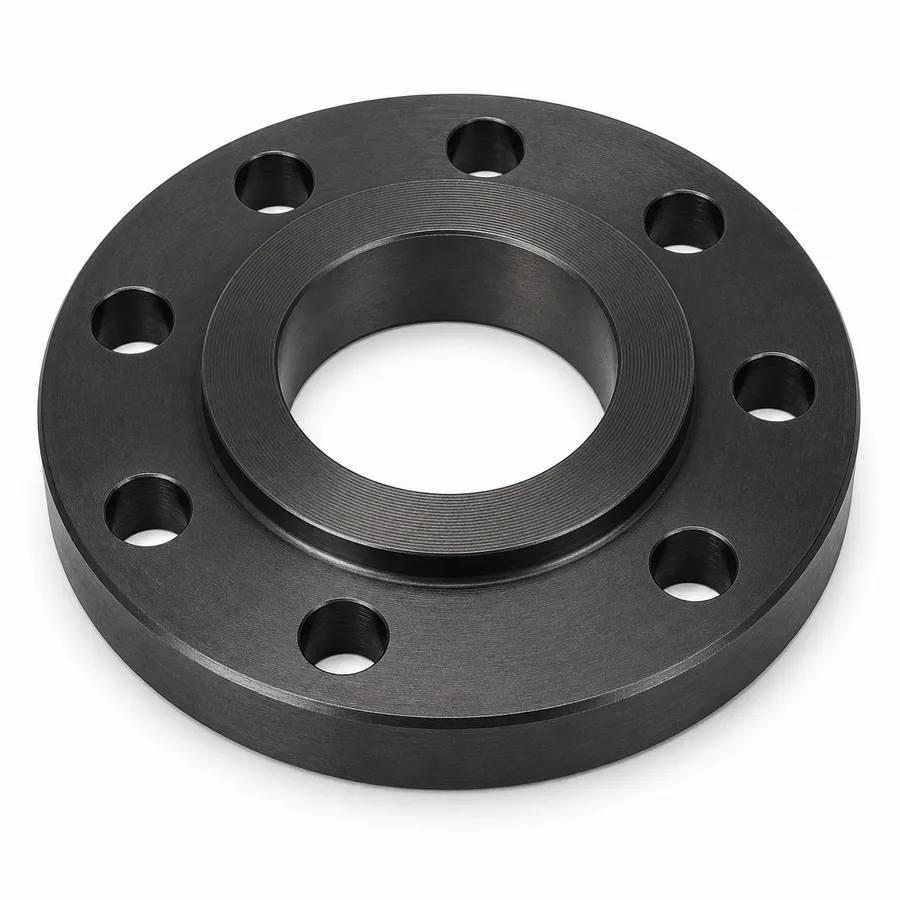 brida acero al carbon 150lb tipo slip on
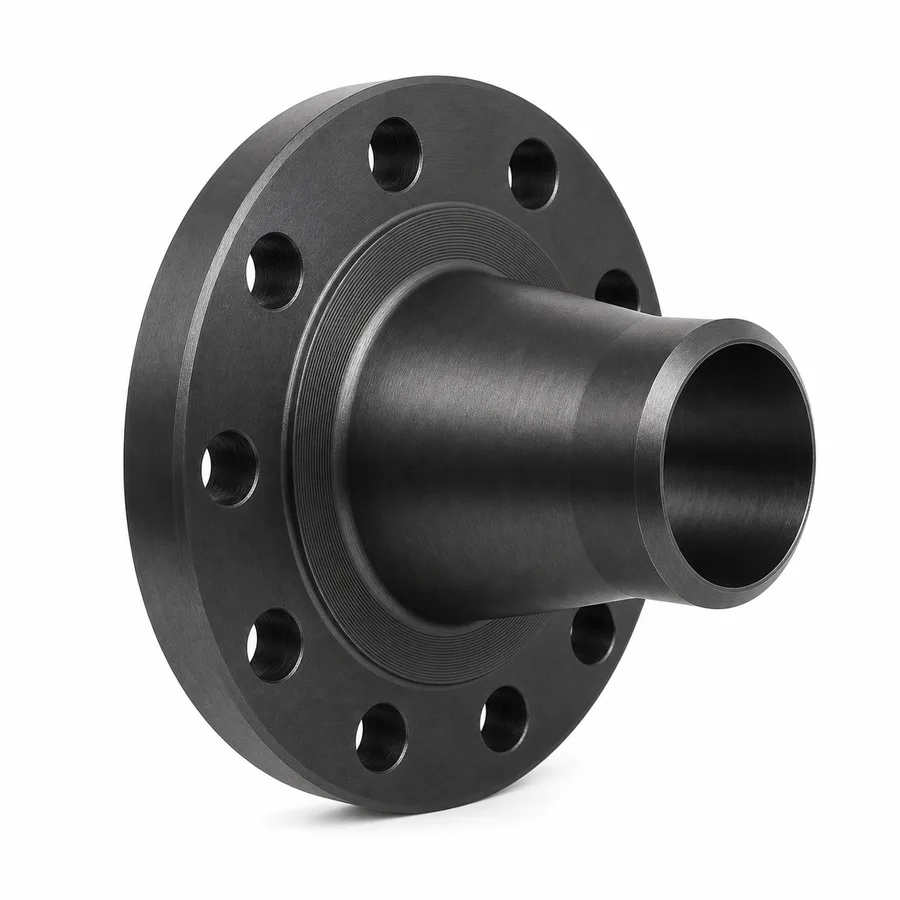 brida acero al carbon 150lb tipo cuello
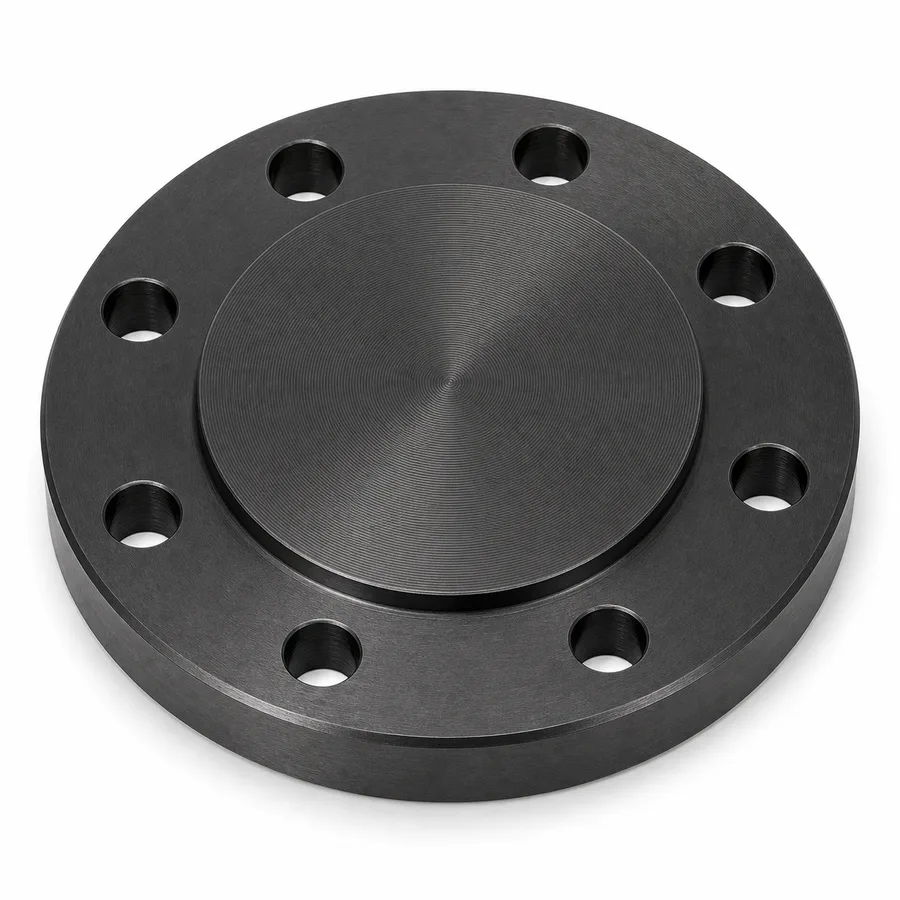 brida acero al carbon 150lb tipo ciega