Flange gaskets seal because they receive enough bolt load compatible with their material, geometry and service. They are not interchangeable accessories: a flat rubber gasket, a spiral wound gasket and a ring joint work by different principles, require different flange faces and respond differently to pressure, temperature, thermal cycling and tightening.
This guide consolidates “industrial gaskets”, “pipe gaskets” and flange gasket types. TECTUL supplies Class 150 spiral wound gaskets, Class 300 spiral wound gaskets, RTJ ring joints and compressed sheet flange gaskets. Selection must combine ASME B16.20, ASME B16.21, ASME B16.5 and the material datasheet.
In industrial purchasing, a gasket is specified by type, dimensional standard, NPS, class, flange face, material, thickness when applicable, centering ring if present, chemical compatibility and temperature. Ordering a “4-inch gasket” is insufficient because Class 150, 300 or 600 flanges may require different dimensions and bolt load capacity.
The flange pressure class is not the actual allowable gasket pressure in every fluid. Performance depends on temperature, material relaxation, flange-face finish, torque, stud lubrication and alignment. For hazardous service, steam, hydrocarbons or chemicals, the gasket must be validated with the technical datasheet and tightening procedure.
| Type | Dimensional standard | Strength | Typical use | Precaution |
|---|---|---|---|---|
| Nonmetallic flat | ASME B16.21 | Economical and conformable | Water, air, moderate services | Limited by material and temperature |
| Spiral wound | ASME B16.20 | Handles pressure, temperature and cycles | Steam, hydrocarbons, process service | Requires adequate bolt load |
| Ring joint RTJ | ASME B16.20 | Metal seal for demanding service | High pressure, RTJ flanges | Only with compatible RTJ groove |
| PTFE | By format | High chemical resistance | Corrosive chemicals | Check creep and load |
| Graphite | By construction | High temperature | Steam and thermal service | Control oxidation and compatibility |
In piping, the gasket is part of a system: flanges, studs, nuts, lubricant, alignment and tightening sequence. If a flange is warped, the face is scratched or studs do not provide uniform load, a new gasket can fail quickly. Selection therefore is not only about material; it includes the mechanical condition of the joint.
For cold water or low-demand air, a suitable flat gasket may be enough. For steam, hydrocarbons or thermal cycling, spiral wound gaskets are often more robust. For RTJ grooved flanges, the ring joint is not optional: the metal ring and groove geometry define the seal.
ASME B16.21 covers dimensions for nonmetallic flat gaskets for flanges. They may be made from elastomers, compressed fibers, PTFE or other materials depending on service. Their advantage is conformability to moderate imperfections with lower bolt load than many metallic solutions. They are common in water, air, drains and non-critical service.
Material selection is the sensitive point. NBR is often used where resistance to compatible oils is needed; EPDM is associated with water and moderate steam depending on datasheet; PTFE provides chemical resistance; graphite or special compressed sheets cover higher temperatures. Material should not be assigned by color or habit.
A spiral wound gasket combines a wound metal strip and a filler, commonly graphite or PTFE depending on service. It may include a centering ring and an inner ring. Its design handles pressure, temperature and cycles better than many flat gaskets, provided it receives enough bolt load and the flange is compatible.
It is a frequent choice for ASME Class 150, 300, 600 and higher process flanges. TECTUL carries references by class, such as Class 150 and Class 600. The datasheet must confirm winding material, filler, rings and dimensional standard.
Ring joints are metallic gaskets for RTJ grooved flanges. They do not seal by soft compression but by controlled deformation of the metal ring against the groove. They are used in high-pressure or demanding service where the flange is designed for that sealing system.
They must not be installed on ordinary raised-face flanges or replaced with flat gaskets. Compatibility of R, RX or BX profile, material and relative hardness against the flange is essential. Reusing a deformed ring joint increases leakage risk; in critical work it is replaced.
| Material | Strength | Usual services | Validation required |
|---|---|---|---|
| NBR | Resistance to certain oils | Compatible hydrocarbons and oily air | Exact temperature and fluid |
| EPDM | Good performance in water | Water, some sanitary or moderate steam services | Do not assume oil compatibility |
| PTFE | Broad chemical resistance | Chemicals and corrosive fluids | Creep and bolt load |
| Graphite | High temperature and conformability | Steam, heat and process | Oxidation and chemical compatibility |
Flange class guides dimensions and joint capacity, but sealing is produced by the actual load transmitted to the gasket. A soft gasket can be damaged by excessive compression; a spiral wound gasket can leak if bolt load is insufficient; a ring joint requires the correct groove geometry. The gasket material must therefore be selected together with studs, nuts and tightening method.
In ASME flanges, face finish also matters. Deep scratches, corrosion, paint or old gasket residue reduce sealing capability. Before assembly, the face should be inspected and cleaned. If the flange is warped or misaligned, replacing the gasket does not correct the cause. During plant shutdowns, documenting type, class, material and torque prevents a quick replacement from introducing a different combination.
Two gaskets that look similar may have different fillers, rings or materials. A graphite-filled spiral wound gasket does not behave like a PTFE-filled one; a compressed fiber gasket is not equivalent to an elastomer; an RTJ ring in the wrong material may mark the flange or fail to deform as required. The purchase order should include standard, NPS, class, face type, material and certificate when applicable.
Material compatibility must be verified against the real fluid, concentration, temperature and possible chemical cleaning. Water, treated water, steam, oil, fuel, solvent and acid are not equivalent categories. An elastomer that works well in water may swell in oils; a chemically resistant material may relax if bolt load is insufficient. The manufacturer datasheet therefore controls over any rule of thumb.
Temperature also changes behavior. Some materials lose elasticity, others harden, creep or oxidize. In cyclic service, the gasket must maintain sealing after flange expansion and contraction. When there is doubt, it is better to raise the specification level and document the selection criterion than to install an inexpensive gasket in an expensive shutdown.
Procurement can reduce leakage risk by buying the gasket together with compatible studs and nuts, especially during planned shutdowns. The kit should match NPS, class and flange face. If the maintenance team receives several similar gaskets without clear labeling, the chance of installing the wrong class or material increases. Packaging and identification are part of quality control.
If a joint leaks repeatedly with the same gasket, ordering another identical unit without checking the cause is poor practice. Review flange finish, parallelism, stud condition, torque, chemical compatibility and operating cycles. Repeated leakage may show that the material is insufficient, the flange is damaged or the assembly procedure does not deliver uniform load.
For moderate water or air, an ASME B16.21 flat gasket in the right material may be enough. For process service, steam, thermal cycling or more demanding flange classes, evaluate ASME B16.20 spiral wound gaskets. For RTJ flanges, use a ring joint compatible with the groove. Send TECTUL NPS, class, flange face, fluid, temperature, pressure, flange material and certificate requirement to select without guessing.
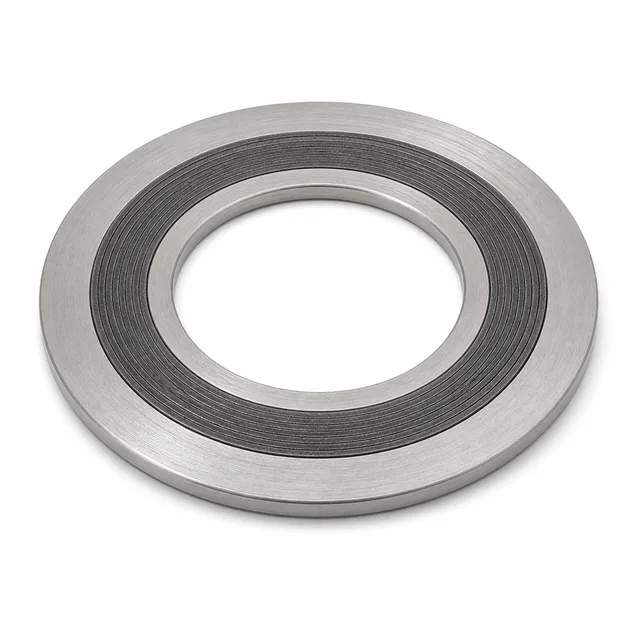 empaque espirometalico 150 libras certificados
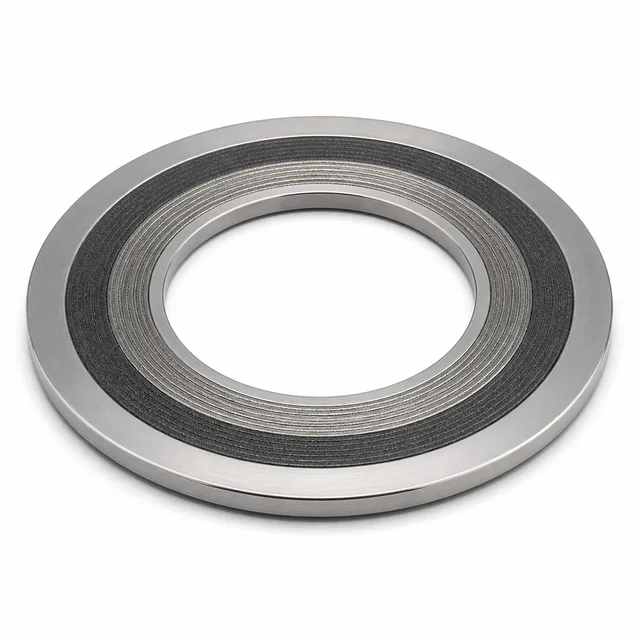 empaque espirometalico 300 libras certificados
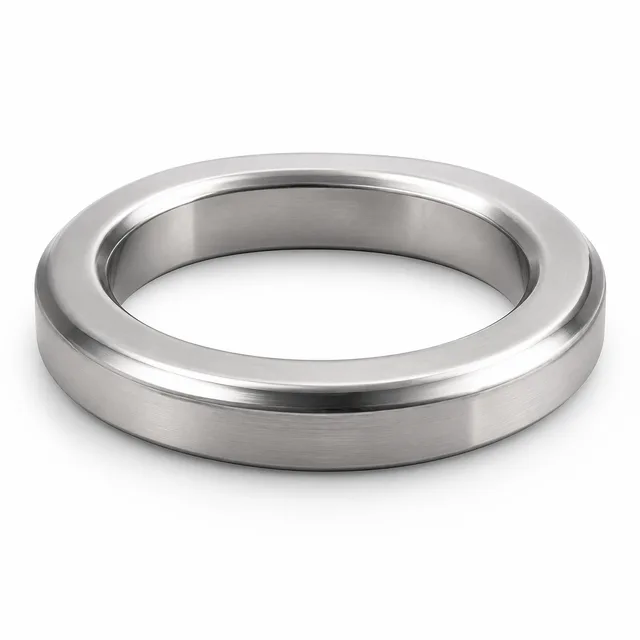 empaque oval ring rtj r certificados