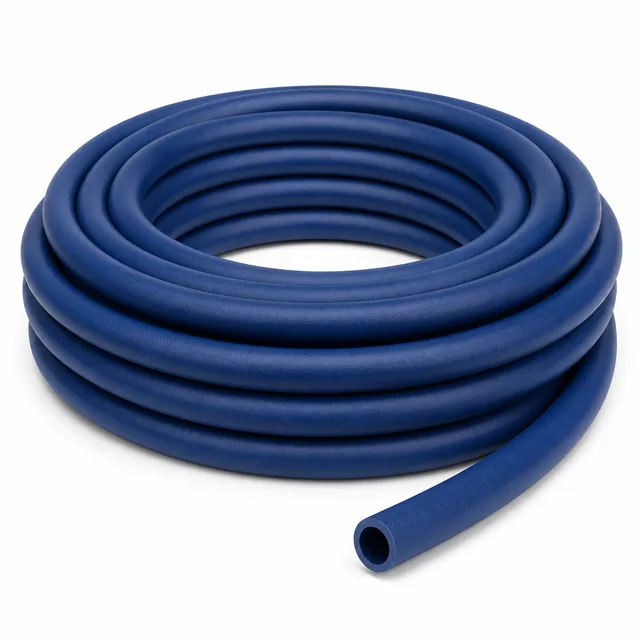
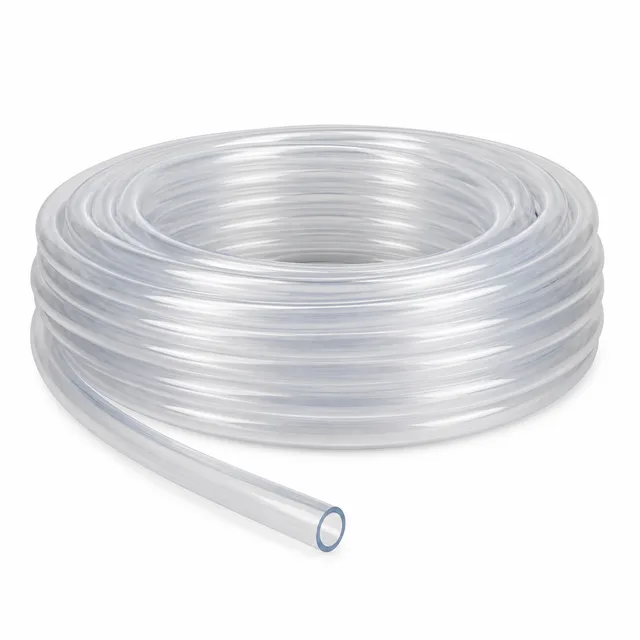
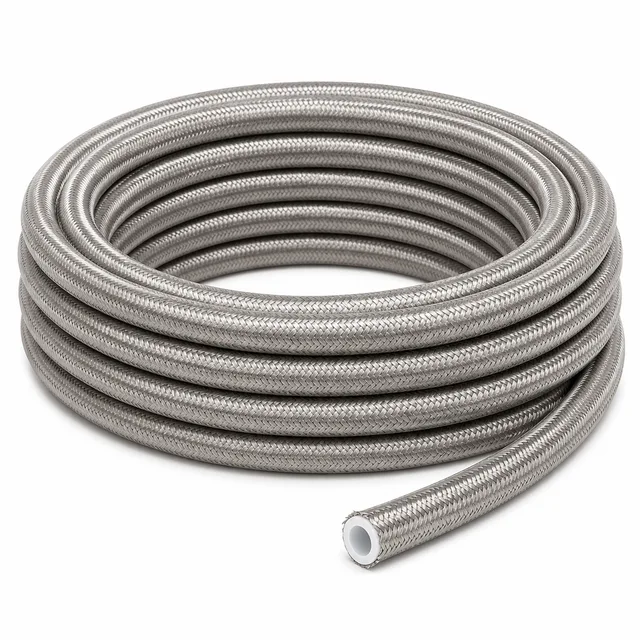
An industrial hose looks simple until it fails: it can cause leaks, downtime, product contamination, pressure whip, chemical burns or lost production. That is why purchasing should not be based only on diameter and price. Correct selection combines fluid, working pressure, temperature, vacuum or suction, bend radius, abrasion, environment, fittings, standard and safety factor.
This guide covers hoses for water, air, chemicals, high pressure and food contact. TECTUL can support purchases from families such as air and water hose, R2 hydraulic hose, PTFE hose and food hose. The final recommendation must come from the manufacturer datasheet and compatibility guidance; if a numerical value is not confirmed for the exact reference, it should not be assumed from color or appearance.
Working pressure is the maximum recommended pressure for continuous service under defined conditions. Burst pressure is a destructive or failure pressure, not a service pressure. Buying a hose because its burst pressure “looks high” is unsafe. A safety factor defined by standard, manufacturer or application sits between the two. Pressure capability also changes with temperature, aging, pulsation, fittings, bend radius and external damage.
For hydrostatic testing, ISO 1402 defines test methods for rubber and plastic hoses. For hydraulics, SAE J517 and ISO 18752 organize performance families. For chemicals, EN 12115 provides requirements for hose assemblies handling liquid or gaseous chemicals. NAHAD emphasizes that the complete assembly, not only the hose, must be compatible: tube, reinforcement, cover, couplings, clamps, crimping and assembly method.
| Hose type | Common use | Primary criterion | Risk if selected poorly |
|---|---|---|---|
| Industrial water | Washdown, irrigation, transfer, drainage | Pressure, temperature, flexibility and cover | Bursting, collapse, UV or dragging damage |
| Compressed air | Pneumatic tools, temporary lines | Working pressure, compressor oil and coupling safety | Whip, leakage, cover cracking from oil |
| Chemical | Compatible acids, bases, solvents | Compatibility chart with concentration and temperature | Tube attack, swelling, hazardous leak |
| High-pressure hydraulic | Machinery, cylinders, mobile equipment | Impulse, reinforcement, bend radius, crimped fitting | Fatigue failure, fluid injection, equipment downtime |
| Food-grade | Beverages, dairy, powders or compatible fats | Contact material, cleaning and non-contamination | Migration, odor, contamination or poor cleanability |
Water hoses range from light washdown to industrial transfer. Confirm whether the hose will work in discharge or suction, whether hot water, detergents, floor dragging, UV exposure and traffic crushing are present. A discharge hose is not automatically suitable for suction: it may collapse without helical reinforcement or suitable construction. References such as 300 psi air and water hose must be checked against exact datasheet, diameter and allowable temperature.
In compressed air, the hazard is not only leakage. A pressurized hose that disconnects can whip and injure people. Safety couplings, correct clamps, restraints, inspection and suitable length matter. Compressor oil carryover may attack some compounds. Ozone, heat, sparks, abrasion and repeated bending should also be considered. Do not use low-pressure hoses on compressors because they look similar.
Chemical hose selection requires product name, concentration, temperature, pressure, whether service is continuous or intermittent and cleaning procedure. Acids, bases, solvents, fuels and oxidizers can behave differently with rubber, PVC, EPDM, nitrile, PTFE and other materials. A PTFE hose may suit many fluids because of PTFE chemical resistance, but fittings, gaskets, conductivity, temperature and bend radius must also be approved.
Never extrapolate compatibility from a broad family name. Two products with similar names may have different concentrations or additives. If mixtures, CIP cleaning, steam, hypochlorite or solvents are involved, request manufacturer confirmation. For flammable fluids or powders, check electrical continuity or static dissipation when applicable.
Hydraulic hoses operate under pressure, impulse, flexing and temperature. SAE J517 and ISO 18752 help classify wire- or textile-reinforced hoses. An R2 hydraulic hose is not selected only by diameter: working pressure, impulse, fluid, temperature, minimum bend radius, cover, fitting, crimp style and equipment compatibility must be checked. Failure can be violent, and hydraulic fluid injection into skin is a medical emergency.
Common mistakes include twisting the hose during installation, bending below the minimum bend radius, routing over sharp edges, mixing incompatible fittings, crimping without specification or reusing damaged couplings. The assembly must be made with compatible components and, in critical applications, tested by procedure.
For food service, it is not enough that a hose “has no odor”. It must be suitable for contact with the specific product, resist cleaning, temperature, fats or alcohols when present, and avoid contamination. Rules such as FDA 21 CFR 177 (indirect food additives: polymers) apply to polymeric materials in contact with food, but each reference must declare its compliance. A PVC food hose may work for selected beverages or foods, while other products require sanitary rubber, PTFE, silicone or another solution.
Hose life is not defined only by purchase date. It depends on service hours, pressure pulses, temperature, chemistry, movement, abrasion, storage and assembly quality. A hose that has been bent below its minimum bend radius can fail even if it looks new. A cover that is cracked, blistered, cut or exposing reinforcement should be removed or evaluated before continued operation. In high pressure service, never search for leaks with your hand.
For repetitive purchases, create an internal record with reference, length, connections, fluid, pressure, installation date and reason for retirement. That history helps identify whether the problem is selection, assembly, routing, temperature or operating abuse. Changing supplier without correcting the root cause rarely solves recurring hose failures.
A good hose with the wrong fitting is still an unsafe assembly. Coupling material must resist the fluid and environment; thread or flange type must match the installation; crimping or clamps must match the hose construction. In suction service, check that the fitting does not restrict flow excessively. In chemical service, confirm gasket and fitting metal compatibility. In air service, use whip restraints where the risk justifies them.
If hose is purchased by roll for internal assembly, document who cuts it, who crimps it, which die is used, under which specification and how it is inspected. Assembly traceability is as important as the brand printed on the cover.
Storage before installation also matters. Keep hose away from sunlight, ozone sources, sharp bends, oils or chemicals not approved for the cover. Rotate stock so old hose is not installed after years of poor storage.
For mobile equipment, add routing clamps and abrasion sleeves where movement can rub the cover during normal cycles.
For water and air, start with working pressure, temperature and coupling safety. For chemicals, do not buy without documented compatibility by fluid, concentration and temperature. For hydraulics, select the complete assembly under SAE, ISO or manufacturer datasheet, including fittings. For food, require a contact suitability and cleaning declaration. For TECTUL, the fastest way to select correctly is to provide fluid, pressure, temperature, diameter, length, connection type and working environment.