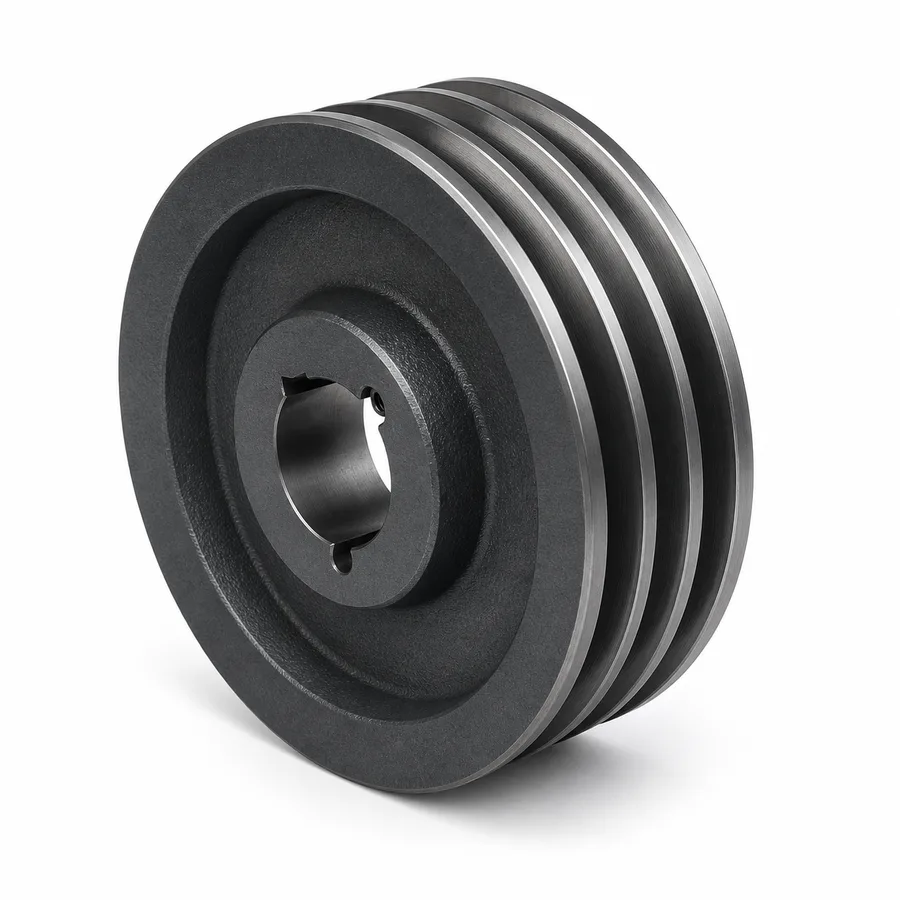
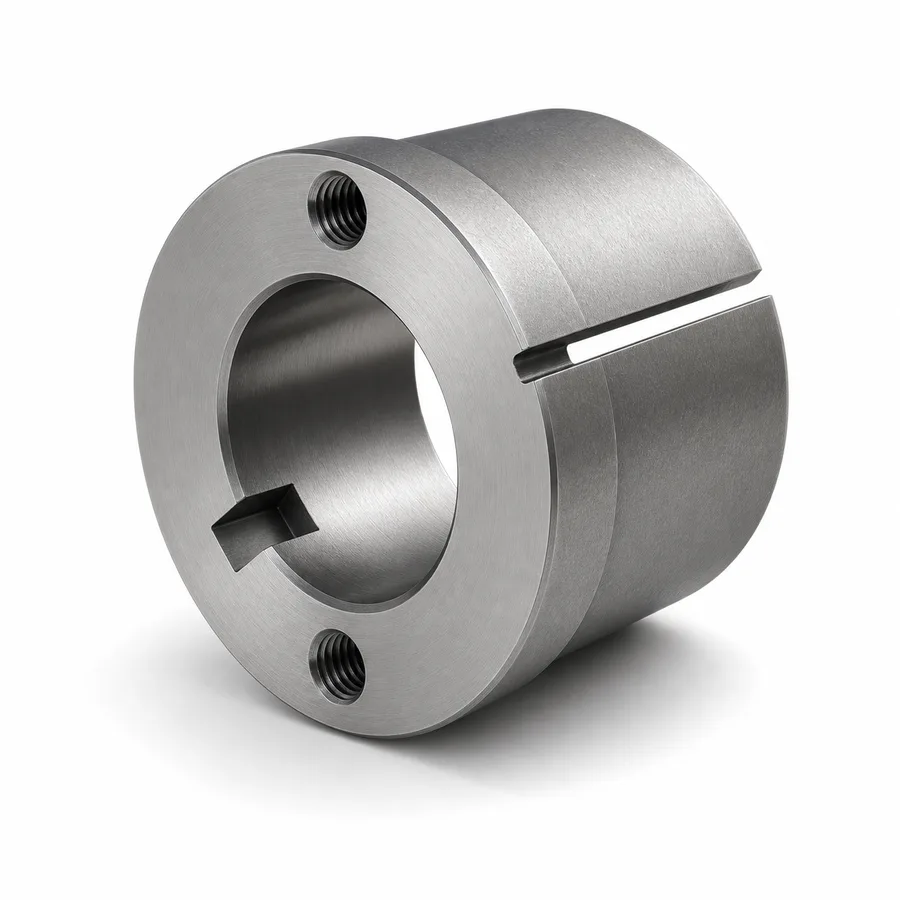
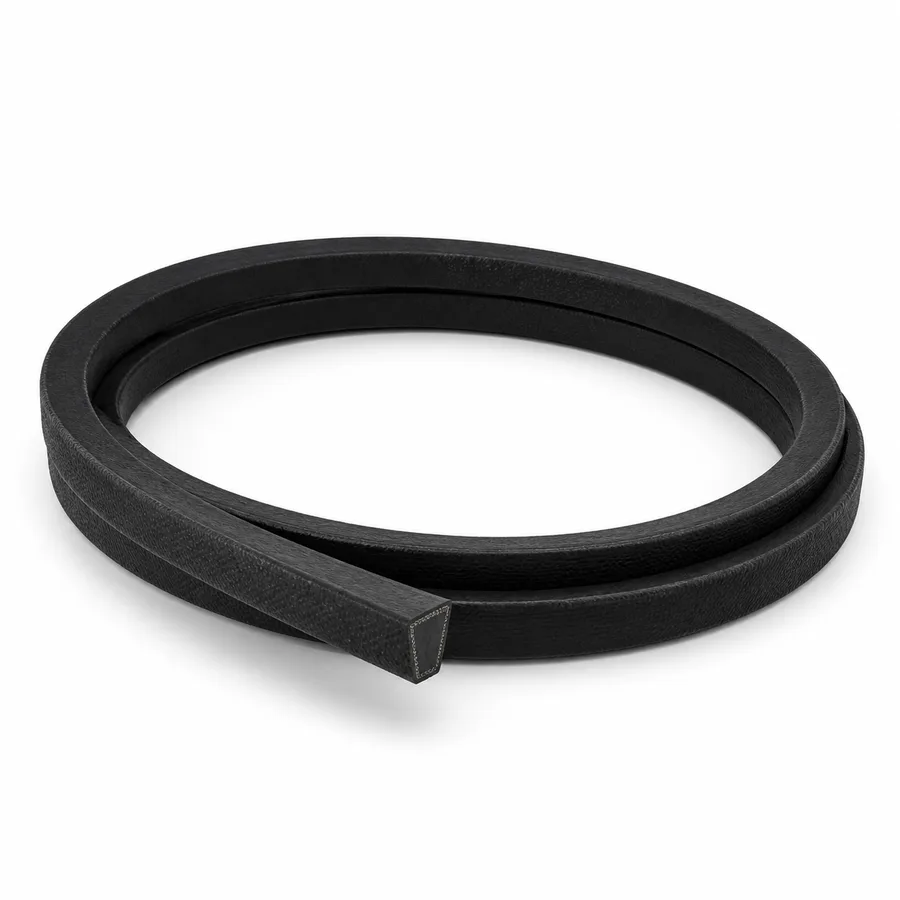
A V-belt pulley is not purchased by outside diameter alone. For a drive to run without slip, belt heat or excessive bearing load, the specification must include groove profile, datum or reference diameter, number of grooves, bushing type and compatibility with the installed V-belt. TECTUL supplies V-belt pulleys, taper-lock bushings and belts for industrial maintenance in Colombia.
Verdict: for direct replacement, use the same belt profile and the same number of grooves; for a compact redesign, use narrow SPA/SPB profiles when the manufacturer selection allows it; for older machinery or plant spares, use classical A/B profiles if the drive was calculated that way. Do not run an A belt in an SPA groove or a B belt in an SPB groove just because the width looks close.
The correct pulley is defined by the drive system, not by one isolated dimension. Groove profile controls side contact, diameter limits belt flexing, groove count distributes power among multiple belts, and shaft mounting controls concentricity and maintenance. In power drives, a poorly identified pulley can cause vibration, side wear, rubber dust, heat and premature shaft or bearing failures.
ISO 4183 and ISO 4184 organize grooved pulley dimensions and classical and narrow V-belt lengths under the datum width system. Manufacturer catalogs complement those standards with selection tables by power, speed, minimum diameter and service factor. For that reason, power ranges should not be copied without rpm, wrap angle, center distance, duty and small-pulley diameter.
| Profile | Family | Nominal belt top width | Typical use | Purchasing criterion |
|---|---|---|---|---|
| A | Classical | Approx. 13 mm | Existing light and medium drives | Replacement when the machine already uses A |
| B | Classical | Approx. 17 mm | Larger section than A in older equipment | Use only when pulleys and belts are B |
| SPA | Narrow | Approx. 12.7 mm | Compact power with lower total width | Prefer in redesigns checked by catalog |
| SPB | Narrow | Approx. 16.3 mm | Higher capacity than SPA in medium equipment | Use when more power per groove is required |
Classical A and B profiles remain common because many process machines, fans, pumps and compressors were designed around those belts. Their main advantage is availability and compatibility with older equipment. In maintenance, replacing a classical pulley with a narrow one without recalculation is not an upgrade: it changes seating geometry, working depth and required tension.
Narrow SPA and SPB profiles can transmit more power per drive width when selected from manufacturer tables. That advantage comes from an optimized section and more efficient contact. In technical purchasing, the right statement is not “SPA replaces A”; it is “SPA may be a redesign option when power, minimum diameter, length, tension and alignment are verified”.
A single-groove pulley works with one belt; two, three or more grooves distribute load among equal belts. Groove count is not selected to fill space but to keep corrected design power within the capacity of the set at real speed. Small fans and pumps may need one groove; compressors, crushers or large fans often need multiple belts.
| Service condition | Selection signal | Technical decision | Risk if ignored |
|---|---|---|---|
| Low power and smooth start | One belt runs without slip | One groove may be enough | Oversizing increases cost and inertia |
| Medium or high power | The table requires several belts | Use 2 or more equal grooves | Slip and overheating |
| Shock load or frequent starts | High service factor | Increase capacity or profile by catalog | Fatigue breakage |
| Important speed change | High diameter ratio | Check wrap angle | Capacity loss from poor contact |
Outside diameter is easy to measure with a caliper or tape, but it is not the diameter that governs the exact speed ratio. V-belt pulleys use datum or pitch diameter depending on the designation system. The difference exists because the belt working line sits inside the belt section, not at the outside face of the pulley.
For replacement, compare the marking stamped on the pulley or measure with a known belt. If only outside diameter is available, use it as preliminary identification and confirm against catalog. On small pulleys, a few millimeters can change rpm, tension and belt life.
The taper-lock bushing allows one pulley to fit different shaft diameters without machining the pulley hub. The tapered bushing centers and clamps with screws; installed correctly, it simplifies removal and replacement. To purchase it, specify bushing reference, shaft diameter, keyway if applicable and pulley diameter. “Bushing for a 4-inch pulley” is not enough.
A frequent error is using a bushing that fits the shaft but does not match the pulley bore. Other failures come from tightening without cleaning the taper, lubricating the wrong surfaces or tightening screws without an alternating sequence. The result is eccentricity, loosening and vibration.
Pulley selection does not end with the purchase order. A drive with the correct profile can fail if it runs misaligned or with incorrect tension. Angular misalignment loads one flank more than the other; parallel misalignment forces the belt to move laterally on every revolution. In both cases, rubber dust, noise and temperature at the bearing housing appear.
Low tension produces slip and polished belt flanks. Excessive tension may look like a solution because it removes slip, but it increases radial load on the shaft, bearings and support. For commissioning, use the belt manufacturer tension method, check again after the first hours of service and record the motor or slide-base position.
Industrial pulleys are available in cast iron, steel or special materials depending on speed, diameter and environment. In high-speed equipment, balancing and concentricity matter as much as profile. In wet or corrosive environments, check coating, groove cleanliness and belt compatibility. A rusty pulley can wear a new belt in a few shifts.
Guards and ventilation also deserve review. An enclosed drive without ventilation accumulates heat; an open drive is exposed to dust, water and accidental contact. Pulley purchasing should be paired with inspection of the full set: base, alignment, shaft condition, keys, screws and guard.
For industrial maintenance, purchase the V-belt pulley with profile, datum diameter, groove count and bushing defined. If the drive worked well, replace the same geometry and change the complete belt set. If you want to reduce width or increase capacity, send TECTUL power, rpm and center distance data; then SPA or SPB can be evaluated with a technical basis.