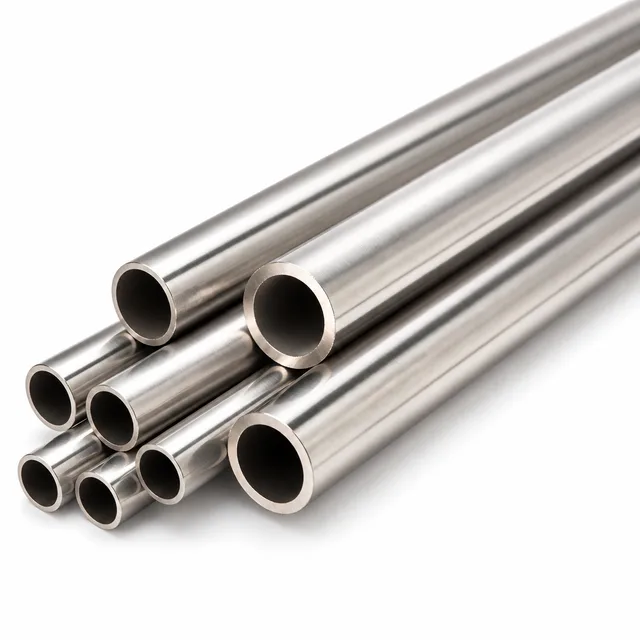
Selecting industrial tubes does not start with price or commercial length; it starts by defining whether the item will work as a structural member, a mechanical component, an instrumentation line or an ornamental element. In industrial purchasing, calling every hollow product a tube can create errors in diameter, wall thickness, standard and accessory compatibility.
This guide consolidates searches about tube types and focuses on tubes, not process pipe. For NPS and schedule piping, use a dedicated pipe guide; here the priority is tube measured by actual outside diameter, such as stainless steel tubing, round, square and rectangular structural tubes, and mechanical tubing for fabrication.
In technical English, tube and pipe are not equivalent. Tube is usually purchased by real dimensions: outside diameter or OD, wall thickness and shape. If 1/2 inch tubing is specified, the technical expectation is 0.500 inch OD unless the datasheet states otherwise. Pipe, by contrast, is designated by NPS and schedule; for sizes below NPS 14, the nominal number is not the actual OD. For example, NPS 2 pipe has 2.375 inch OD under ASME B36.10M/B36.19M tables.
This difference controls compatibility. A compression fitting for 1/2 inch tubing does not install on NPS 1/2 pipe, because NPS 1/2 pipe has a larger OD. Likewise, a threaded or weld pipe fitting does not replace a double-ferrule instrumentation connector. When the drawing, buyer and supplier use different words for the same item, receiving ends up comparing parts that should never have been mixed.
| Product | How it is specified | Frequent standards | Typical use |
|---|---|---|---|
| Structural tube | Shape, outside dimensions, wall and grade | ASTM A500/A500M | Columns, frames, railings, supports |
| Mechanical tubing | OD, wall, manufacturing condition and tolerances | ASTM A513/A513M | Shafts, bushings, frames, machined parts |
| Stainless tubing | Fractional or metric OD, wall and alloy | ASTM A269/A269M, ASTM A213/A213M | Instrumentation, air, gases, control lines |
| Pipe | NPS and schedule | ASME B36.10M, ASME B36.19M | Process, steam, water, flanged and pipe fitting networks |
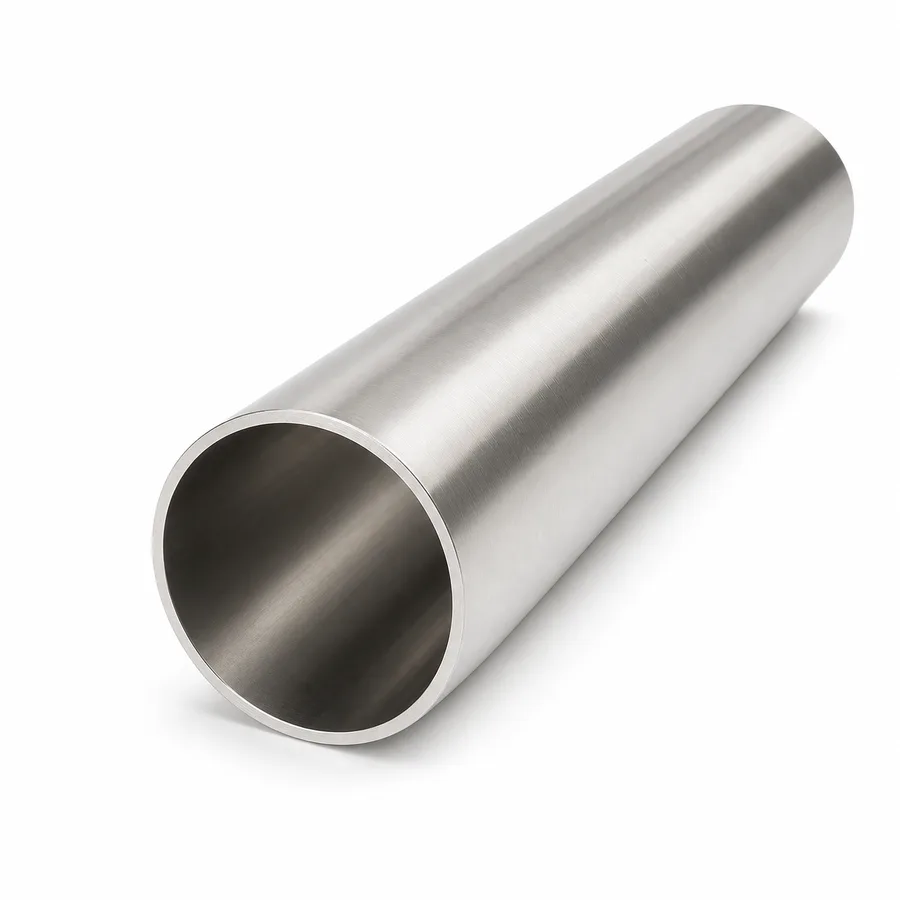
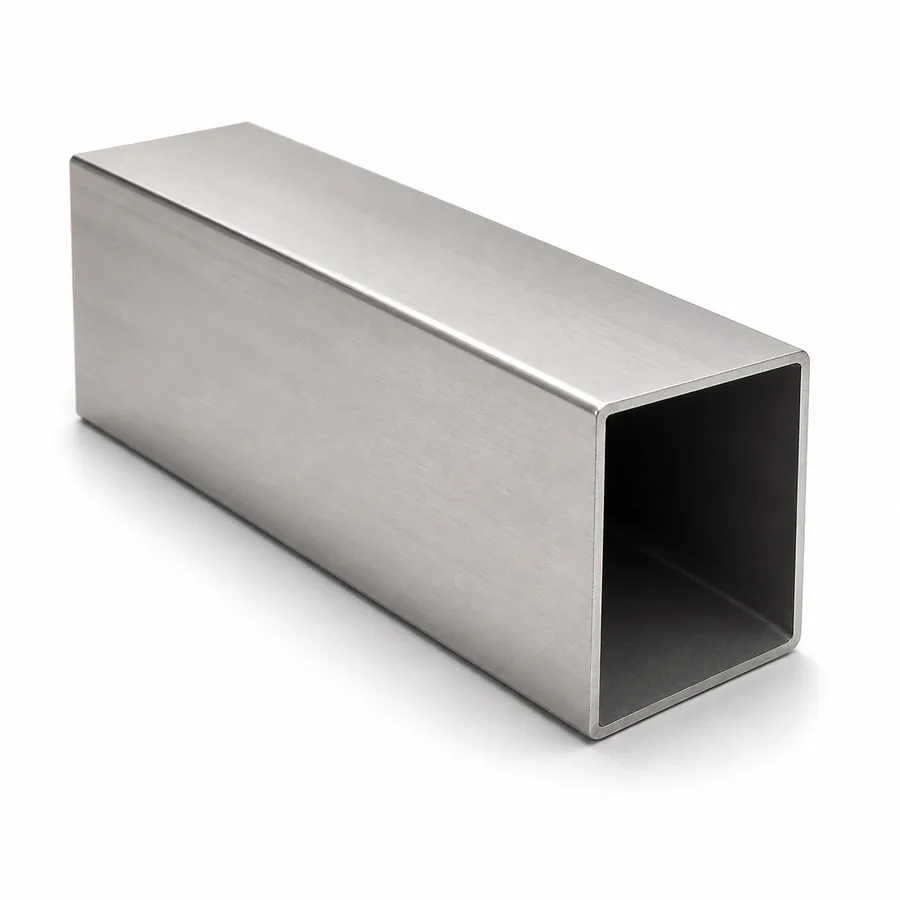
Structural tube is selected by mechanical capacity, geometry and fabrication convenience. In carbon steel, ASTM A500/A500M covers cold-formed welded and seamless structural tubing in round, square and rectangular shapes. In ornamental or architectural stainless steel, TECTUL carries options such as 304 stainless ornamental round tube, 304 stainless ornamental square tube and 304 stainless ornamental rectangular tube.
Shape changes behavior. Square or rectangular tube simplifies flat joints, frames and supports; round tube works well in exposed members, handrails and parts where orientation should not create a weak face. Selection should not be based only on the visible side: wall thickness, unsupported length, loads, corrosion, weldability and finish must be reviewed.
Mechanical tubing prioritizes tolerances, finish, straightness, weldability and response to machining or forming. ASTM A513/A513M covers electric-resistance-welded carbon and alloy steel mechanical tubing. That does not automatically mean it is suitable for internal pressure; it means it was made for parts, assemblies, metal furniture, frames, motion systems or components that will later be cut, drilled, bent or machined.
For purchasing, specify OD, wall, length, material, surface condition and downstream process. If it will be plated, polished, bent or welded, that information belongs in the request. Two tubes with the same OD and wall can behave differently when grade, delivery condition or weld quality changes.
Instrumentation tubing is used with compression fittings, needle valves, manifolds, transmitters and control lines. The main criteria are accurate OD, wall thickness, alloy and compatibility with the joining system. ASTM A269/A269M covers welded and seamless austenitic stainless steel tubing for general service; ASTM A213/A213M appears in seamless tubes for boilers, superheaters and heat exchangers, and may be relevant when engineering requires it.
For instrumentation, allowable pressure depends on OD, wall, alloy, temperature, design factor and the fitting manufacturer standard. That is why a universal pressure for “1/2 inch tubing” should not be published. A heavier-wall 316 tube is not the same as a lighter-wall 304 tube, and a vibrating line demands better support and routing than a static line.
Geometry is chosen by load, joint and function. Round tube distributes stresses without corners, can be easier to clean in some applications and has continuous appearance. Square tube simplifies 90-degree cuts, fastening and modular assemblies. Rectangular tube allows inertia to be oriented: it can be more efficient when the main load acts on a known axis. In visible applications, finish can matter as much as strength.
| Shape | Advantage | Purchasing check | Common application |
|---|---|---|---|
| Round | Good geometric continuity and appearance | Confirm OD, wall and finish | Handrails, frames, light supports |
| Square | Flat faces for welding and drilling | Verify side, wall and corner radius | Light structures, furniture, frames |
| Rectangular | Higher inertia on one axis | Define load orientation | Frames, light columns, cross members |
| OD tubing | Compatible with compression fittings | Do not confuse with NPS | Instrumentation and control |
Carbon steel is often the economical choice for indoor structures, frames and painted components. Stainless steel is justified by corrosion, hygiene, appearance, cleanability or service life. In stainless steel, 304 is common for general environments; 316 is considered where chlorides, chemicals or more aggressive conditions exist, always with compatibility validation. Copper belongs to another family of conveyance and heat transfer; it should not be conceptually mixed with stainless instrumentation tubing.
Material choice should come from environment, cleaning, temperature, weldability and exposure. An indoor handrail does not require the same material as a wet plant air line, and a painted structure does not require the same surface as a sanitary component. If chemicals are present, saying “stainless” is not enough: concentration, temperature and cleaning must be identified.
The first error is asking for “half-inch tube” without clarifying whether that means 1/2 inch OD or NPS 1/2. The second is using ornamental tube as pressure or instrumentation tubing. The third is buying by appearance only, without checking wall, standard and accessory compatibility. The fourth is assuming a rectangular shape works the same in any orientation; in structures, load direction matters.
It is also common to confuse finish with technical specification. A bright finish does not replace a manufacturing standard, and a heavy wall does not automatically make a tube pressure-rated. For critical jobs, request certificate or datasheet and make clear whether the part belongs to an auditable system.
At receiving, compare the physical tube with the purchase order before it reaches fabrication. Check outside dimension, wall, length, shape, finish, visible damage and label. If the tube will fit into a compression system, measure OD with a suitable instrument instead of relying on the commercial description. If it will be welded into a frame, keep heat number or batch identification when the project requires traceability.
To buy tubes, first separate the function: structure, mechanical part, instrumentation or process pipe. If the joint uses compression fittings, think actual OD and tubing; if it uses NPS fittings, review pipe and schedule; if it works as a load-bearing member, review shape, wall and structural standard. TECTUL can help match the request with real product sheets so a commercial name does not lead to the wrong size.