Selecting an industrial valve is not just matching thread and diameter and buying what is available. The valve determines how the line opens, how it closes, how well it throttles, what pressure drop it adds, what maintenance it needs and how it handles temperature, corrosion, solids, vibration and cycling. A ball valve may be excellent for quick shutoff, but it does not replace a globe valve when stable throttling is required; a gate valve isolates well, but it should not be used as a control valve.
This guide explains ball, gate, globe, butterfly, check and needle valves for industrial buyers. At TECTUL, useful starting points include 1000 PSI carbon steel ball valve, class 150 flanged ball valve and bronze check and gate valves. Final selection must define material, connection, pressure class, fluid, temperature and function.
The first question is functional: will the valve isolate, throttle, prevent backflow, bleed, dose or protect equipment? Diameter, pressure, material and connection come next. ASME B16.34 sets requirements for metallic valves with flanged, threaded and welding ends; ASME B16.5 defines flange classes and dimensions. API 598 is widely used for valve inspection and testing. These documents make clear that a valve is a pressure component, not just a flow accessory.
| Type | Internal movement | Best use | Not ideal for |
|---|---|---|---|
| Ball | Quarter-turn perforated ball | Fast shutoff, low pressure drop, frequent operation | Fine long-term throttling or abrasive solids unless designed for them |
| Gate | Wedge or disc moving up and down | Fully open or fully closed isolation | Throttling and very frequent cycling |
| Globe | Disc against seat with flow direction change | Manual throttling and flow adjustment | Services where minimum pressure drop is critical |
| Butterfly | Quarter-turn rotating disc | Large diameters, low weight and moderate modulation | Severe high pressure without specialized design |
| Check | Disc, swing, piston or spring responding to flow | Preventing backflow and protecting pumps | Manual isolation or flow control |
| Needle | Fine tapered stem | Instrumentation, bleed and small dosing duties | Main high-flow lines |
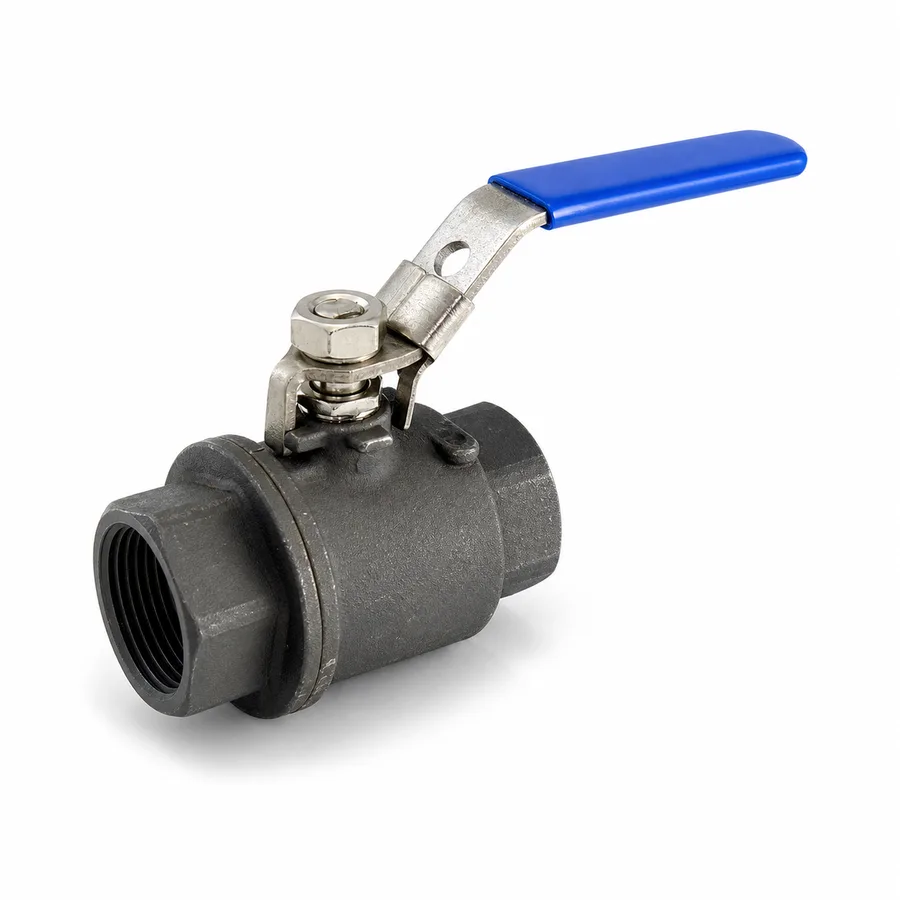
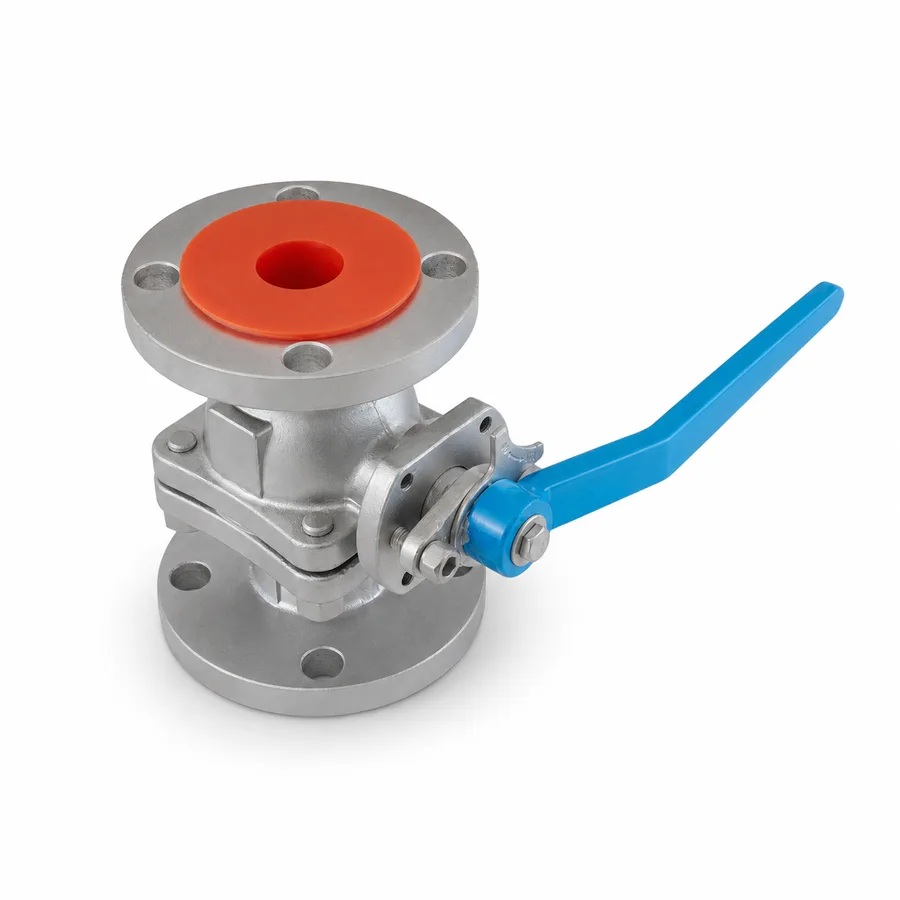
A ball valve uses a perforated sphere that rotates a quarter turn. When the bore aligns with the pipe, the valve is open; when it rotates perpendicular to flow, it closes. Its advantages are quick operation, good tightness in many services and low pressure drop when full port. The 1000 PSI carbon steel ball valve can fit threaded industrial services inside its datasheet limits. The class 150 flanged ball valve fits installations requiring flanges and bolted removal.
A gate valve moves a wedge or disc perpendicular to flow. Fully open, it provides low obstruction; closed, it isolates. Its natural duty is open or closed service. Leaving it partially open for flow control is poor practice because the wedge and seat may vibrate, erode and lose shutoff capability. A globe valve forces fluid to change direction and pass through a seat controlled by a disc. This geometry creates more pressure drop, but it provides better manual throttling.
A butterfly valve uses a disc rotating in the flow stream. It is compact, light compared with many large-diameter alternatives and quick to operate. It can provide isolation and, with the correct design, moderate modulation. Not all butterfly valves are equal. Wafer, lug, flanged, concentric and eccentric designs differ in installation, maintenance and performance. Seat elastomer must resist fluid, temperature, cleaning and pressure.
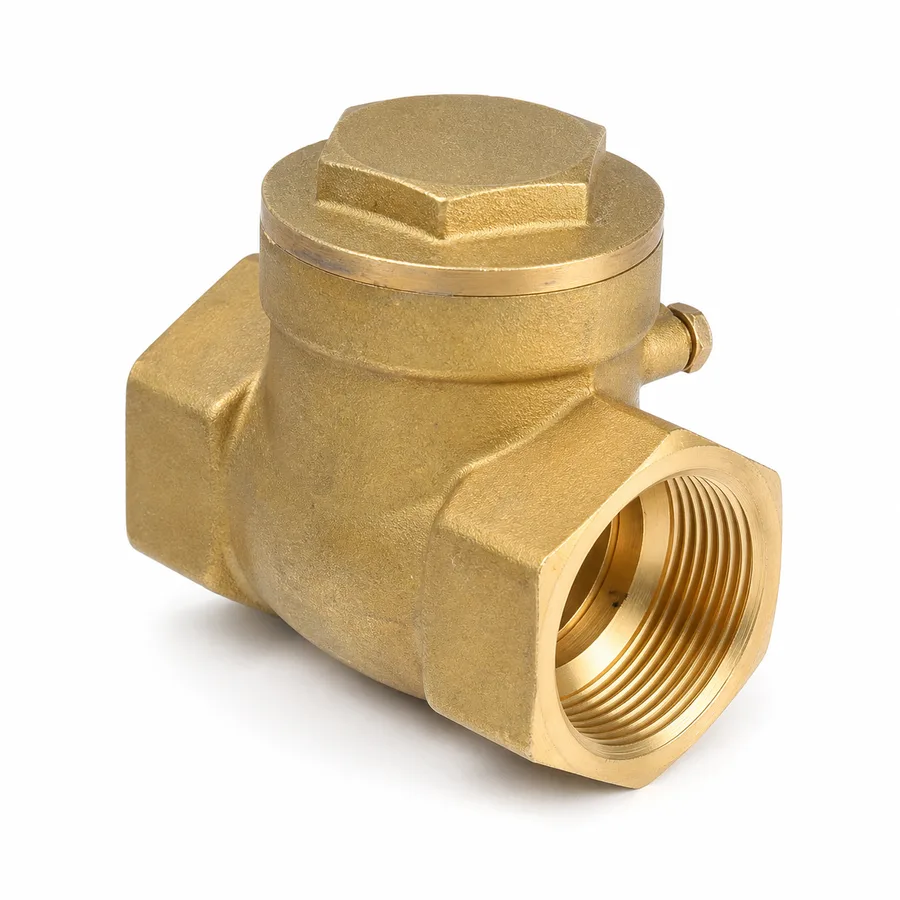
A check valve allows flow in one direction and closes when flow reverses. It protects pumps, prevents line draining and reduces unwanted backflow. Designs include swing, piston, ball, dual plate and spring-loaded. A bronze check and gate valve reference can be a starting point for compatible networks. A needle valve uses a tapered point that gradually enters a seat; it allows fine control in instrumentation, bleeds, pressure taps and small dosing duties.
Bronze, carbon steel and stainless cover many needs, but they are not interchangeable. Bronze is used in water, air and compatible services. Carbon steel provides robustness for industrial process and pressure service with corrosion control. Stainless is selected for corrosion, hygiene or chemical compatibility. Class 150 flanges are interpreted with pressure-temperature tables; WOG markings are validated with datasheets. Do not transfer a cold-water marking to steam or hot chemical service without review.
Select first by function: ball for quick shutoff, gate for open-closed isolation, globe for throttling, butterfly for larger diameters and low weight, check for non-return and needle for fine adjustment. Then validate body, seals, connection, class, temperature and fluid. At TECTUL, a complete request makes it possible to recommend a valve that fits the line, not just the thread.
Valve body material often gets most attention, but many failures appear in seats, packing and seals. A ball valve with the right body can fail if the seat does not resist temperature or chemical exposure. A butterfly valve may be excellent in water and poor in a fluid that swells the elastomer. A globe valve may lose control if the trim does not match the service. The datasheet must therefore be reviewed as an assembly: body, ball or disc, stem, seat, packing, connection and operation.
Operating frequency also matters. A valve that remains open for months and closes only during maintenance has different demands from one cycling every day. With frequent cycling, torque, seat wear, stem packing and automation options become central criteria. On large manual valves, operator type, handwheel, lever or gearbox affects safety and ergonomics.
The same valve can perform well or poorly depending on installation. In check valves, horizontal or vertical orientation changes closing behaviour. In wafer butterfly valves, centering between flanges and bolt tightening pattern are critical. In threaded valves, excessive sealant can enter the flow path and affect shutoff. In flanged valves, gasket and bolting must match the system class. In every case, piping should be aligned without forcing the body.
Maintenance starts at selection. If the valve is installed in an inaccessible area, any adjustment will be costly. If the fluid crystallizes, carries solids or leaves deposits, bleed, cleaning or bore design must be evaluated. If water hammer is possible, check valve type and closing speed matter. If automation may be added later, it is useful to buy valves with compatible mounting features from the start.
Pressure drop is not a minor detail. A full-port ball valve can add low restriction when open, while a globe valve creates greater loss because of its geometry. That loss can be useful for manual control, but costly when the line needs hydraulic efficiency. In partially open butterfly valves, the disc remains in the flow and may create vibration or noise if the service is not appropriate. In check valves, pressure drop depends on design and actual opening at normal flow.
When the valve will be used for throttling, state it during quotation. Many isolation valves do not survive continuous throttling well because the jet erodes seat, ball, gate or disc. If the process requires frequent control, the buyer should ask about operating range, trim material, cavitation, noise, actuator and maintenance. A low-cost shutoff valve can become expensive when used as a control valve.
For industrial service, the purchase file should include datasheet, material, connection standard, test requirement and tag when applicable. API 598 or project testing requirements should be clear before delivery. If a valve is part of a pressure boundary, receiving inspection should confirm marking, flow direction, end connection, handwheel or lever operation and visible damage. Small documentation gaps often become large delays during commissioning.