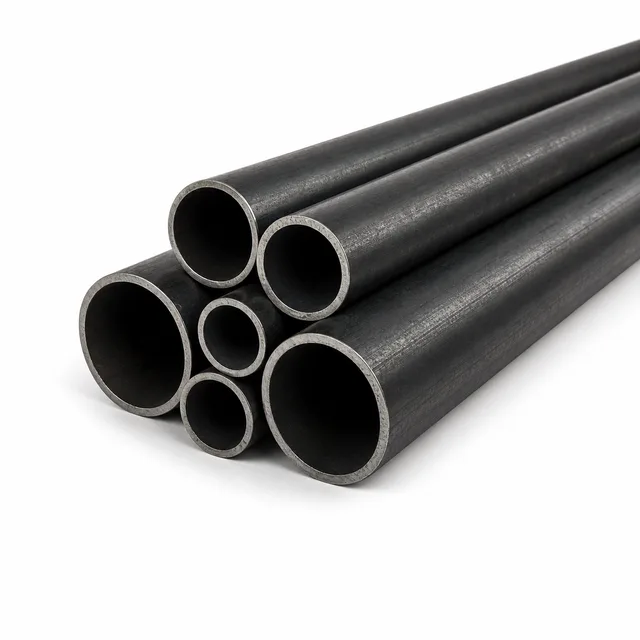
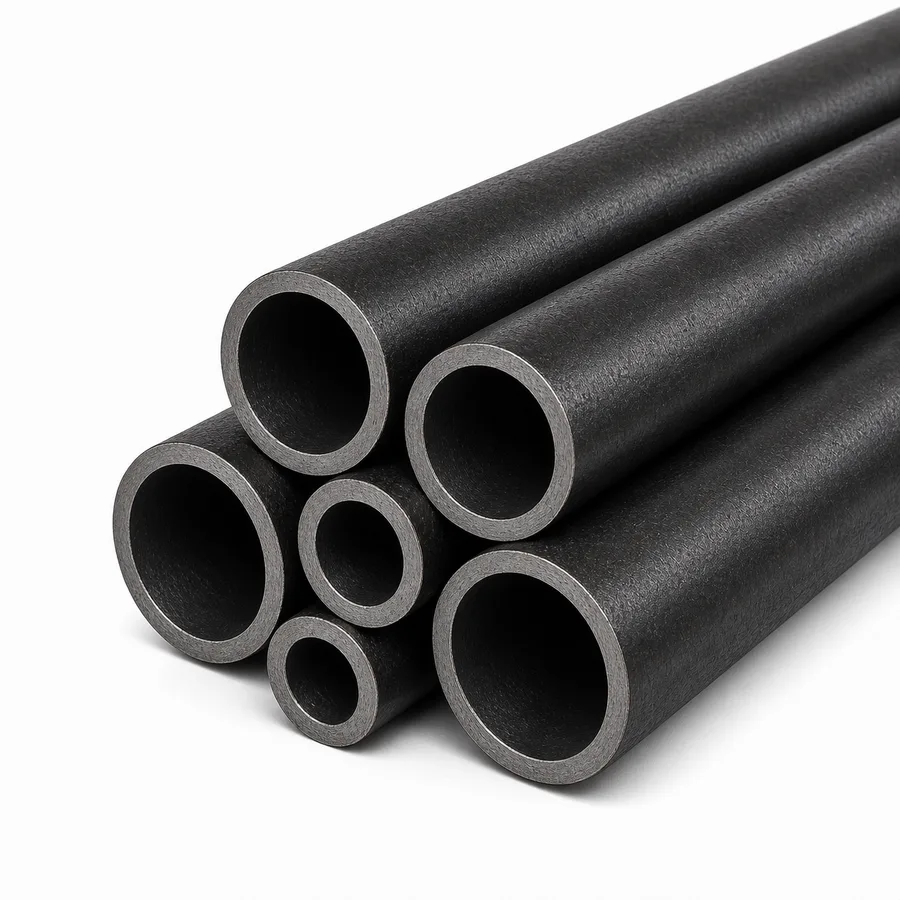
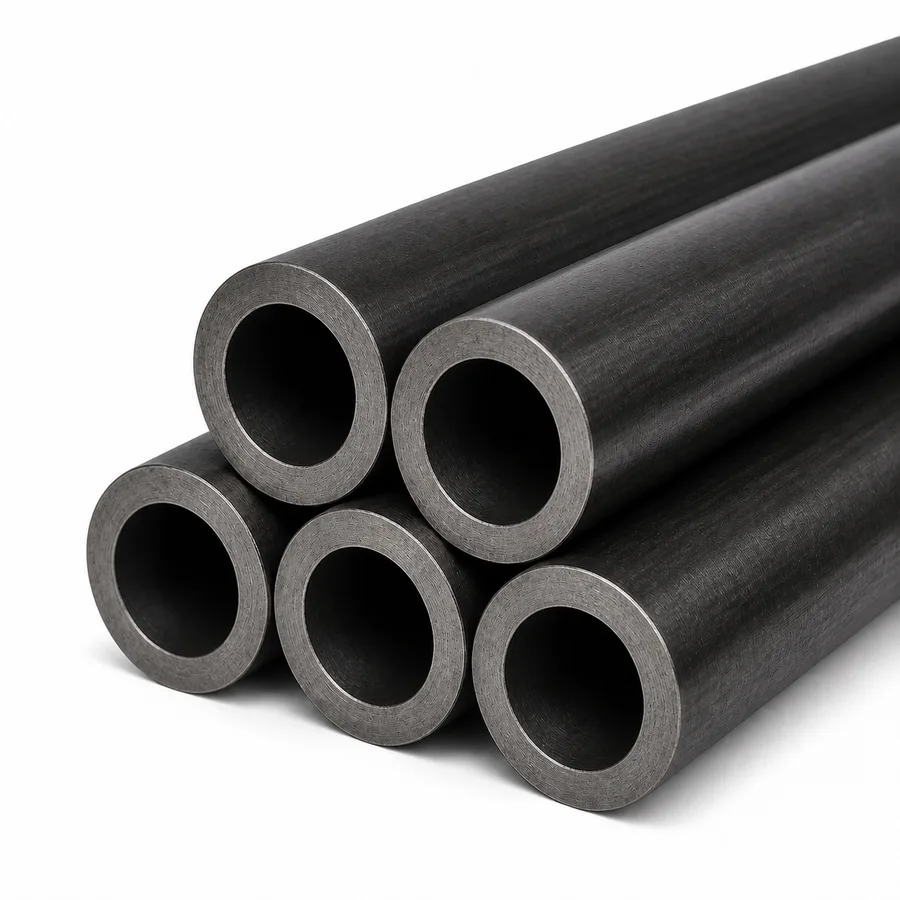
Seamless pipe is not automatically better for every service; it is mandatory or advisable when code, pressure, temperature, cyclic service, corrosion or the customer removes the longitudinal weld as a source of uncertainty. Verdict: for steam, high temperature, relatively high pressure, critical services or ASTM A106 specifications, require seamless; for water, air, general networks, light structures and moderate services, ASTM A53 Type E welded pipe can be technically sufficient if it meets the standard, schedule and test requirements.
At TECTUL, buyers can compare SCH40 carbon steel pipe, SCH80 carbon steel pipe, SCH160 carbon steel pipe, SCH40 seamless stainless steel pipe and SCH10 seamless stainless steel pipe. Correct purchasing separates three questions: manufacturing standard, schedule thickness and real service condition.
Seamless pipe is manufactured without a longitudinal weld. It starts from a billet or solid piece that is pierced and rolled to obtain diameter and thickness. The advantage is removing the seam as a longitudinal discontinuity; the disadvantage may be cost, availability and dimensional tolerances depending on process. Welded pipe starts from plate or strip formed and joined by welding. ERW uses electrical resistance to weld longitudinally; SAW uses submerged arc welding and is used in large diameters or wall thicknesses where the process is justified.
A modern welded seam can be reliable when the standard requires control, heat treatment and testing. The problem appears when black pipe is purchased without type, grade, process, test or traceability. In pressure service, outside diameter is not enough: thickness, ASTM specification, joint factor, temperature and fluid determine whether the pipe is acceptable.
| Service | Recommendation | Practical threshold | Document to request |
|---|---|---|---|
| Steam and high temperature | ASTM A106 seamless | If the design mentions A106 or high temperature, do not substitute A53 without approval | Material certificate and schedule |
| Water, air, general service | ASTM A53 Type E or S as specified | Type E can be sufficient at moderate pressure | Standard, type, grade and test |
| Critical ASME B31.3 process | Follow line class and applicable joint factor | If calculation depends on E=1, verify permitted condition | Line specification |
| Large diameters | Evaluate ERW or SAW welded pipe | SAW appears when size and wall exceed common ERW offering | Welding procedure and examinations |
| Sanitary or corrosive stainless | A312 seamless or welded by cleanliness and service | Require finish and traceability for clean product | Grade, finish and test |
ASTM A106/A106M covers seamless carbon steel pipe for high-temperature service. It is a typical specification for steam, refinery, auxiliary boiler and lines where temperature and pressure raise requirements. ASTM A53/A53M covers black and galvanized steel pipe, welded and seamless, for mechanical and pressure applications and ordinary uses in steam, water, gas and air within the standard scope and limits. A53 includes Types F, E and S; in technical purchasing, Type E means electric-resistance welded and Type S means seamless.
A106 should not be replaced by A53 only because both are carbon steel and both may be supplied in SCH40. A106 targets high-temperature seamless service; A53 is broader and more general. If the drawing, line class or customer requires A106, substitution requires engineering approval. If the service is moderate industrial water and the specification accepts A53 Type E, requiring seamless may increase cost without proportional benefit.
ERW, electric resistance welded, produces a longitudinal seam by electrical heating and pressure. It is common in commercial sizes and wall thicknesses for general pipe. SAW, submerged arc welded, uses a submerged arc and filler metal; it is used in large diameters, heavier walls or pipe where welding process and examinations are specified for the application. Neither should be purchased without a standard: ERW or SAW describe process, not a replacement for ASTM, API or ASME.
ASME B31.3 uses quality or longitudinal joint factors in allowable thickness calculations according to product type and examination level. In practical terms, seamless pipe avoids longitudinal seam penalty when the applicable table assigns full factor. Some welded pipes can also reach high factors if manufacturing and examination requirements are met. For purchasing, the point is not to change manufacturing process without reviewing line calculation: if thickness was calculated with one factor and another is delivered, allowable pressure may change.
The buyer does not have to recalculate everything, but should request the line specification or design code when pipe operates under pressure. If nobody can state standard, grade, schedule, temperature and pressure, the purchase is not ready. Price per metre does not solve compliance.
ASME B36.10M defines dimensions for welded and seamless wrought steel pipe; ASME B36.19M covers stainless steel pipe. SCH40, SCH80 or SCH160 describe nominal wall thickness for an NPS, but they are not a universal maximum pressure. Allowable pressure depends on diameter, actual thickness, material, temperature, joint efficiency, corrosion allowance and code. That is why a small SCH40 pipe may allow higher pressure than a large SCH40 pipe of the same material under the same code.
ASTM A53 Type E can be sufficient in water, air, fire networks under applicable standards, mechanical services and general lines where pressure, temperature and failure consequence are moderate. It may also be preferable by availability, cost and lengths. The condition is to buy it by complete specification: ASTM A53/A53M, type, grade, schedule, ends, coating if applicable and test. For stainless steel, ASTM A312 allows seamless and welded products; the decision should consider corrosion, cleanliness, internal finish and documentation.
When receiving pipe, check longitudinal marking, standard, grade, schedule, heat or lot, ends and certificate if the line is critical. Measure wall thickness when the project requires it and do not mix pipes from different standards in the same isometric without approval. In maintenance, mark which section is removed and which section is installed; years later, that traceability shows whether a failure occurred in seamless, ERW, galvanized, stainless or a temporary substitution. Traceability is not paperwork for its own sake: it prevents shutdowns and disputes once the line is pressurized.
When in doubt, quote both alternatives with the same schedule, grade and certificate requirement. Comparing seamless without documentation against welded with full traceability is not a technical comparison; it is a purchasing mismatch.
Require seamless when the service is high temperature, relevant pressure, critical process or the specification names ASTM A106, seamless ASTM A312 or full joint factor. Accept welded pipe when the project standard allows it and service is general, with clear documentation of ASTM A53 Type E or another applicable specification. At TECTUL, state fluid, pressure, temperature, NPS, schedule, standard, type, grade, ends and whether ASME B31.3 applies; with those data the choice is based on technical risk rather than market myths.