A gate valve is an isolation valve: it is purchased to be fully open or fully closed. The verdict is clear: for clean services, medium or large sizes and low pressure drop when open, use a gate valve; for flow regulation, throttling, balancing or semi-open operation, use a globe, needle, control butterfly or another valve designed for modulation. A partially open gate valve concentrates velocity at the wedge edge and seats, creates vibration, erodes sealing surfaces and eventually leaks.
At TECTUL, selection should start with service, material, end connection, pressure class, standard and operation. For flanged carbon steel, review the flanged carbon steel gate valve; for compact higher-pressure lines, the 800 psi carbon steel gate valve; for water and fire systems requiring visual indication, the rising-stem iron gate valve; for clean water, the flanged resilient-seated gate valve; and for smaller sizes, the bronze gate valve.
A gate valve uses a closure member that moves perpendicular to the flow. When fully open, the flow path is almost unobstructed and pressure loss is low compared with more tortuous body designs. That makes it attractive in water mains, steam, air, compatible hydrocarbons, fire protection networks, equipment bypasses, headers and lines where the valve remains open or closed for long periods. Its strength is not daily flow adjustment; it is equipment isolation, maintenance access and reduced pressure drop during normal operation.
The right purchase depends on the operating cycle. If the valve is operated only a few times per year, a handwheel valve may be enough. If the operator must visually confirm position, an outside screw and yoke rising stem helps because the stem rises as the valve opens. If the valve is buried or installed in a tight box, a non-rising stem reduces height, although it sacrifices direct visual travel indication. If the line carries solids, sludge or scale, a conventional gate valve may jam; knife gate or other solids-handling designs should be evaluated.
| Service | Recommended selection | Practical threshold | Caution |
|---|---|---|---|
| Open-close clean water | Iron, bronze or steel according to pressure and connection | Normally 0% or 100% open operation | Do not use as a balancing valve |
| Process with high temperature or pressure | Cast steel API 600 or forged API 602 | ASME class from line design | Check ASME B16.34 and API 598 testing |
| Visible fire protection network | OS&Y or supervised indication | Position must be verifiable | Do not hide handwheel or indicator |
| Large water sizes | Resilient seated or iron design under applicable standard | Prioritize torque and spare parts | Avoid abrupt closure |
| Continuous throttling | Do not use gate valve | If it operates between 10% and 90% open, change valve type | Erosion, vibration and future leakage |
The reason is hydraulic, not commercial. In an intermediate position, the real flow area becomes an irregular window between the wedge edge and the seats. Local velocity rises, the jet impacts sealing surfaces and hydraulic forces can make the wedge vibrate. That vibration marks the seats, loosens packing and accelerates wear. If particles, wet steam or water with solids are present, the effect becomes worse because the closure edge works as an obstacle exposed to flow.
A globe valve has higher pressure drop, but its plug and seat are designed for modulation. A butterfly valve can throttle within manufacturer and application limits. A standard ball valve is not ideal for fine control either, but it handles quick quarter-turn isolation. The gate valve should pass through the intermediate zone and rest fully open or fully closed. In purchasing, if the user says the valve is left half a turn open to reduce flow, the specification is already wrong.
The solid wedge is robust and simple. It can work well in general service, water, air and clean fluids when temperature does not create critical differential deformation. Its advantage is compact construction; its limit appears when thermal expansion, pipe stress or small misalignment prevents uniform seating. In severe applications, more mass should not be confused with better sealing.
The flexible wedge includes a section that can absorb small deformations. It is widely used in steel valves for services where temperature changes and sealing must tolerate dimensional variation. It does not correct poor installation or forced piping, but it reduces jamming risk compared with a rigid wedge. For steam, hot condensate or cyclic thermal processes, it is often preferred over a solid wedge, within the correct standard and material.
A split wedge distributes contact through two pieces or surfaces that can better accommodate the seats. It is useful when reliable shutoff with less sensitivity to seat variation is required. Purchasing should review spare parts, maintenance and fluid compatibility because more parts also mean more elements subject to wear or incorrect assembly.
OS&Y means outside screw and yoke. In an OS&Y gate valve, the stem moves outward as the valve opens, making position visible. This is common in fire systems, pump rooms and services where visual inspection matters and valves must not remain closed by mistake. It also keeps the thread away from direct fluid contact, which helps in some corrosive or deposit-forming services.
A non-rising stem keeps the outside height almost constant. It is useful in boxes, buried service, low-clearance spaces or installations where stem travel would interfere. Its disadvantage is that position is harder to read, and the thread may be more exposed to the fluid depending on construction. The purchasing question is not which is better, but whether the operator needs position confirmation and whether there is room for full stem travel.
Bronze is used in smaller sizes, water, air and compatible services, often with threaded installation. Gray iron or ductile iron appears in water, distribution networks, fire protection and moderate-pressure services under standards such as MSS SP-70 or waterworks specifications. Carbon steel and alloy steel cover industrial process, pressure, temperature and ASME classes. Stainless steel is selected for corrosion, cleanability or process compatibility, but it does not automatically replace carbon steel when pressure, temperature or design standard require another construction.
Resilient-seated gate valves use a coated closure member to support shutoff in clean water with less sensitivity to small particles than metal-to-metal seating. They are frequent in waterworks, pumping and water networks. They should not be moved into steam, hot hydrocarbons or chemicals without checking elastomer compatibility. For metal-to-metal shutoff, seat condition, fluid cleanliness and leakage testing matter more than exterior appearance.
API 600 covers steel gate valves with flanged and butt-welding ends, bolted bonnets, typical in refinery, petrochemical and process service. API 602 applies to compact forged steel valves in small sizes, including gate, globe and check valves. ASME B16.34 establishes valve design requirements for flanged, threaded and welding ends, including pressure-temperature classes. MSS SP-70 applies to gray iron gate valves with flanged and threaded ends. API 598 defines valve inspection and testing, so it is a normal receiving reference when body and seat tests are required.
Buying a 150 pound gate valve without standard, material and test is incomplete. Class 150 is not a universal fixed pressure: it depends on material and temperature under the applicable tables. The purchase order should state nominal size, class, end connection, body material, trim or internal parts where applicable, wedge type, stem type, actuation, packing, design standard and test standard. If an equivalent is accepted, equivalency must compare those fields, not only body length.
Buy a gate valve when the objective is isolation with low pressure drop when open. For water and general networks, select iron, bronze or resilient seat according to pressure, connection and maintenance. For industrial process, specify API 600 or API 602 according to size and construction, with ASME B16.34 and API 598 testing where applicable. If the valve will operate partially open, do not buy a gate valve: switch to a control or throttling valve. At TECTUL, provide fluid, temperature, pressure, size, class, connection, operating frequency and need for visual indication; with those data, the gate valve becomes specified equipment rather than a generic reference.
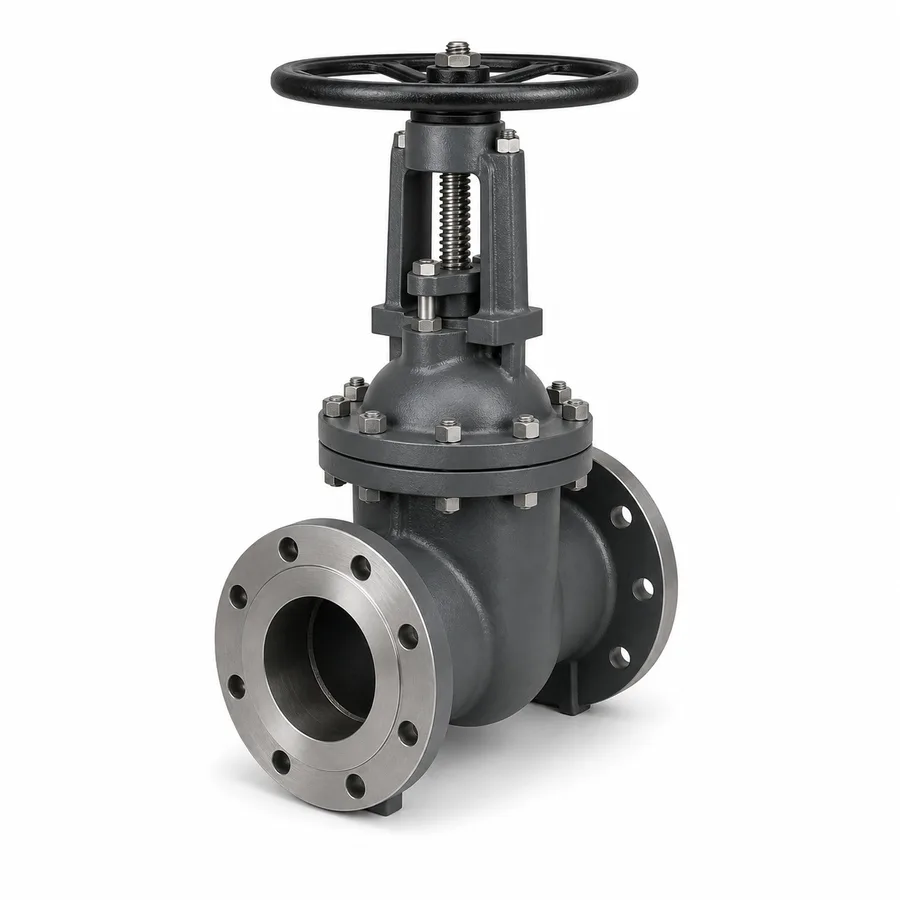 valvula compuerta acero al carbon bridada
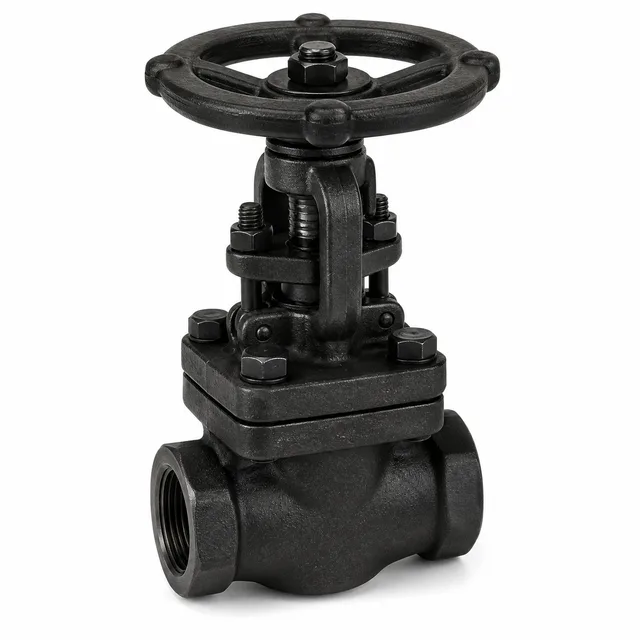 valvula compuerta acero al carbon 800 psi
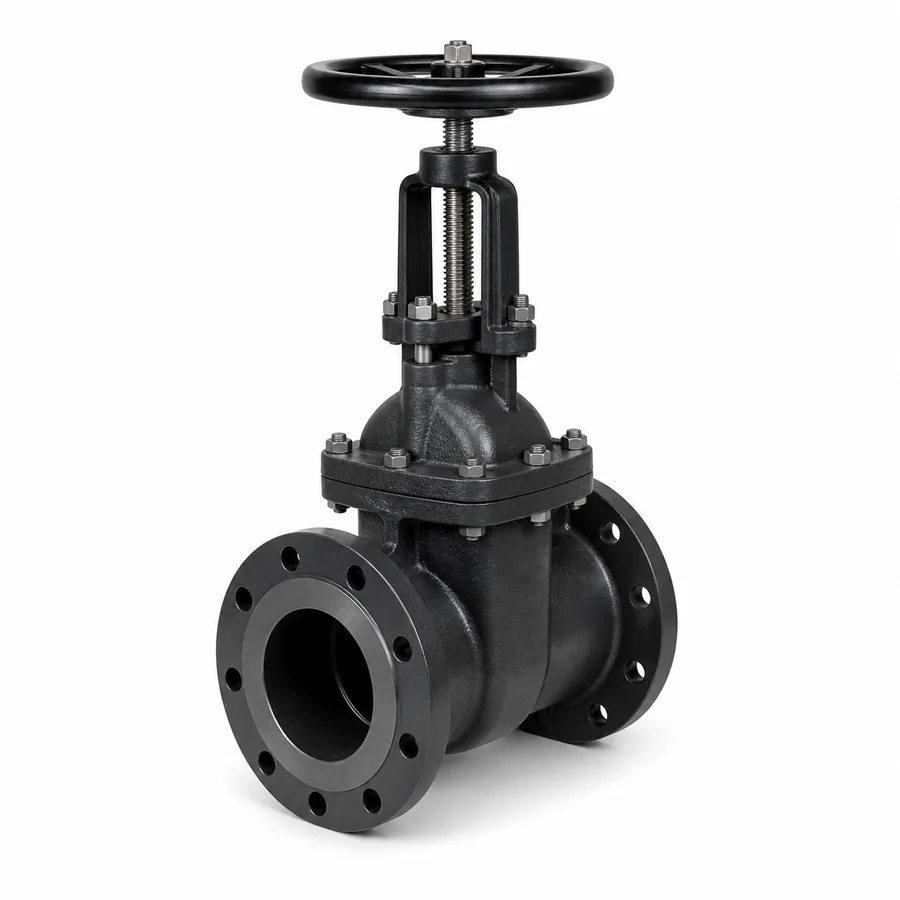 valvula compuerta hierro vastago ascendente