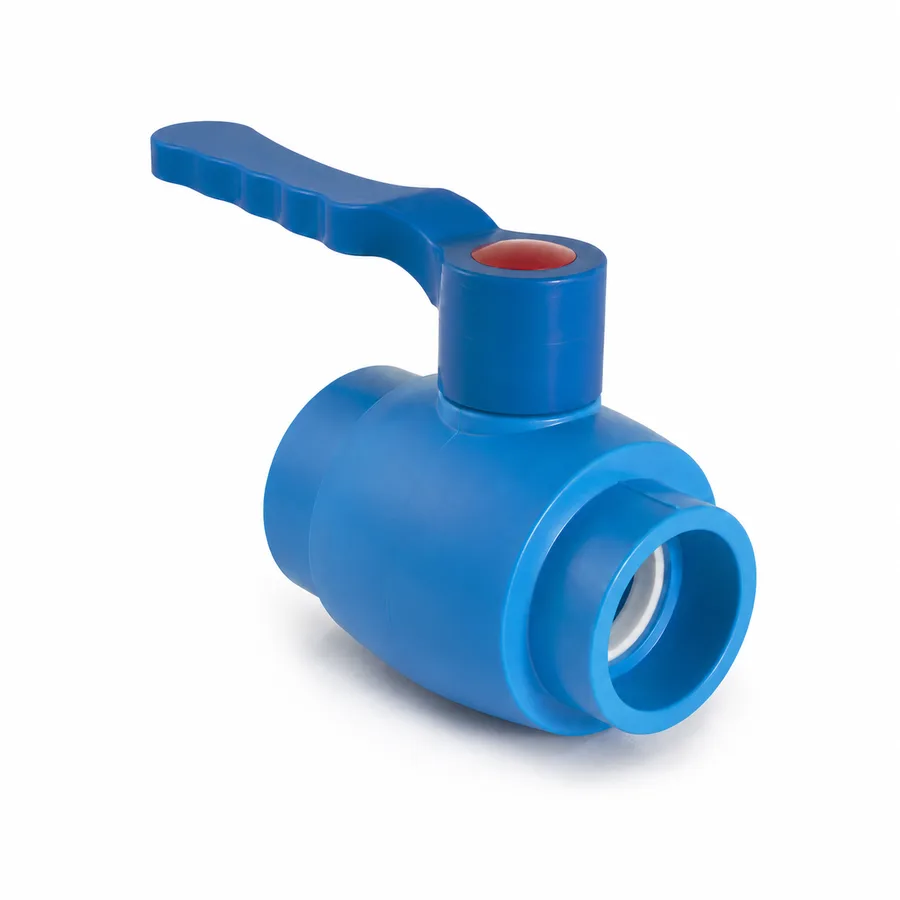
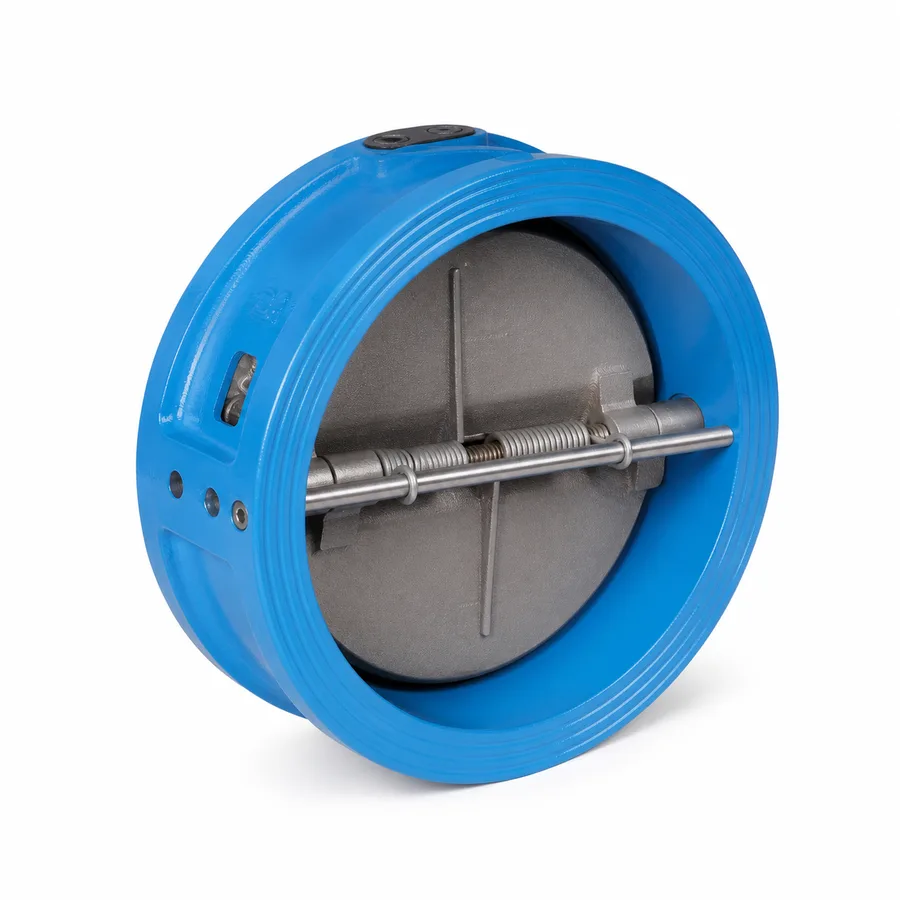
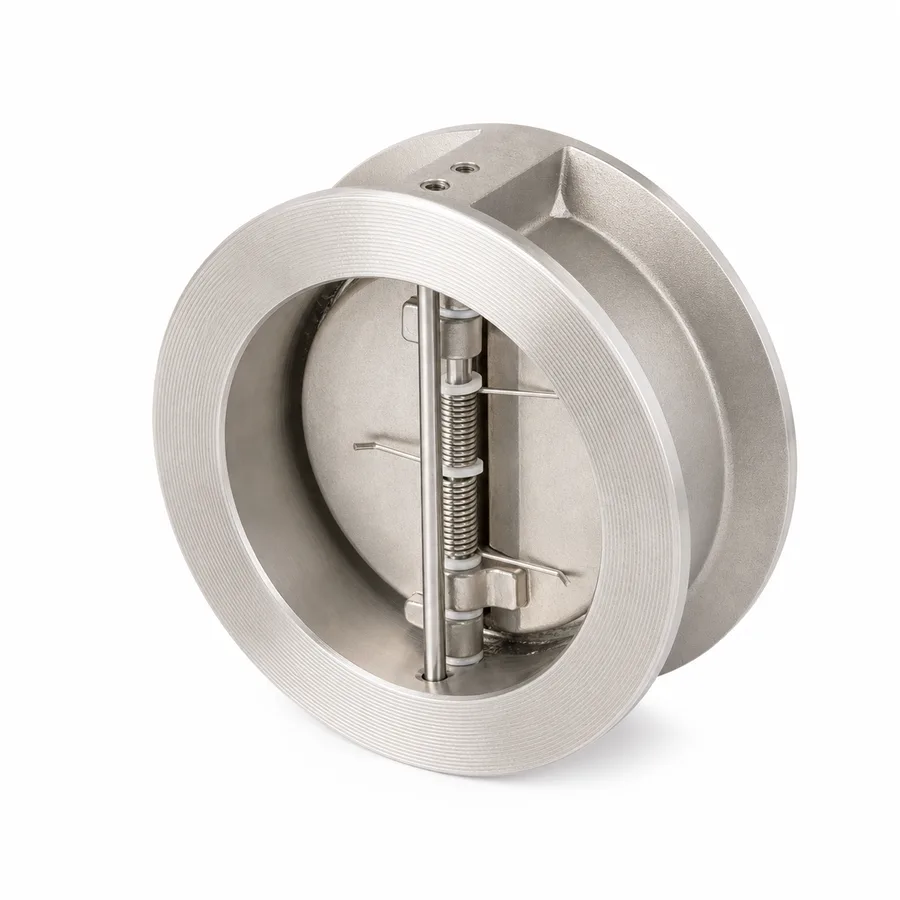
A check valve is not purchased by size alone: it is purchased by flow dynamics. Verdict: for clean water with stable flow and low closing-speed demand, a swing check may work; for pumps with frequent starts and stops, vertical lines or water hammer risk, prefer spring-assisted, dual-plate or other quick-closing designs; for steam, high pressure or reciprocating service, evaluate piston or lift check designs according to standard and allowed orientation.
TECTUL offers options such as the iron swing check valve, the dual-plate wafer check valve, the stainless disc wafer check valve, the vertical stainless check valve and the grooved check valve for fire protection systems. The key is to choose closing speed, pressure drop, mounting position and connection before looking only at price.
A check valve allows flow in one direction and seeks to prevent reverse flow when a pump stops, downstream pressure changes or a liquid column tries to return. If it closes late, reverse flow gains velocity and slams the disc into the seat. That impact can cause water hammer, noise, vibration, seat damage, hinge failure or pipe stress. If it closes too hard or uses excessive spring force, it can increase pressure drop and become unstable at low flow.
That is why the check valve is selected with the system curve in mind. It must open at normal flow, remain stable without flutter and close before reverse flow becomes destructive. An oversized valve is as problematic as an undersized one: if normal flow does not create enough velocity, the disc never reaches a stable position and repeatedly strikes the seat.
| Condition | Recommended type | Practical threshold | Risk if wrong |
|---|---|---|---|
| Pumping with frequent stops | Spring, dual-plate or quick-closing design | Check whether closure occurs before flow reversal | Water hammer and seat damage |
| Clean horizontal water | Swing check if flow is stable | Install with top cover and correct direction | Flutter at low flow |
| Vertical upward flow | Vertical, spring or approved design | Only if datasheet allows that orientation | Disc that does not close or open |
| Between flanges with short space | Wafer or dual-plate | Confirm face-to-face length and guides | Interference and excessive loss |
| Grooved fire system | Grooved check valve listed for the system | Compatibility with couplings and design supervision | Inspection rejection |
A swing check uses a hinged disc lifted by flow. It has low pressure drop when properly sized and is common in water, general pumping and service networks. Its closure depends on gravity, reverse flow and geometry, so it may close late in highly dynamic systems. It must be installed in the allowed orientation, with room for cover and hinge maintenance.
The spring pushes the disc toward the seat and accelerates closure. It is useful when flow may reverse quickly or when mounting position requires mechanical assistance. Spring force must match differential pressure and minimum flow; excessive spring force raises pressure drop and may prevent full opening.
The dual-plate design divides the closure member into two half discs with springs. Its short body reduces space and weight, and fast closure helps against water hammer. It is frequent between flanges in medium and large sizes. Guides, flange compatibility, differential pressure and fluid cleanliness must be reviewed because deposits on pins or springs affect movement.
Piston or lift checks are used when guided movement and controlled closure are required, typically in steam, gases or clean liquids under demanding pressure and temperature. They often create more pressure drop than a swing check, but provide firm guiding. Allowed orientation is critical; not every piston valve works in every position.
Water hammer appears when a mass of fluid changes velocity suddenly. On a pump discharge, if the check valve allows the column to reverse and then slams shut, energy becomes transient overpressure. The check valve is not the only control element: line velocity, pipe length, elevation profile, pump stopping time, trapped air, relief valves and starting control also matter. Still, selecting a slow check where quick closure is required is a frequent cause of damage.
In purchasing, ask whether the pump starts and stops many times per day, whether there is a vertical column, whether impact noise occurs at shutdown, whether variable speed drives are present and whether the network has transient protection. When there is a history of water hammer, do not automatically repeat the same swing check; evaluate spring-assisted closure, dual-plate design, damping, surge anticipation or hydraulic analysis.
The body arrow indicates flow direction, but it does not approve every position. A swing check is normally installed horizontal or vertical upward if the manufacturer allows it; vertical downward flow is often problematic because gravity may open the disc or prevent closure. Spring checks and some vertical checks allow more orientations, but always under datasheet limits. In steam and gases, condensate and dirt change behavior; an installation that works in water may fail with wet steam.
API 594 covers check valves with flanged, lug, wafer and butt-welding ends. MSS SP-71 covers gray iron swing check valves with flanged and threaded ends. MSS SP-125 covers in-line, spring-loaded, center-guided check valves in gray iron and ductile iron. AWWA C508 applies to waterworks swing checks in sizes 2 through 48 inches. API 598 is used for valve inspection and testing. The standard does not replace system analysis, but it removes ambiguity in construction and testing.
At receiving, confirm flow arrow, standard, material, pressure, internal type and allowed orientation. Before installation, open the cover or inspect movement when the design allows it; a disc jammed during transport can fail from the first pump start. After installation, listen to pump shutdown: a sharp, repeated or metallic impact indicates that the valve is not closing at the right moment or that normal flow does not keep it stable. That symptom must be corrected through hydraulic selection, not only by tightening bolts or changing gaskets.
For replacement work, record the symptom that triggered the purchase. A valve bought because of leakage is not the same as a valve bought because of shutdown impact or repeated water hammer. That history helps decide whether to keep the same family, change closing speed or request a hydraulic review before installing another check valve.
Document the result.
If the line is horizontal, clean and stable, a swing check can be economical and durable. If pumping is dynamic, size is medium or large, impact noise is present or short face-to-face space is required, evaluate dual-plate wafer or spring-assisted closure. If orientation is vertical, buy only designs declared for that position. For grooved fire protection networks, use a grooved check valve compatible with the system. At TECTUL, provide fluid, normal and minimum flow, pressure, DN, position, pump, start frequency and water hammer symptoms; then the check valve is selected by hydraulics, not habit.