 TECTULby IMR
Cold weld for copper — two-component epoxy repair putty, no torch required
TECTUL · Dispatch across Colombia · Exports to Central & South America
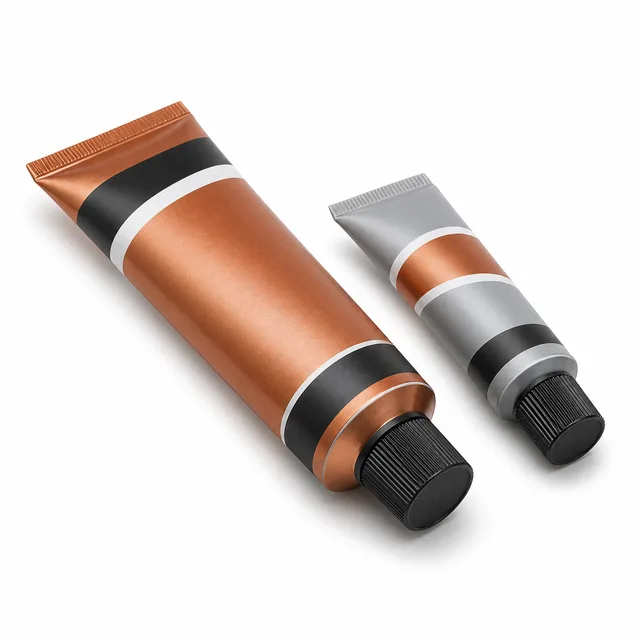
TECTUL's cold weld for copper is a two-component epoxy adhesive (resin plus hardener) in a 36 ml tube, used to bond and seal copper and copper-alloy parts without a torch or flux. It hardens to handling strength in 4 to 6 hours and reaches full cure in 15 to 24 hours at room temperature. It is a chemical repair, not a metallurgical joint: it suits pinhole leaks, porosity and worn threads of low demand, and it does not replace the capillary soldered joint per ASTM B828 on copper fittings made under ASME B16.22-2021 in new installations or full-design-pressure lines.
Important: Before using these data in engineering, design or installation decisions on systems exposed to mechanical, pressure, rupture, fatigue, impact or water-hammer risk, it is essential to read the technical notice and limitation of liability at the end of this sheet.
SKU VT-266053-01 · 36 ml tube · only current catalog presentation · sold by the unit
1. Technical specifications
What it is
Cold weld for copper is a two-component epoxy adhesive (resin plus hardener) applied cold, without a torch or flux, to bond and seal copper and copper-alloy parts. It is not welding or soldering in the metallurgical sense: it is a chemical adhesive that reproduces the sealing effect of a soldered joint without melting the metal or adding filler metal.
| Characteristic | Data |
|---|---|
| Product type | Two-component epoxy adhesive (repair putty/paste), resin + hardener |
| SKU and presentation | VT-266053-01 · 36 ml tube (only current TECTUL catalog presentation) |
| Lot brand | Confirmed on quotation |
| Mix ratio | 1:1 by volume, per type-reference formulas (two-component repair epoxy); the exact ratio of the real lot is confirmed in its manufacturer's data sheet |
| Initial hardening (handling) | 4 to 6 hours at room temperature |
| Full cure | 15 to 24 hours at room temperature |
| Service thermal resistance (cured) | Type-reference formulas declare service up to 287 °C (550 °F) once cured; confirmed in the real lot brand's data sheet |
| Materials it works on | Copper and copper alloys (bronze, brass); the lot manufacturer's data sheet confirms compatibility with other non-ferrous metals |
| Service pressure | Not published by the lot manufacturer; not a pipe-standard value — confirmed on quotation |
The hardening times, mix ratio and thermal resistance in this section are values from type-reference formulas (industrial and household two-component repair epoxies) verified against manufacturer data sheets — they are not necessarily the certified figure for the specific brand and lot TECTUL ships, which is confirmed on quotation.
⚠ Important: this technical data sheet is a reference guide to the product's properties; it is not a quality certificate for the product you are buying. Heats vary from one another and may differ from the values stated here, or even depart from the standards. If your application requires compliance with a standard, always check the quality certificate (mill certificate) of the lot you are buying. If in doubt, ask one of our technical advisors →
2. What it fixes and what it doesn't
What it fixes
- Pinhole leaks from pitting or porosity in copper pipe or fittings.
- Worn or damaged threads on copper and copper-alloy connections, when the part cannot be replaced right away.
- Low-demand sealing and minor assembly work where torch heat is prohibited or cannot reach: confined spaces, proximity to flammable materials, lines that cannot be fully drained.
- Emergency field repair while the permanent fix is scheduled.
What it does not replace
On new copper pipe installations and on lines operating at full design pressure, the primary joint is made with a filler-metal capillary soldered joint per ASTM B828, on copper fittings manufactured to ASME B16.22-2021. Cold weld epoxy is not a substitute for that joint: it is an epoxy adhesive, without the mechanical properties or the pressure-and-temperature behavior of a continuous metallurgical joint. For the rigid copper pipe itself (types K, L and M per ASTM B88), TECTUL keeps a dedicated data sheet with the dimensional and alloy detail.
This sheet also does not certify it for fuel gas networks: that application requires products and procedures specifically certified under the applicable gas regulation, a certification a general-purpose repair epoxy does not carry by default.
3. Application
Preparation and mixing
- Shut off the flow and depressurize the section before working on it.
- Sand the copper surface around the leak or thread until bare, oxide-free metal is exposed.
- Degrease and fully dry the area: residual moisture reduces the epoxy's adhesion.
- Mix resin and hardener in the ratio stated by the lot brand's data sheet (type-reference ratio: 1:1 by volume) until the color is uniform, with no streaks.
- Apply and shape the putty on the prepared surface before it begins to harden.
Curing and putting into service
- Immobilize the part during initial hardening (4 to 6 hours at room temperature): do not load or move it during that time.
- Do not pressurize or put the line into service before full cure (15 to 24 hours at room temperature); at lower ambient temperature, cure time extends.
- Perform a leak test before returning the line to service.
- Confirm any temperature, pressure or chemical-exposure limit in the lot brand's data sheet before considering the repair final.
4. Frequently asked questions
Does a cold-weld repair hold pressure?
It holds the load of a minor repair or a low-demand seal, not that of a new line at full design pressure. It is not a substitute for the filler-metal capillary soldered joint per ASTM B828 on ASME B16.22-2021 fittings: on those lines the primary joint is soldered. For the exact value the real lot withstands, confirm the brand's data sheet on quotation.
Does it work on wet pipe?
No. The epoxy requires a clean, sanded, completely dry copper surface to bond; residual moisture at the application point reduces adhesion and can prevent sealing. Shut off the flow, fully dry the area and degrease it before mixing and applying.
What temperature does it withstand?
It depends on the lot's formula. Type-reference formulas declare service up to 287 °C (550 °F) once fully cured; the exact temperature of the real lot TECTUL ships is confirmed in its brand's data sheet on quotation.
Is it permanent or provisional?
It depends on the use. As a minor repair or a low-demand seal, within the temperature limits and without a design pressure above what the manufacturer declares, it can be considered a continuous-use solution. On a new full-pressure line it is a provisional repair: the permanent fix is cutting out the damaged section and executing the capillary soldered joint.
How long should I wait before putting the repaired line into service?
Initial hardening takes 4 to 6 hours at room temperature — do not load or move the part during that time — and full cure, before pressurizing, takes 15 to 24 hours at room temperature. Run the leak test after full cure, not before.
5. Application notes
Feasibility
Cold weld for copper is the right choice for pinhole leaks, porosity and worn threads of low demand, and for emergency repairs where a torch cannot be used. It is not specified as the primary joint on new full-pressure copper pipe installations, nor is it certified in this sheet for fuel gas networks: in those cases the selection is the filler-metal capillary soldered joint per ASTM B828 on ASME B16.22-2021 fittings.
Installation
Shut off the flow and depressurize before working. Sand, degrease and fully dry the copper surface: residual moisture is the most common cause of adhesion failure. Mix resin and hardener in the ratio from the lot manufacturer's data sheet, immobilize the part during initial hardening and do not pressurize before full cure. Always verify with a leak test before returning the line to service.
Design
This sheet does not certify a pressure or service temperature value for the real lot TECTUL ships: the cure time, mix ratio and thermal resistance figures cited are from type-reference formulas. For a project that requires a certified figure, TECTUL confirms the real lot brand's data sheet on quotation. The decision to use this product instead of the capillary soldered joint is the responsibility of the line designer, per the project code and the criticality of the service.
6. Technical notice and limitation of liability
The hardening and cure times, mix ratio and thermal resistance in this sheet correspond to type-reference formulas (industrial and household two-component repair epoxies), verified against the data sheet and official page of the manufacturer cited as reference. They are not a certificate of conformance for the brand or the specific lot TECTUL ships under SKU VT-266053-01: those figures are confirmed in the real brand's data sheet on quotation.
To learn the certified behavior of a specific lot, TECTUL provides upon request the data sheet and, if the manufacturer issues one, the certification of the shipped lot. In the absence of that certification, the data given here must not be used as the sole criterion in critical, safety-related, fuel-gas, or life-and-property-critical applications; in those cases consult our technical team beforehand.
Sources
- Página de producto TECTUL — Soldadura en frío para cobre (previews/conduccion-de-fluidos/juntas-empaques-y-sellos/soldadura-en-frio-para-cobre.html), consultada 4-ago-2026: SKU VT-266053, presentación 36 ml, endurecimiento inicial 4-6 h y curado total 15-24 h
- J-B Weld Company — J-B Weld Original Cold-Weld / Twin Tube, ficha oficial de producto (jbweld.com/product/j-b-weld-twin-tube), consultada ago 2026: proporción de mezcla 1:1, endurecimiento 4-6 h, curado total 15-24 h, resistencia térmica hasta 550 °F (287 °C) una vez curado — tomada como fórmula de referencia del tipo, no como ficha del lote real de TECTUL
- ASTM B828-16(2021) — Standard Practice for Making Capillary Joints by Soldering of Copper and Copper Alloy Tube and Fittings
- ASME B16.22-2021 — Wrought Copper and Copper Alloy Solder Joint Pressure Fittings
- ASTM B88-20 — Standard Specification for Seamless Copper Water Tube (referencia del tubo de cobre rígido tipos K, L y M para el deslinde con la junta capilar soldada)
This data sheet is the property of TECTUL, part of the Industrias IMR group. Reproduction without attribution is prohibited. Original document and updates: tectul.com/en/conduccion-de-fluidos/sellado-y-union-de-tuberias/ficha-tecnica-soldadura-en-frio-para-cobre.html.