Corrosion is the electrochemical degradation of a metal reacting with its environment: iron gives up electrons, dissolves as an ion and ends up as oxide. In an industrial plant the right question is not whether corrosion will happen, but how fast and by which mechanism, because each mechanism is prevented differently: a corrosion allowance that solves uniform attack does nothing against chloride pitting, and a paint system that works in a rural atmosphere fails on a marine pier.
As a quick guide: in moderate rural or urban atmospheres (ISO 9223 categories C2–C3), hot-dip galvanized or painted carbon steel is usually the economical choice; with chlorides, chemical washdowns or sanitary requirements, move to 304 or 316 stainless steel; and for buried or submerged structures —tanks, piers, hulls, buried pipe— cathodic protection with sacrificial anodes is the standard complement to any coating. This guide covers the mechanism, the six most common corrosion types and the five prevention strategies with their reference standards.
All wet corrosion works like a battery. Four elements must be present at the same time: an anode (the area of metal that dissolves: Fe → Fe²⁺ + 2e⁻), a cathode (the area where electrons are consumed, typically by reduction of dissolved oxygen), an electrolyte (water with salts closing the ionic circuit) and an electrical contact between anode and cathode. Remove any one of the four and corrosion stops.
That principle underpins every prevention method: paints and galvanizing isolate the metal from the electrolyte; inhibitors modify the electrolyte; dielectric unions break the electrical contact between dissimilar metals; and cathodic protection turns the whole part into a cathode by feeding it electrons from an external anode that corrodes in its place.
The metal loses thickness evenly across the exposed surface: the general rusting of weathering steel. It is the most benign type because it is predictable: once the environment's rate is known (see the ISO 9223 table below), you size a corrosion allowance or a coating for the required service life. Unprotected steel sheet on an industrial roof is the typical case.
It appears when two dissimilar metals are in electrical contact within the same electrolyte: the more active (anodic) metal corrodes at an accelerated rate while the nobler (cathodic) one is protected. The galvanic series ranks metals by their potential in seawater; the larger the potential difference between the coupled metals, the stronger the attack on the active one. As a practical criterion, differences above roughly 0.25 V are considered incompatible without isolation.
| Metal | Indicative potential in seawater (V vs. calomel electrode) | Role in the couple |
|---|---|---|
| Graphite | +0.25 | Cathodic (noble): accelerates corrosion of almost any metal coupled to it |
| 316 stainless steel (passive) | −0.05 to −0.10 | Cathodic against carbon steels and light alloys |
| Copper | −0.30 to −0.37 | Cathodic against steel, zinc and aluminum |
| Brass | −0.30 to −0.40 | Similar to copper |
| Carbon steel | −0.60 to −0.70 | Anodic against copper and stainless; cathodic against zinc |
| Aluminum (alloys) | −0.75 to −1.00 | Anodic against steel and copper |
| Zinc / galvanized steel | −0.98 to −1.03 | Anodic: sacrifices itself to protect steel |
| Magnesium | −1.60 to −1.63 | The most active: used only as a sacrificial anode |
Indicative values per ASTM G82; the ranking may change in other electrolytes. The classic piping case is coupling copper with galvanized steel: the potential difference is about 0.6 V, the zinc coating is consumed at the joint and, in addition, copper ions carried by the water deposit downstream on the steel and trigger local pitting. That is why copper is never installed upstream of galvanized pipe, and every copper-to-steel transition must use a dielectric union. The area ratio also matters: a small anode coupled to a large cathode (a steel bolt in a copper plate) corrodes far faster than the reverse case.
A localized attack that perforates the metal at discrete points while the rest of the surface stays intact; it is typical of stainless steels in the presence of chlorides, which locally break down the passive chromium-oxide film. Relative pitting resistance is compared with the PREN index (%Cr + 3.3·%Mo + 16·%N): the higher the PREN, the higher the resistance. As indicative values calculated from composition ranges: 430 stainless ≈ 16–18, 304 ≈ 18–20, 316 ≈ 23–28 and duplex 2205 ≈ 34–38. In practice: 430 and 304 work indoors and in chloride-free atmospheres; near the sea or with chlorinated cleaning agents, the molybdenum in 316 makes the difference.
It occurs inside narrow gaps where the electrolyte stagnates and oxygen is depleted: under gaskets, washers, riveted laps, dirt deposits or intermittent welds. The oxygen-starved zone becomes anodic relative to the rest of the part and corrodes out of sight. Prevention is a design matter: continuous welds instead of lap joints, drainage that avoids standing water, sealing of gaps and periodic cleaning of deposits.
It is the combination of three factors: a susceptible material, sustained tensile stress and a specific environment. It produces fine cracks and sudden brittle failure with no visible metal loss, which makes it especially dangerous. The most cited industrial case is austenitic stainless steel (304/316) with chlorides at elevated temperature —in practice above roughly 60 °C, according to reference literature (ASM Handbook)—, typical under wet insulation on hot piping. It is prevented by relieving residual stresses, switching to resistant alloys (duplex, ferritics) or removing the aggressive medium.
High-velocity flow continuously strips the protective oxide film and exposes fresh metal: the attack concentrates at elbows, reducers, valve seats and pump discharges, with a horseshoe or directional-groove pattern. Copper is especially sensitive: Copper Development Association manuals limit water velocity in copper tube to around 1.5 m/s (5 ft/s) in hot water and up to about 2.4 m/s (8 ft/s) in cold water. Prevention means lowering velocity (larger diameter), smoothing direction changes or moving to harder materials.
ISO 9223:2012 classifies atmospheric corrosivity into six categories and bounds the first-year thickness loss for structural metals. It is the reference for deciding how much protection a structure needs:
| Category | Typical environment | Carbon steel (µm/year, first year) | Zinc (µm/year, first year) |
|---|---|---|---|
| C1 (very low) | Dry, climate-controlled interiors | ≤ 1.3 | ≤ 0.1 |
| C2 (low) | Rural, low pollution | 1.3 – 25 | 0.1 – 0.7 |
| C3 (medium) | Urban and moderate industrial | 25 – 50 | 0.7 – 2.1 |
| C4 (high) | Industrial and moderate coastal | 50 – 80 | 2.1 – 4.2 |
| C5 (very high) | Aggressive industrial, coastal | 80 – 200 | 4.2 – 8.4 |
| CX (extreme) | Marine splash zone, aggressive tropical | 200 – 700 | 8.4 – 25 |
Two practical takeaways: first, the same steel corrodes up to 100 times faster on a pier than in a dry warehouse, so the site category matters more than the coating brand; second, zinc corrodes 10 to 30 times slower than steel in every category, and that ratio is exactly what makes galvanizing pay off.
| Strategy | How it works | Where it fits | Reference |
|---|---|---|---|
| Material selection | Removes susceptibility (stainless, non-ferrous, plastics) | Chlorides, chemicals, sanitary requirements; where maintenance is costly | PREN index; ASM Handbook Vol. 13A |
| Hot-dip galvanizing | Zinc barrier + sacrificial protection at cuts and scratches | Outdoor structure, enclosures and fasteners in C2–C4 | ASTM A123/A123M-24 (minimum coating thickness 45 to 100 µm by material category and steel thickness) |
| Paints and coatings | Barrier against the electrolyte; demands surface preparation | Large surfaces; where color is required; scheduled maintenance | ISO 12944 (systems by category C2–CX and durability) |
| Cathodic protection | Turns the part into a cathode: an external anode corrodes in its place | Buried or submerged: tanks, piers, hulls, buried pipe | NACE/AMPP SP0169; ISO 15589-1 |
| Inhibitors | Modify the electrolyte to slow the anodic or cathodic reaction | Closed circuits: cooling, boilers, radiators | Manufacturer water-treatment programs |
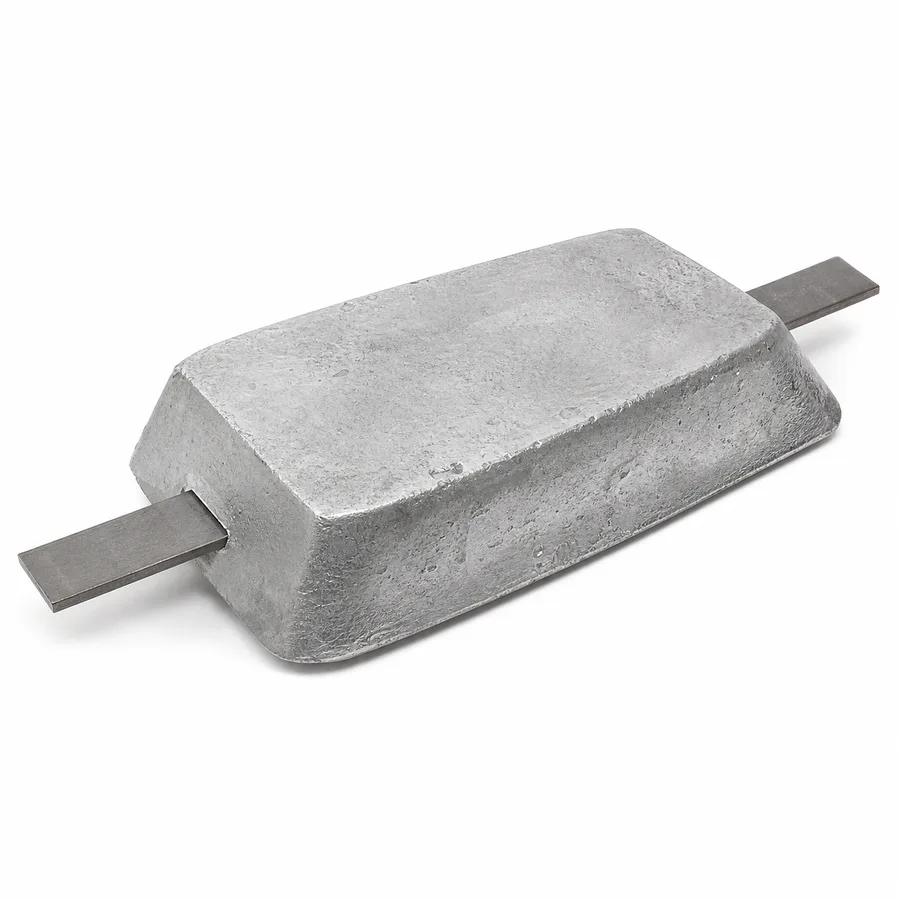
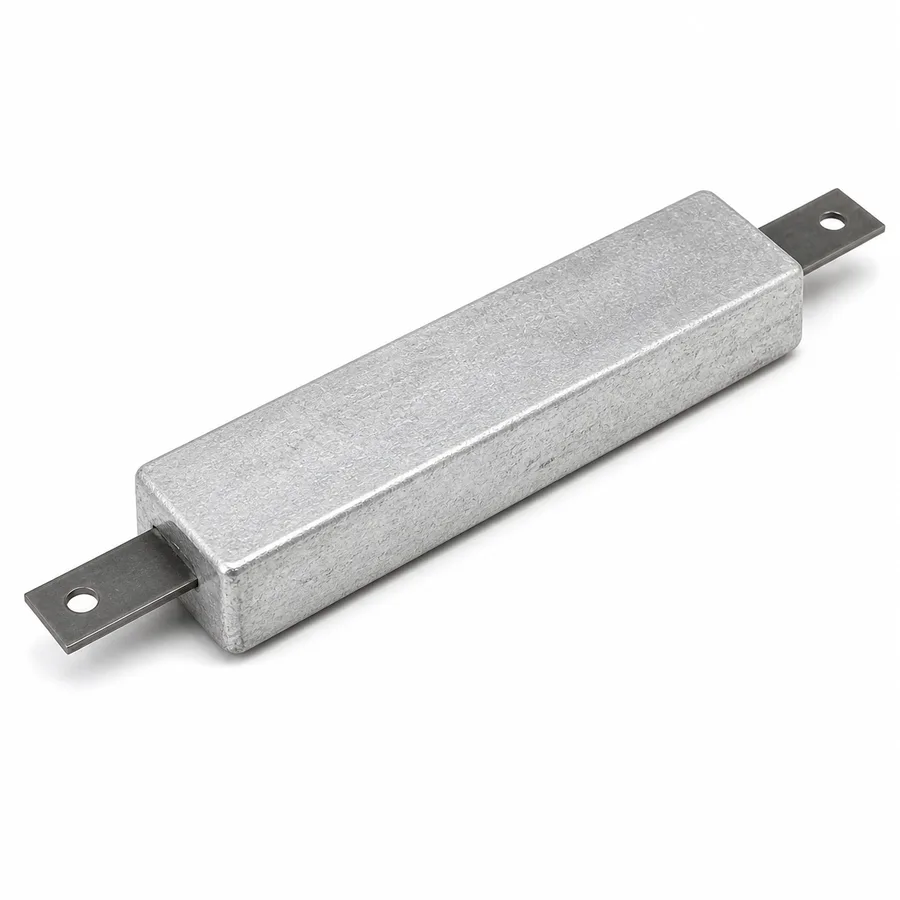
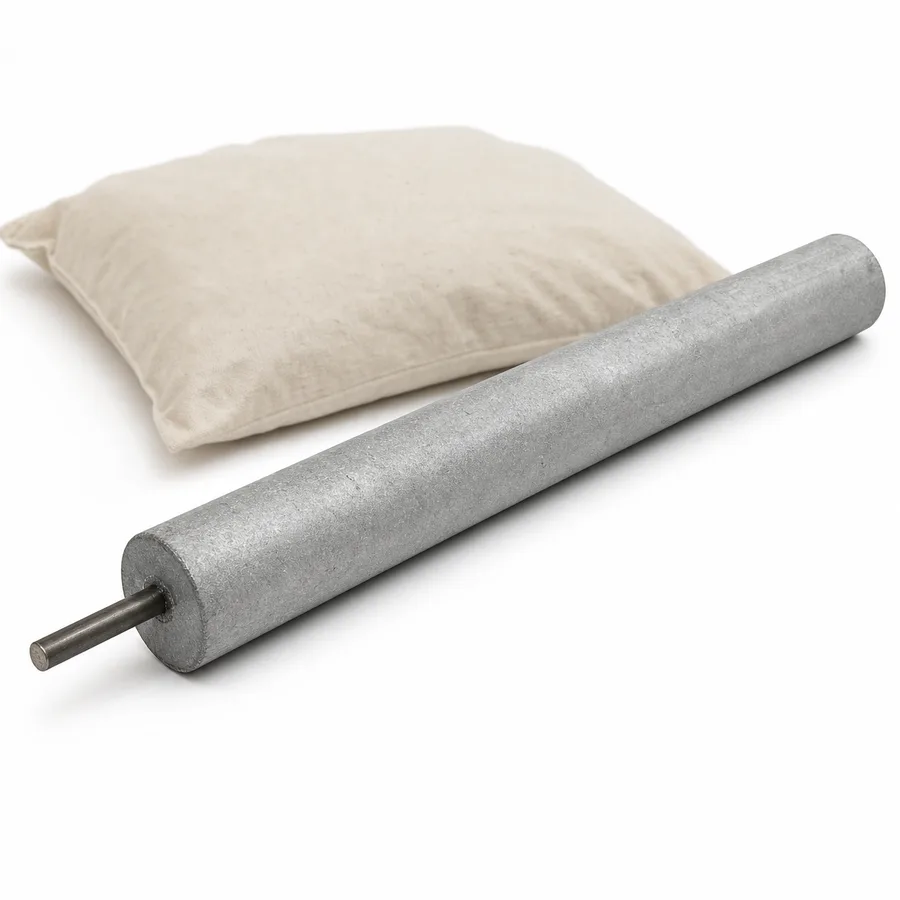
Strategies are combined: standard practice on buried pipe is coating + cathodic protection, because the anode only has to cover defects in the barrier and its consumption drops drastically. To size cathodic protection —which anode metal, how much mass and how often to replace— see the complete sacrificial anode guide: in short, a zinc anode for seawater and hulls, an aluminum anode when maximum capacity per kilogram in salt water is the goal, and a magnesium anode for soils and fresh water, where its higher driving potential is needed.
Translate the environment into a purchasing decision:
The TECTUL technical team can help you define your site's corrosivity category and choose between galvanizing, stainless steel or cathodic protection based on your operating data.