A modern diesel engine needs six correct fluids to reach its design life: API C-series engine oil (CK-4 or FA-4), formulated coolant —never plain water—, 32.5 % urea DEF fluid (ISO 22241), ISO VG 46 or 68 hydraulic fluid, clean fuel with fine filtration and NLGI 2 EP grease on the chassis. Each one performs a different function, degrades in a different way and is specified by a different standard; mixing them up or "stretching" them is behind a large share of premature failures in yellow machinery and trucks.
Quick verdict: for mixed fleets in Colombia, use 15W-40 API CK-4 oil, which is backward compatible with CJ-4 and earlier categories; reserve FA-4 only for engines that expressly approve it. Use ASTM D6210 fully formulated coolant or long-life OAT/ELC —never tap water—, ISO 22241 certified DEF in every SCR engine, ISO VG 46 hydraulic fluid as the baseline (VG 68 in hot climates under high load) and NLGI 2 EP lithium grease on pins and joints. Exact intervals are set by the equipment manufacturer's manual, not by this guide or any other.
The American Petroleum Institute (API) service classification for diesel engines is the C series ("Commercial"). The categories in force in 2026 are API CK-4 and API FA-4, licensed since December 2016 under the API 1509 system. The central difference is HTHS viscosity (high temperature, high shear, measured at 150 °C): CK-4 keeps HTHS ≥ 3.5 mPa·s and is backward compatible with CJ-4, CI-4 PLUS and CI-4; FA-4 lowers HTHS to 2.9–3.2 mPa·s to reduce fuel consumption and can only be used in engines that explicitly approve it (broadly, 2017-and-later models from some manufacturers; never in older engines).
The succession is already defined: API will grant the first licences of the new CL-4 and FB-4 categories (developed under the working name PC-12) on 1 January 2027, aligned with the 2027 North American emissions rules. Until then —and through the transition years— CK-4 remains the correct purchasing specification for mixed fleets.
Viscosity is classified under SAE J300 (revision J300_202405). A 15W-40 and a 5W-40 are the same SAE 40 grade when hot (kinematic viscosity of 12.5 to 16.3 mm²/s at 100 °C); they differ when cold: 15W is rated for cranking at −20 °C and 5W at −30 °C. In practice, 15W-40 is the economical standard for the Colombian climate; synthetic 5W-40 is justified for cold starts at high altitude, for extended intervals backed by oil analysis or when the engine manufacturer recommends it for fuel efficiency.
Plain water transfers heat well, but it corrodes iron and aluminium, offers no freeze or boil-over protection and promotes wet-liner cavitation: liner vibration forms bubbles that implode against the metal and drill through it, a classic heavy-duty diesel failure. The correct coolant is a blend of ethylene glycol, demineralised water and corrosion inhibitors: a 50/50 dilution by volume protects against freezing down to about −37 °C and raises the boiling point above that of water, a margin that grows with the system's pressurised cap.
| Technology | Inhibitors | Maintenance | Reference |
|---|---|---|---|
| Conventional fully formulated | Inorganic (silicates, nitrites, molybdates) | Periodic supplemental coolant additive (SCA) doses; minimum 2 years of normal service with maintenance | ASTM D6210-17 |
| OAT / long life (ELC) | Organic acids (carboxylates), with or without nitrites | No periodic SCA dosing; extended life per the coolant and engine manufacturers | Manufacturer specifications |
ASTM D6210-17, the specification for glycol-base coolants for heavy-duty engines, requires the concentrate to be used at 40 to 60 % by volume (or prediluted at 50 % minimum) and, with additive maintenance, to serve at least two years in normal service. OAT/ELC coolants remove the periodic SCA dosing in exchange for discipline: do not mix technologies, because the blend dilutes the inhibitors of both and leaves the system worse protected.
DEF (Diesel Exhaust Fluid; AdBlue is its best-known trade name) is an aqueous solution of 32.5 % by mass technical urea (AUS 32) in demineralised water, standardised by the ISO 22241 series. It is not a fuel additive: it travels in its own tank and is dosed into the exhaust, where the SCR (selective catalytic reduction) catalyst converts nitrogen oxides into nitrogen and water. It is required by Euro V and Euro VI engines equipped with SCR and by North American EPA 2010-and-later engines. ISO 22241-1:2019 sets the urea content at 31.8 to 33.2 % and strict limits on biuret, aldehydes, phosphorus, calcium and trace metals: agricultural urea and tap water poison the catalyst. 32.5 % is the eutectic point of the solution: it freezes at −11 °C and recovers its quality on thawing.
What happens if DEF runs out? The engine is not damaged, but emissions regulations mandate an inducement strategy: the system progressively reduces torque and power and, after the next restart, limits speed until the tank is refilled. On a job site that means a parked machine. A maintenance detail few consider: DEF attacks copper and carbon steel and degrades many sealants; if you service covers or flanges in contact with DEF, use a gasket maker with documented compatibility such as Loctite 515, whose technical data sheet reports partial strength retention (≈60 %) in this fluid — the detail is in the Loctite 515 guide.
The hydraulic systems of excavators, loaders and backhoes use fluids classified by ISO VG viscosity (ISO 3448:1992): the grade number is the mid-point kinematic viscosity at 40 °C in mm²/s, with a ±10 % band. ISO VG 46 (41.4–50.6 mm²/s at 40 °C) is the most widespread grade in temperate climates; VG 68 (61.2–74.8 mm²/s) is preferred under high ambient temperature or continuous severe service; VG 32, in cold operation. The performance categories are HM (anti-wear, equivalent to DIN 51524-2 HLP) and HV (high viscosity index, DIN 51524-3 HVLP), defined in ISO 11158. Beware: several machinery manufacturers instead specify monograde engine oils (for example SAE 10W) as hydraulic fluid; the equipment manual overrides any equivalence. And cleanliness weighs as much as the grade: hold the ISO 4406 particle code the manufacturer requires with the recommended filtration.
The fuel is specified in ASTM D975-24 (grades 1-D and 2-D, with sulfur levels S15, S500 and S5000). Its two field enemies are water and particles. Water —free or emulsified— corrodes, feeds microbial growth in tanks and destroys injectors; high-pressure common rail systems, which according to injection manufacturers exceed 2,000 bar (200 MPa), run on micron-level clearances and forgive no abrasives. The practical filtration architecture: a primary filter with water separator (typical media in the order of 10 µm) plus a fine final filter; for common rail, filtration manufacturers offer 3 µm media at 99 % efficiency (Donaldson technical data). Drain the water separator daily and buy fuel only from a reliable supplier.
Pins, bushings, joints and U-joints are lubricated with NLGI 2 consistency grease with EP (extreme pressure) additives. NLGI grade 2 corresponds to a worked penetration of 265 to 295 tenths of a millimetre per ASTM D217: a medium consistency, the most used on chassis because it pumps well and stays in the joint. The usual thickeners are lithium and lithium complex; EP additives protect against shock loads on pins and buckets. For automotive service, the ASTM D4950 classification designates chassis greases as LB (and GC-LB if they also serve wheel bearings). On joints exposed to impact and dust, machinery manufacturers often call for greases with molybdenum disulfide (MoS2); check the manual before standardising a single grease in the warehouse.
No generic interval replaces the equipment's operation and maintenance manual: hours between changes depend on the engine, service severity, fuel sulfur content and fluid quality, and each manufacturer publishes them by model. The objective tool for adjusting intervals is periodic oil analysis (wear metals, soot, fuel dilution, TBN): it confirms or corrects the interval with data instead of assumptions. Keep an hour-meter log for every fluid —oil, coolant, hydraulic and filters— and never extend an interval without laboratory evidence.
| Fluid | Function | Classification / standard | Key figure |
|---|---|---|---|
| Engine oil | Lubricate, cool and control soot | API CK-4 / FA-4; SAE J300 (15W-40, 5W-40) | HTHS ≥ 3.5 mPa·s (CK-4); 2.9–3.2 mPa·s (FA-4) |
| Coolant | Transfer heat; protect against corrosion and cavitation | ASTM D6210 (heavy duty); manufacturer OAT/ELC | 50/50 blend: protection down to ≈ −37 °C |
| DEF (AdBlue) | Reduce NOx in the SCR catalyst | ISO 22241 (AUS 32) | Urea 31.8–33.2 %; freezes at −11 °C |
| Hydraulic fluid | Transmit power to cylinders and motors | ISO 3448 VG 46/68; ISO 11158 HM/HV | VG 46 = 41.4–50.6 mm²/s at 40 °C |
| Diesel fuel | Energy; lubricates the injection pump | ASTM D975 (grades 1-D / 2-D) | Final filtration of 3 µm at 99 % in common rail |
| Chassis grease | Protect pins and joints | NLGI 2 EP; ASTM D4950 (LB) | Penetration 265–295 (ASTM D217) |
Only as a one-off emergency, correcting the mixture as soon as possible: plain water dilutes the inhibitors, drops the glycol below the 40 % that ASTM D6210 requires and reopens the door to corrosion and liner cavitation. Top up with prediluted coolant of the same technology already in the system.
The engine loses power by design, not by breakdown: the inducement strategy reduces torque and, after the next start, limits speed until the tank is refilled. Refill with ISO 22241 certified DEF and the system returns to normal with no damage.
No, unless the engine manufacturer expressly approves it: FA-4 has an HTHS viscosity of 2.9–3.2 mPa·s, below the 3.5 mPa·s minimum that pre-2017 engines were designed around. For mixed fleets, the safe choice is CK-4, which is backward compatible.
No: agricultural urea contains biuret, formaldehyde and metals above the ISO 22241-1 limits, and those impurities irreversibly poison the SCR catalyst. Use only commercial DEF certified under ISO 22241.
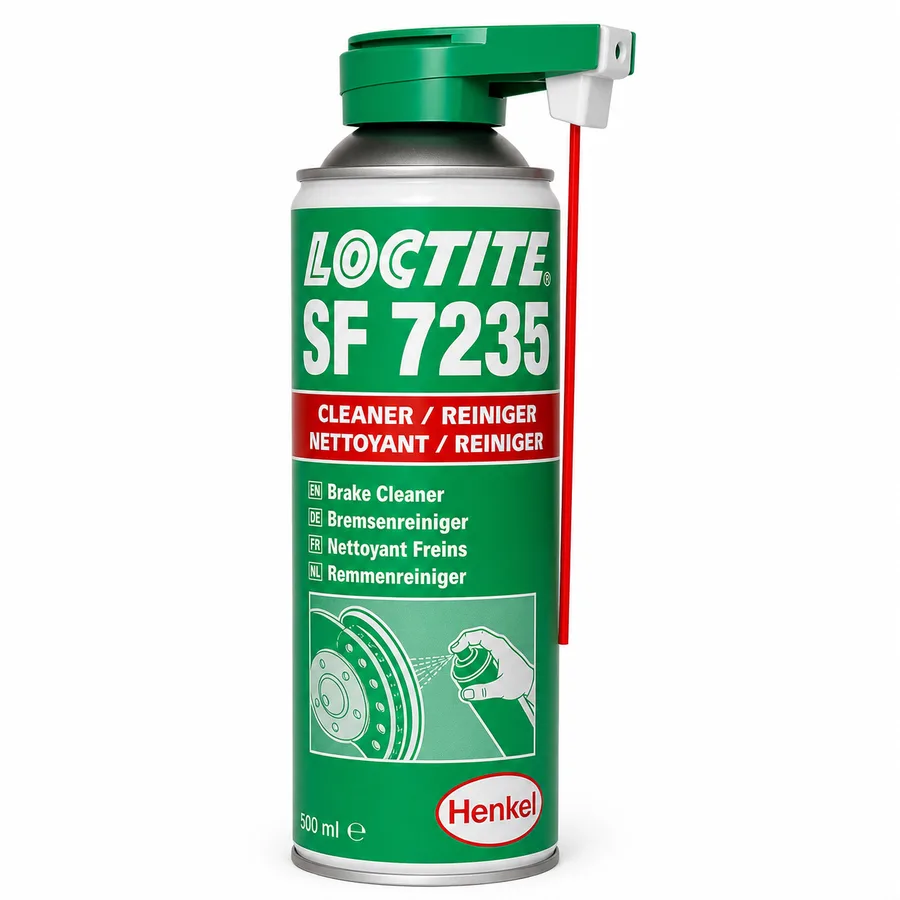
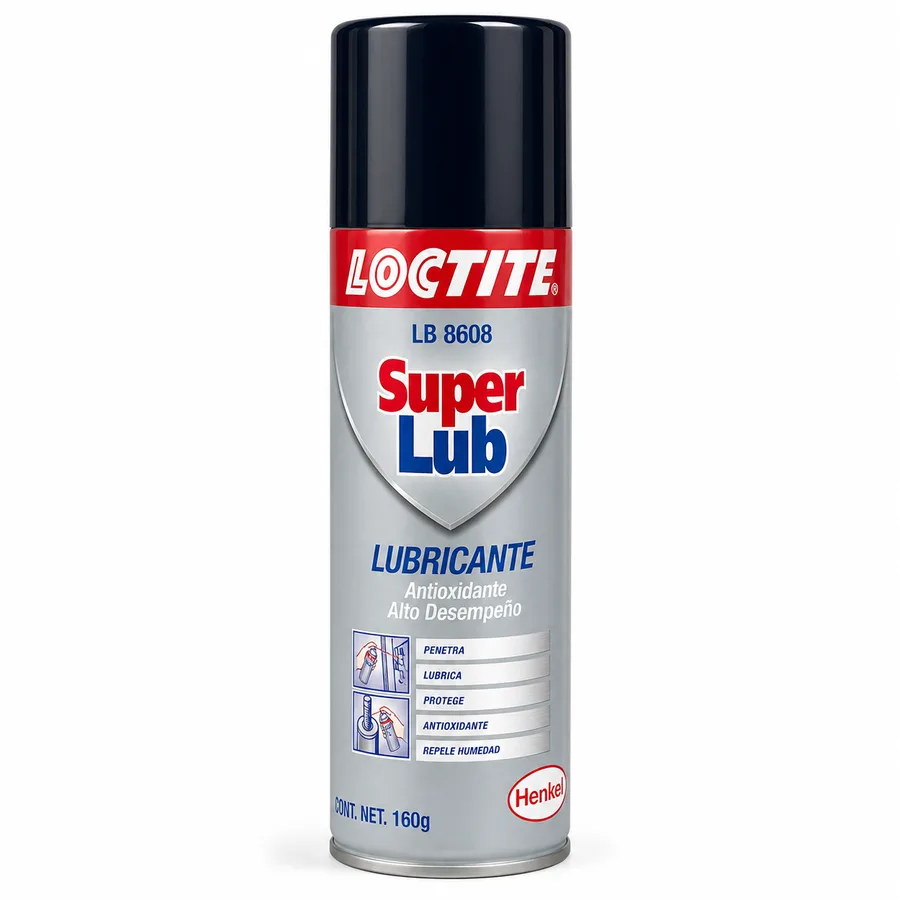
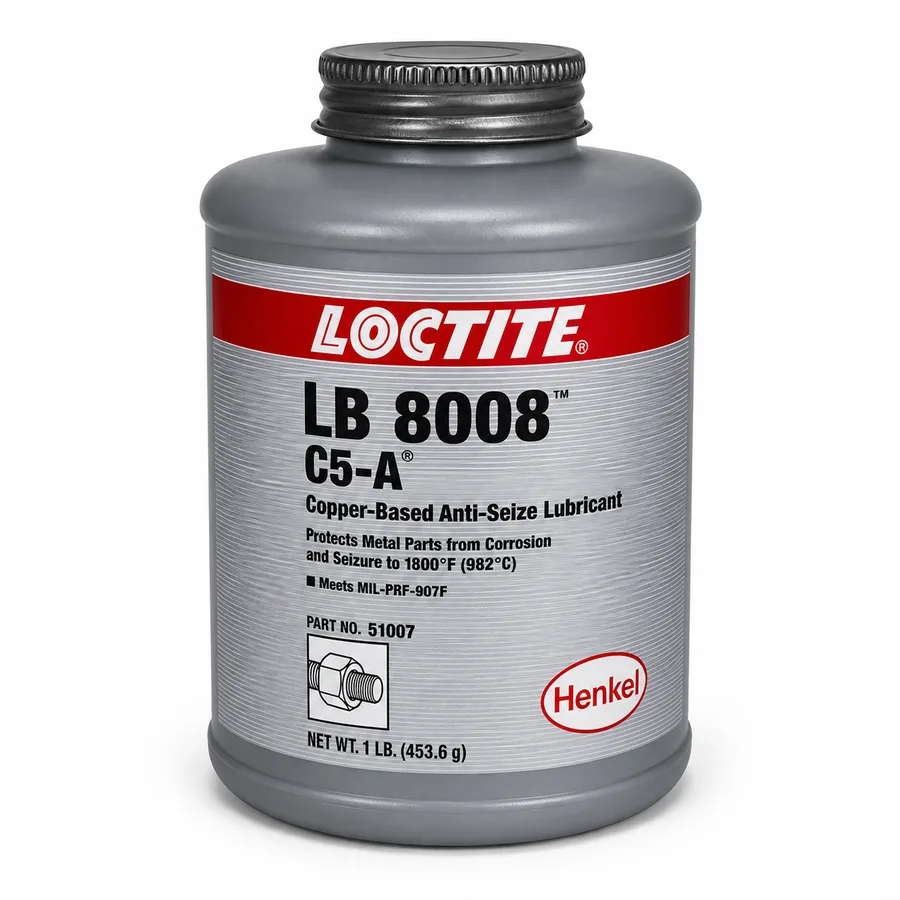
TECTUL does not sell diesel engine oils, coolants or DEF today; this guide exists so you buy them well wherever they belong. What you will find in the catalogue are the maintenance chemicals that accompany these fluids: the industrial degreaser Loctite SF 7235 to clean components before servicing them, the aerosol lubricant Loctite Super Lub, the anti-seize Loctite LB 8008 C5-A for heat-exposed fasteners and the gasket maker Loctite 515 with documented DEF compatibility. Quote industrial lubricants and chemicals via WhatsApp with reference and quantity: you get a reply with itemised VAT and delivery throughout Colombia. Updated 22 July 2026.