A flange insulation kit is the set of dielectric gasket, stud sleeves and insulating washers that interrupts electrical continuity between the two halves of a bolted flange joint without sacrificing the pressure seal. It is installed for two reasons: to stop galvanic corrosion where the joint mates dissimilar metals, and to electrically section a cathodically protected pipeline so the protective current does not leak into neighboring structures.
Quick verdict: for raised face (RF) flanges use a type F gasket; for flat face (FF) flanges, typical of water networks, use a full-face type E; for high-pressure RTJ flanges use type D, which occupies the metal ring groove. On material: laminated phenolic for services up to 107 °C (225 °F) when cost governs; G-10 epoxy-glass when you need higher compressive strength (345 MPa versus 165 MPa) or continuous temperature up to 138 °C (280 °F).
When a flange joins two metals with different electrochemical potential — carbon steel against stainless steel, steel against copper or bronze — and an electrolyte is present (water, moist soil, condensate), a galvanic cell forms: the more active metal becomes the anode and corrodes at an accelerated rate right at the joint. The mechanism, the galvanic series and the anode/cathode area rule are covered in our practical guide to corrosion in metals. The insulation kit breaks the circuit: with no electron path between the two flanges, the cell cannot sustain itself.
The second front is cathodic protection. A buried pipeline protected with sacrificial anodes or impressed current must be isolated from everything that is not meant to be protected: the above-ground plant, the customer's tank, the grounding grid. The standard NACE SP0286-2007, Electrical Isolation of Cathodically Protected Pipelines (active and reaffirmed, now under AMPP), addresses exactly that: isolation devices — insulating flanges, gaskets, sleeves, washers, monolithic joints — their selection based on the pipeline and its contents, precautions and testing. Without that isolation, the protective current disperses and the section that matters ends up underprotected. The kit also blocks stray currents from nearby direct-current sources (electrified railways, welding or electrolysis plants), which cause localized corrosion where they leave the pipe through the soil.
To avoid confusion: if you want to compare slip-on, weld neck or blind flanges, that guide is types of flanges; if you are looking for conventional, non-dielectric sealing gaskets, the guide is types of flange gaskets. This article covers the complete insulation kit.
A standard kit per flanged joint includes, per manufacturer catalog (Calpico):
The rule is absolute: every stud gets a sleeve and washers. A single stud in metallic contact with both flanges short-circuits the entire kit.
| Type | Geometry | Flange face | Selection criterion |
|---|---|---|---|
| E | Full face: same outside diameter as the flange, drilled for the studs | Flat face (FF) and raised face | Water networks and iron flanges; it covers the whole face and leaves no cavities where moisture can lodge |
| F | Ring that bears only inside the bolt circle, on the raised face | Raised face (RF) | Standard process lines with ASME B16.5 flanges; less material and direct centering on the raised face |
| D | Dielectric ring that occupies the ring-joint groove | Ring Type Joint (RTJ) | High pressure in oil and gas; it replaces the metal ring with an insulating one |
For gas and services with high sealing demands there are type E and F variants with an integrated elastomeric seal (a nitrile or fluoroelastomer O-ring seated in the G-10 laminate), which concentrate the seal in a groove and better tolerate marked faces.
The values below come from manufacturer catalogs (Calpico; G-11 temperature ranges per Lamons). Dielectric strength is expressed in volts per mil (1 mil = 0.0254 mm). The higher the operating pressure, the lower the allowable temperature.
| Material | Max. continuous temperature | Dielectric strength | Compressive strength | Water absorption |
|---|---|---|---|---|
| Laminated phenolic | 107 °C (225 °F) | 500 V/mil (≈19.7 kV/mm) | 165 MPa (24,000 psi) | 1.6 % (ASTM D229) |
| Neoprene-faced phenolic | 79 °C (175 °F) | Same as the phenolic core | Same as the phenolic core | Same as the phenolic core |
| G-10 epoxy-glass (NEMA G-10) | 138 °C (280 °F) | 550 V/mil (≈21.7 kV/mm) | 345 MPa (50,000 psi) | 0.10 % |
| G-11 epoxy-glass | Up to 200 °C (392 °F) | On the order of G-10, per manufacturer | Comparable to G-10 | Low, comparable to G-10 |
Which one to choose? Phenolic is the lowest-cost option for water and temperate general services. The neoprene facing helps seal scratched or pitted faces with less bolt load. G-10 withstands twice the compression without creeping — it retains bolt torque over time — and absorbs 16 times less water, which is why it is the current standard for hydrocarbons and cathodically protected joints. G-11 is reserved for hot lines. For sleeves: high-density polyethylene serves up to 79 °C (175 °F); spiral-wound mylar reaches 149 °C (300 °F) with a dielectric strength of 4,000 V/mil; phenolic or G-10 sleeves inherit the laminate's properties.
Safety precaution: an isolated joint on a line exposed to lightning or electrical system faults can develop a dangerous potential difference across its two sides. NACE SP0286 contemplates installing overvoltage protection in parallel with the joint (decouplers or grounding cells) where that risk exists.
To quote an insulation kit, specify: nominal diameter, pressure class and flange face type (for example, 4 in class 150 RF), fluid and operating temperature, gasket material (phenolic or G-10) and whether you need an integrated elastomeric seal. TECTUL stocks the components of the flanged joint the kit is installed on: class 150 carbon steel weld neck flange, class 150 slip-on flange, flange studs with nuts, neoprene gasket for conventional sealing and certified type R ring joint gaskets for RTJ joints. Complete type E, F or D insulation kits are quoted on request via WhatsApp with the joint data.
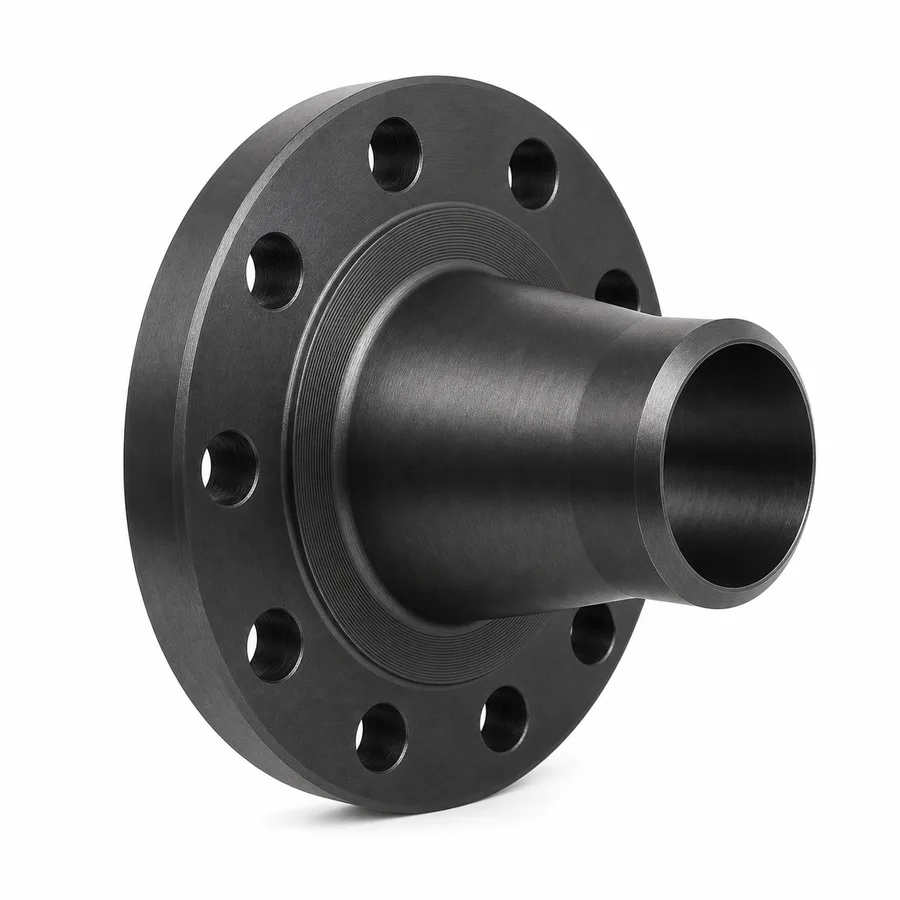 brida acero al carbon 150lb tipo cuello
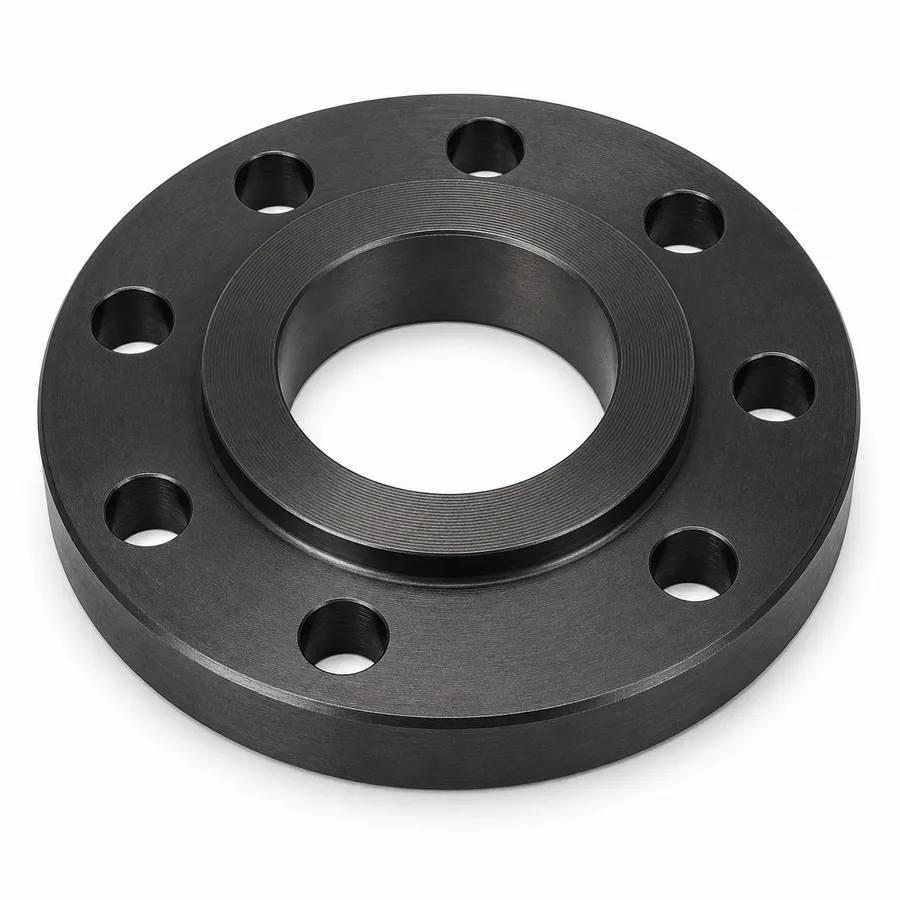 brida acero al carbon 150lb tipo slip on
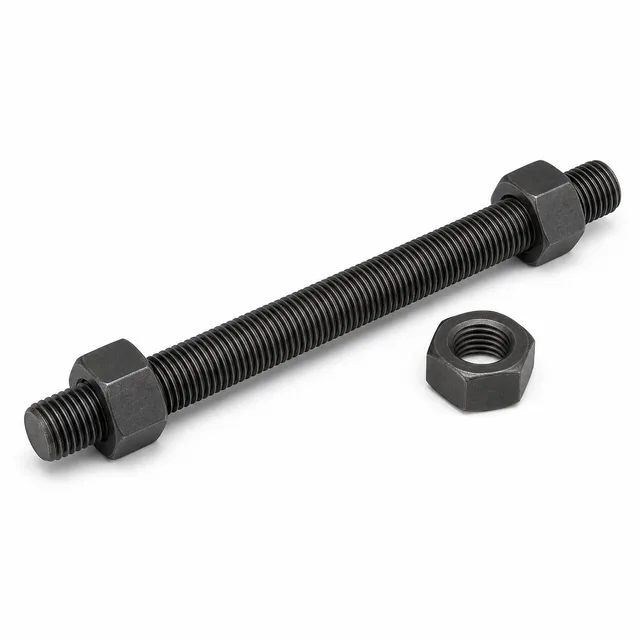 esparrago brida acero carbon