Small gasoline-powered equipment — string trimmers, chainsaws, water pumps, generators, blowers, motorized sprayers — fails far more often from the wrong fluids and stale fuel than from mechanical defects. Direct verdict: for four-stroke engines (water pumps, generators), use SAE 10W-30 or SAE 30 oil rated API SJ or higher and change it by hours of use, not by the calendar; for two-stroke engines (trimmers, chainsaws), mix gasoline with JASO FD oil at exactly the ratio in the manual — 50:1 on most modern equipment; and in both cases use fresh gasoline, consumed within 30 days or treated with fuel stabilizer.
This guide covers the six fronts of spark-ignition equipment maintenance: four-stroke engine oil, two-stroke mix, gasoline and ethanol, stabilizer for storage, spark plug and air filter, plus a generic hour-based maintenance table. If your equipment is diesel (stationary diesel engines, diesel generators and pumps), the fluids and criteria are different: see the guide to fluids for diesel machinery.
The most expensive mistake in small equipment maintenance is confusing the engine type. A four-stroke engine has an independent oil sump: it has a filler plug with a dipstick and burns straight gasoline. It is the typical engine of water pumps, generators, tillers and rotary lawn mowers. A two-stroke engine has no oil sump: it is lubricated by the oil mixed into the gasoline, and it is the usual engine of string trimmers, chainsaws, hedge trimmers and blowers, where maximum power at minimum weight is the goal.
Both possible mix-ups damage the engine: straight gasoline in a two-stroke leaves it without lubrication and seizes it within minutes; premix in a four-stroke produces smoke, combustion chamber deposits and a fouled spark plug. Before buying any fluid, confirm in the manual or on the tank label (2T equipment usually prints the mix ratio next to the cap) which engine you have.
Viscosity is designated per the SAE J300 classification. For small stationary engines, the guidance from Briggs & Stratton — a reference manufacturer in this engine class — defines the ranges by ambient temperature:
| SAE grade | Ambient temperature range | Manufacturer note |
|---|---|---|
| SAE 30 | Above 4 °C (40 °F) | The classic monograde for small engines; below 4 °C it makes starting difficult |
| SAE 10W-30 | Approximately −18 to 38 °C (0 to 100 °F) | Improves cold starting; above 27 °C (80 °F) it may increase oil consumption |
| Synthetic 5W-30 | Full operating range | Recommended by Briggs & Stratton for all temperatures; higher cost |
In warm and temperate climates, SAE 30 and SAE 10W-30 cover practically every case; 10W-30 is the more versatile choice if the same equipment also works in cold highlands. Check the level with the dipstick before every use: many small engines have no low-oil sensor and will run until they seize.
Oil quality is certified per API 1509 under the S series (spark-ignition engines). The current category is API SQ, licensable since March 31, 2025 alongside the ILSAC GF-7 specification; it succeeds API SP, which remains valid. Categories are backward compatible: an API SQ or SP oil serves wherever the manual calls for an earlier category. For small stationary engines, manufacturers typically require API SJ or higher, so any oil on the market bearing the API SL, SM, SN, SP or SQ seal complies. Look for the circular API donut seal on the container.
Change interval: manuals for this engine class order a short first change after break-in (typically between 5 and 20 hours of use) and then changes every 50 to 100 hours or every season, whichever comes first. The exact interval is set by your engine's manual.
In a two-stroke engine the oil travels dissolved in the gasoline and lubricates the cylinder, piston and crankshaft bearings as it passes through. The ratio is expressed as parts of gasoline per part of oil:
| Ratio | Oil per liter of gasoline | Oil per gallon (3.785 L) | Where it is specified |
|---|---|---|---|
| 25:1 | 40 mL | 151 mL | Older equipment, or wherever the manual expressly requires it |
| 32:1 | 31 mL | 118 mL | Intermediate ratio in some manuals |
| 40:1 | 25 mL | 95 mL | Common in light equipment of Asian origin |
| 50:1 | 20 mL | 76 mL | The modern standard: STIHL and Husqvarna specify it with JASO FD oil |
Why does the manual's ratio govern rather than the corner vendor's? Because the ratio is tied to the oil quality the manufacturer certified the engine with: a manual that calls for 50:1 calls for it with JASO FD oil, not with just any oil. Adding more oil than specified does not protect more: it produces chamber and exhaust deposits, a fouled plug, smoke and power loss. Adding less, or running straight gasoline, strips the lubricating film and seizes the engine.
The Japanese standard JASO M345 classifies two-stroke oils by lubricity, detergency, smoke and exhaust blocking. Three grades are current; grade FA was discontinued in the 2004 revision:
| JASO grade | Level | ISO 13738 equivalent |
|---|---|---|
| FB | Basic: meets minimum lubricity and detergency requirements | ISO-L-EGB |
| FC | Reduced smoke and less exhaust blocking than FB | ISO-L-EGC |
| FD | Maximum detergency; the grade required by leading forestry equipment manufacturers | ISO-L-EGD |
Two warnings: do not use four-stroke engine oil to prepare mix, and do not use outboard motor oil (NMMA TC-W3) in air-cooled equipment: it is formulated for water-cooled marine engines, which run at lower temperatures. Prepare only the mix you will consume within a few weeks — manufacturers recommend using it within on the order of 30 days — because aged mix loses octane and lubricating properties.
In many markets — Colombia included — regular and premium gasoline is distributed blended with fuel ethanol at close to 10% (E10). Small engine manufacturers accept at most that 10% ethanol: the Honda GX engine manual, for example, specifies gasoline of at least 86 octane with ethanol content no higher than 10%. Never use higher blends (E15, E85) in small equipment.
Ethanol creates two specific problems in small carburetors. First, it is hygroscopic: it absorbs moisture from the air through the tank vent and, with enough water, the alcohol-water phase separates from the gasoline and sinks to the bottom — exactly where the carburetor draws fuel; the engine will not start and the watery mix corrodes zinc and aluminum parts. Second, ethanol acts as a solvent on fuel system varnish and sediment and can degrade older elastomers, and the residue ends up blocking the jets, whose orifices in these carburetors measure tenths of a millimeter.
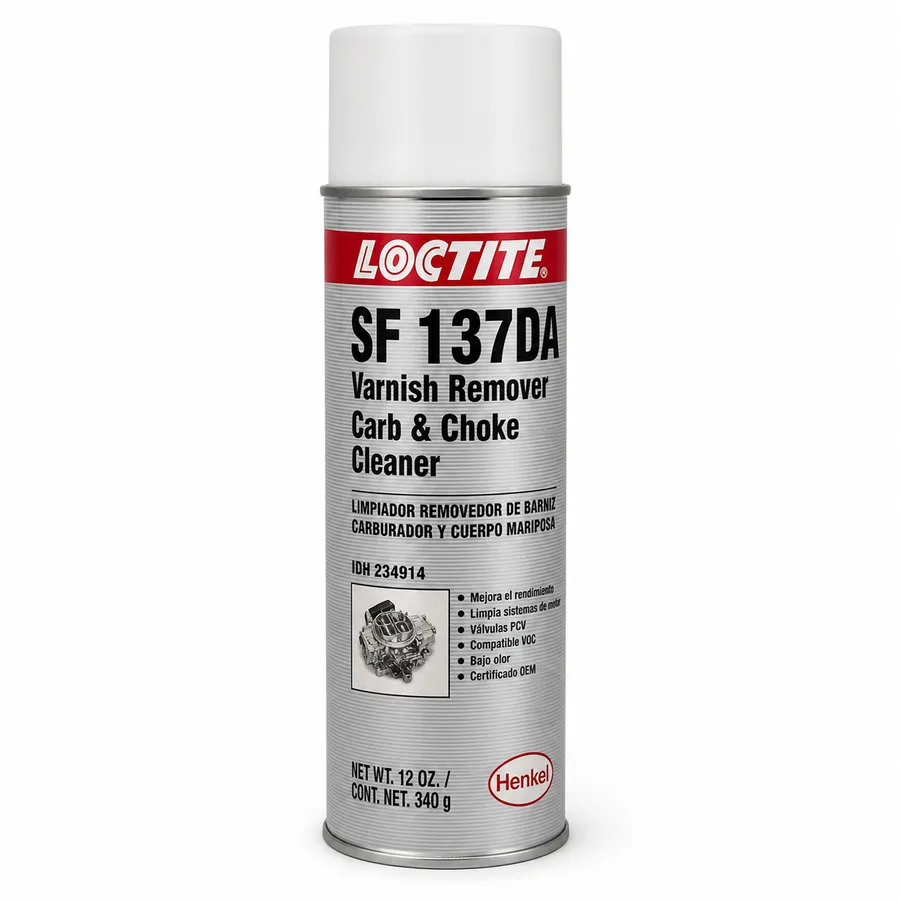
On top of that comes natural aging: stored gasoline oxidizes and forms gums that varnish the carburetor; small engine manufacturers warn of degradation in as little as 30 days. The classic symptom is equipment stored with fuel in it that no longer starts, or starts and dies when accelerating. The first measure, before disassembly, is to apply a carburetor cleaner aerosol with the engine running and through the intake passages; if varnish has already blocked the jets, the carburetor must be disassembled and cleaned part by part.
Fuel stabilizer is an antioxidant additive that delays gum formation and keeps gasoline usable for months instead of weeks; the exact duration is declared by each additive manufacturer. It is dosed into fresh gasoline — it does not recover already degraded fuel — and the engine must run for a few minutes after dosing so the treated fuel reaches the carburetor.
End-of-season storage protocol:
The spark plug is the number one wear part of a gasoline engine. The heat range describes how fast the plug sheds heat into the cylinder head: a "hot" plug retains heat and self-cleans better in light duty; a "cold" plug sheds heat faster and withstands hard use without overheating. In NGK nomenclature, a higher number means a colder plug. It is not chosen by theory: use the exact reference in the manual or its cross-reference catalog equivalent; the NGK BPMR7A, for example, is the usual service reference in chainsaws and trimmers from the leading brands.
The gap (electrode separation) on small equipment typically runs between 0.5 and 0.76 mm — 20 to 30 thousandths of an inch; STIHL service manuals, for example, specify 0.5 mm (0.020 in) for the BPMR7A. It is measured with a feeler or plug gauge and adjusted by carefully bending the side electrode, never by pressing on the center one. The insulator color diagnoses the engine: light brown indicates correct combustion; black and wet, a rich mixture or excess 2T oil; white, a lean mixture or overheating.
When reinstalling covers and accessories subject to constant vibration — housings, engine mounts, guards — secure the fasteners with a medium-strength threadlocker: it still allows future disassembly with hand tools and keeps vibration from backing the screws out.
A small engine breathes thousands of liters of air per hour just centimeters from the dust it raises itself. The filter type defines the maintenance:
| Filter type | Maintenance | Typical equipment |
|---|---|---|
| Oiled foam | Wash with soap and water, dry, re-soak with clean engine oil and squeeze out the excess | Trimmers, chainsaws, small general-purpose engines |
| Pleated paper | Replace; it may be blown with low-pressure air from the inside out, but never washed or oiled | Generators, water pumps, mid-size engines |
| Dual stage (foam pre-filter + paper element) | The foam is washed and oiled; the paper is replaced | Equipment working in severe dust |
A torn or badly seated filter is the same as no filter: dust acts as an abrasive on the cylinder and rings and the wear is irreversible. In dusty environments (dry-season trimming, construction sites), double the cleaning frequency in the manual.
This table summarizes the usual intervals found in manuals for stationary engines and light forestry equipment. It is indicative: the intervals in your equipment's manual always prevail over any generic table.
| Frequency | Tasks |
|---|---|
| Before each use | Oil level (4T), air filter condition, fuel leaks, fresh fuel, general fastener check |
| Every 25 hours | Wash and re-oil foam filter; clean cooling fins and starter screen |
| Every 50 hours | 4T oil change in severe service (dust, continuous load); spark plug inspection and cleaning |
| Every 100 hours | 4T oil change in normal service; gap or replace spark plug; replace paper element; clean sediment cup if fitted |
| Yearly or at storage | Stabilize or drain the fuel, new spark plug, cable and pivot lubrication, general cleaning and shop service if applicable |
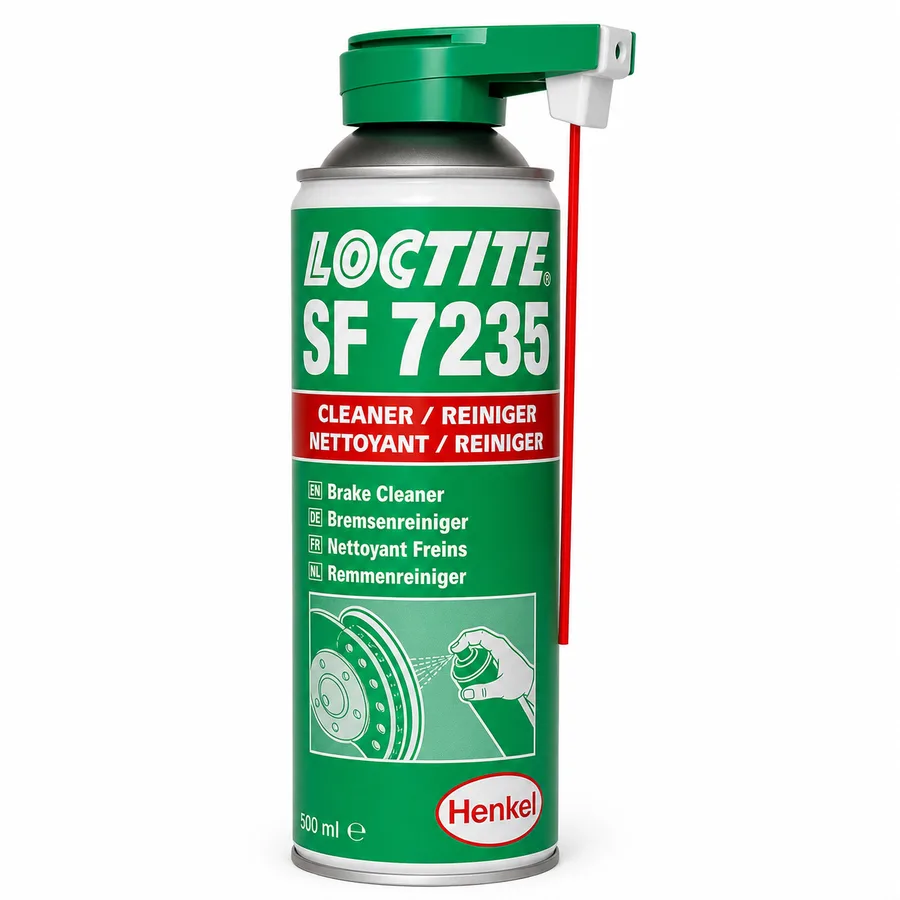
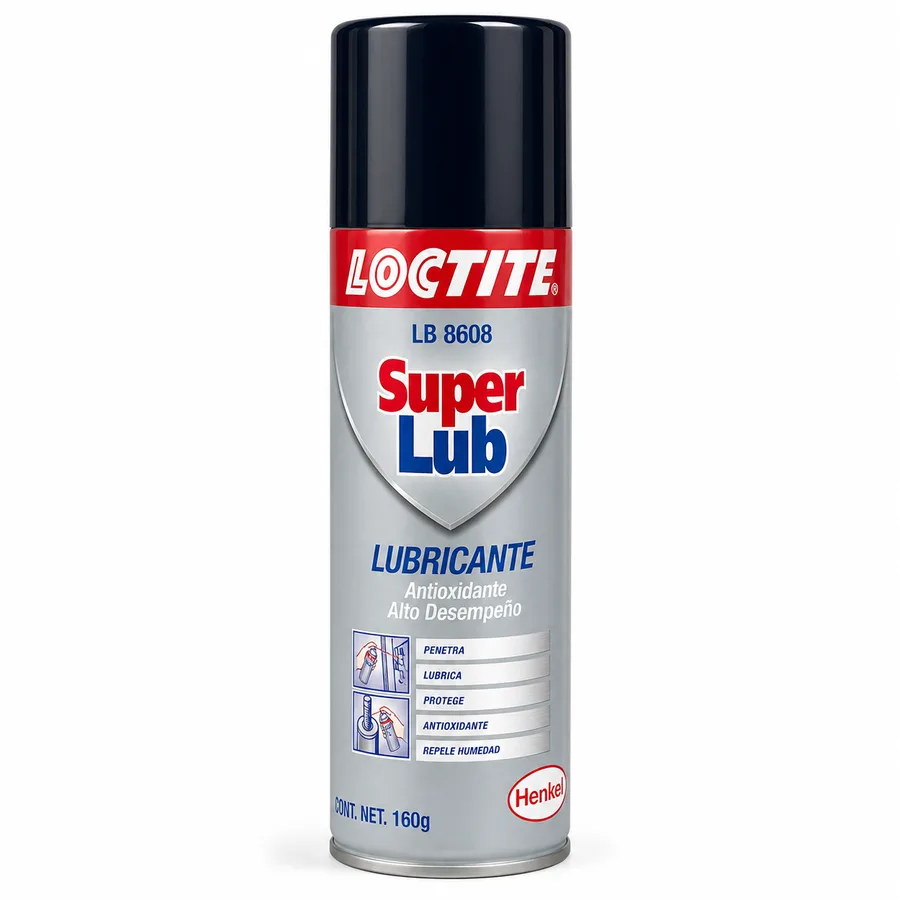
TECTUL carries online the maintenance chemicals in this guide: the carburetor cleaner aerosol to recover equipment with aged fuel, the SF 7235 industrial degreaser and the Super Lub aerosol lubricant for the cleaning and storage routine, and the Loctite 243 threadlocker for vibration-exposed fasteners. Engine oils, two-stroke oil, spark plugs and filters are quoted on request: write to us on WhatsApp with the engine's brand, model and displacement and we will confirm availability and price.