
Flexible polyester fabric duct for moderate high temperature
TECTUL · Dispatch across Colombia · Exports to Central & South America
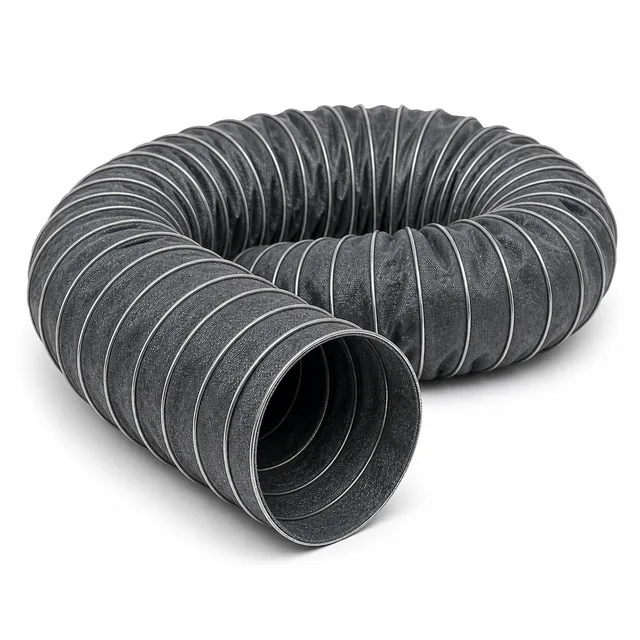
IMPORTANT: reference data — may differ from the physical product; verify with an advisor before buying.
SKU VT-142155 · 1 reference, 22 diameter variants · sold by 10 m roll
1. Technical specifications
General specifications
| Product | Flexible polyester fabric duct for ventilation, smoke extraction and hot air transfer in moderate high-temperature environments |
| Temperature range | -20 °C to 120 °C (-4 °F to 248 °F) |
| Working pressure/vacuum | Not a pressure pipe: it operates under the draft (positive or negative) generated by a fan or extractor. The manufacturer publishes no maximum working pressure or vacuum — confirmed on quotation |
| Construction | Lightweight, flexible polyester fabric over a reinforcing helix, with a coating resistant to chemical substances, abrasion and tearing. The exact coating type (PVC, polyurethane or other) is not declared in the manufacturer data sheet — confirmed on quotation |
| Presentation | 10 m rolls, no partial cuts |
| Intended use | Ventilation systems, smoke extraction and hot air transfer in moderate high-temperature environments |
IMPORTANT
This technical data sheet is a reference guide to the properties of this product type; it is not a quality certificate for the product you are buying. The measurements, dimensions and physical or geometric characteristics of the product supplied may vary by manufacturer, heat and lot, and may even fall outside the cited standards. If any of these figures is critical to your design or build, verify it with one of our advisors against the physical product or the lot's mill certificate, so you can be fully certain of what you are buying. · Original data sheet: tectul.com/en/conduccion-de-fluidos/mangueras/ficha-tecnica-ducto-de-poliester-para-alta-temperatura.html
Dimensional table
| Nominal diameter (in) | Internal diameter (mm) | Internal diameter (in) |
|---|---|---|
| 2″ | 51 | 2.0 |
| 3″ | 76 | 3.0 |
| 4″ | 102 | 4.0 |
| 5″ | 127 | 5.0 |
| 6″ | 152 | 6.0 |
| 7″ | 178 | 7.0 |
| 8″ | 203 | 8.0 |
| 9″ | 228 | 9.0 |
| 10″ | 254 | 10.0 |
| 11″ | 279 | 11.0 |
| 12″ | 305 | 12.0 |
| 13″ | 329 | 13.0 |
| 14″ | 356 | 14.0 |
| 15″ | 381 | 15.0 |
| 16″ | 406 | 16.0 |
| 18″ | 457 | 18.0 |
| 19″ | 482 | 19.0 |
| 20″ | 508 | 20.0 |
| 21″ | 533 | 21.0 |
| 22″ | 550 | 21.7 |
| 23″ | 584 | 23.0 |
| 24″ | 609 | 24.0 |
IMPORTANT: reference data — may differ from the physical product; verify with an advisor before buying.
Dimensions are nominal catalog values, for reference only, subject to the normal manufacturing tolerance of woven flexible ducts; the exact diameter per lot is confirmed on quotation.
2. Polyester covers the step between the generic duct and sustained high temperature
Dónde encaja el poliéster en la familia
De las cinco construcciones de ductos flexibles del catálogo TECTUL, el poliéster es la que declara el segundo rango de temperatura más bajo: -20 °C a 120 °C (-4 °F a 248 °F), por encima del ducto genérico de PVC (80 °C/176 °F) pero muy por debajo de la fibra de vidrio, la silicona (ambas hasta 260 °C/500 °F) o el TPR (150 °C/302 °F). Su argumento no es el techo térmico sino el equilibrio entre ligereza, flexibilidad para instalación y resistencia química/abrasión declarada por el fabricante, en aplicaciones donde 120 °C es un margen suficiente.
Tabla comparativa de los 5 ductos de la familia TECTUL
| Referencia | Rango de temperatura | Diámetros | Presentación | Uso típico |
|---|---|---|---|---|
| Ducto flexible genérico (PVC) | -20 °C a 80 °C (-4 °F a 176 °F) | 4″–50″ (100–1270 mm) | Rollo de 10 m | Climatización y extracción de aire a temperatura ambiente |
| Poliéster para alta temperatura (esta ficha) | -20 °C a 120 °C (-4 °F a 248 °F) | 2″–24″ (51–609 mm) | Rollo de 10 m | Extracción de humos y aire caliente moderado |
| TPR (manguera-ducto) | -40 °C a 150 °C (-40 °F a 302 °F) | 1″–12″ (25–305 mm) | Rollo de 15 m (10 m en 10″–12″) | Ventilación industrial y gases calientes, incluida intemperie fría |
| Fibra de vidrio con núcleo de aluminio | Hasta 150 °C (302 °F) | 2″–16″ (51–406 mm) | Rollo de 10 m | Ventilación/extracción de alta temperatura moderada con forma propia |
| Fibra de vidrio | -70 °C a 260 °C (-94 °F a 500 °F) | 2″–24″ (51–609 mm) | Rollo de 10 m | Extracción de gases calientes y aire de alta temperatura sostenida |
| Silicona | -70 °C a 260 °C (-94 °F a 500 °F) | 1″–12″ (26–305 mm) | Rollo de 4 m | Escape de motores, hornos industriales, exposición a UV/ozono |
IMPORTANT: reference data — may differ from the physical product; verify with an advisor before buying.
Cómo decidir
- Si la temperatura real de servicio no supera 80 °C y el diámetro requerido es grande (hasta 50″), el ducto genérico de PVC es la opción de menor costo.
- Entre 80 °C y 120 °C, con necesidad de resistencia química o a la abrasión declarada y diámetros de hasta 24″, el poliéster es la referencia de este catálogo.
- Por encima de 120 °C, el poliéster queda fuera de su rango declarado: pase a TPR (150 °C), fibra de vidrio con núcleo de aluminio (150 °C) o, para temperatura sostenida más alta, fibra de vidrio pura o silicona (260 °C).
- Ninguna de las cinco referencias es tubería de presión: todas trabajan por el tiro de un ventilador o extractor.
El fabricante no declara el tipo exacto de recubrimiento de la tela de poliéster (PVC, poliuretano u otro polímero); ese dato, junto con la resistencia química a una sustancia específica del proceso, se confirma al cotizar.
3. Installation: worm-gear clamp, sleeve overlap and minimum bend radius
Connection to the collar or spigot
Slide the duct onto the metal collar (spigot) of the box, diffuser or fan with an overlap of 50 to 100 mm (2″ to 4″) and secure it with a worm-gear clamp 25 to 38 mm (1″ to 1.5″) wide, positioned directly over the collar, never over the free corrugated section of the duct. Seal the overlap with at least two full wraps of tape compatible with flexible ducts to prevent air leakage at the seam.
Minimum bend radius
Do not bend the duct below one times its nominal diameter: a smaller radius chokes the inner cross-section and accelerates material fatigue at the bend point. On direct connections to diffusers or grilles, use a radius of at least two times the nominal diameter. Since this fabric is lighter than fiberglass, also avoid dragging it over abrasive surfaces or metal edges that could cut the coating.
Support and routing
Support the run with clamps or wide straps that do not cut the fabric, and extend it to its working length without compressing or overstretching it beyond its natural slack. Before operating, check for leaks, bulges or cracks in the coating.
These are general flexible air duct installation practices (not specific to a TECTUL lot), documented in installation guides conforming to UL 181 and NFPA 90A; the manufacturer's manual may add its own requirements.
4. Frequently asked questions
What temperature does the polyester duct withstand?
Up to 120 °C (248 °F) at the upper limit and -20 °C (-4 °F) at the lower one, per the manufacturer data sheet. It is the reference with the lowest thermal range among the family's three technical fabrics (polyester, fiberglass and silicone); if the process may sustain temperatures above 120 °C, specify fiberglass, silicone or TPR instead.
How does it differ from the generic flexible duct?
The generic PVC duct only reaches 80 °C (176 °F) but covers much larger diameters (up to 50″); polyester raises the thermal ceiling to 120 °C with a narrower dimensional range (up to 24″) and declared resistance to chemicals, abrasion and tearing.
Does it withstand positive pressure from an extraction fan?
The manufacturer publishes no maximum working pressure or vacuum: it operates under the draft generated by the fan or extractor, not as pressure pipe. For a specific pressure operating point, confirm with the manufacturer on quotation.
What chemical coating does the polyester fabric carry?
The manufacturer data sheet declares resistance to chemical substances, abrasion and tearing, but does not specify the exact coating polymer (PVC, polyurethane or other); that detail is confirmed on quotation per lot.
What minimum bend radius should I respect?
Not less than one times the nominal diameter in general, and at least two times the diameter on direct connections to diffusers or grilles, so as not to choke the inner cross-section or fatigue the material at the bend point.
5. Application notes
Feasibility
Specify this polyester duct when the real service temperature stays between -20 °C and 120 °C and lightness, ease of installation and declared resistance to chemicals, abrasion and tearing are needed. Do not specify it for processes that may sustain temperatures above 120 °C: in that case use this family's fiberglass, silicone or TPR. It is not pressure pipe.
Installation
Secure with a worm-gear clamp over the metal collar, with a 50–100 mm overlap and tape sealing. Respect a minimum bend radius of one times the diameter (two times on connections to diffusers or grilles). Avoid dragging over abrasive surfaces or metal edges.
Design
Do not specify this duct for processes with a design temperature above 120 °C: that is the manufacturer's declared limit, the lowest of the catalog's three technical fabrics. The exact polymer of the chemical coating and resistance to a specific process substance are confirmed on quotation. It is not rated as pressure pipe; if the system requires a declared working pressure or vacuum, request it from the manufacturer before specifying.
6. Technical notice and limitation of liability
The pressures, dimensions, weights and other characteristics in this sheet are theoretical calculation values obtained from nominal properties published in the standards cited (ASME B36.10-2022, ASME B31.3-2024, ASTM A106/A106M-19a, ASTM A53/A53M-24, API Spec 5L 46th ed.). They guide selection; they are not a certificate of conformity for any given lot.
The actual behavior of each lot varies with manufacturing — wall tolerance (up to −12.5%), out-of-roundness, residual stresses — and with the raw material — chemical composition within the ranges the standard allows, heat-to-heat differences. To certify a lot, the tests defined by its product standard are required: tensile test, flattening test and hydrostatic test, documented in the manufacturer's mill test certificate (MTC), which TECTUL supplies upon request; testing of the lot in an independent laboratory can also be arranged.
These values must not be used as the sole criterion in critical or safety applications, or wherever failure of the line may compromise people, property or the environment: in such cases the design belongs to the project's responsible engineer under the applicable code (ASME B31.3, B31.1 or the one governing the installation), with the design temperature, corrosion allowance and load cases of the actual service. Before deciding with these data, consult our technical team.
Sources
- Ficha técnica de fabricante «Ducto de poliéster para alta temperatura» (TECTUL SAS, fichas-rescate/ft-ducto-de-poliester.pdf): rango de temperatura -20 °C a 120 °C (-4 °F a 248 °F), tabla dimensional NPS 2″–24″
- UL 181, Standard for Factory-Made Air Ducts and Air Connectors, Ed. 11-2013 (reafirmado 2021) — clasificación y construcción de ductos y conectores de aire flexibles fabricados en planta
- NFPA 90A, Standard for the Installation of Air-Conditioning and Ventilating Systems, edición 2024 — requisitos de instalación de ductos y conectores flexibles
This data sheet is the property of TECTUL, part of the Industrias IMR group. Reproduction without attribution is prohibited. Original document and updates: tectul.com/en/conduccion-de-fluidos/mangueras/ficha-tecnica-ducto-de-poliester-para-alta-temperatura.