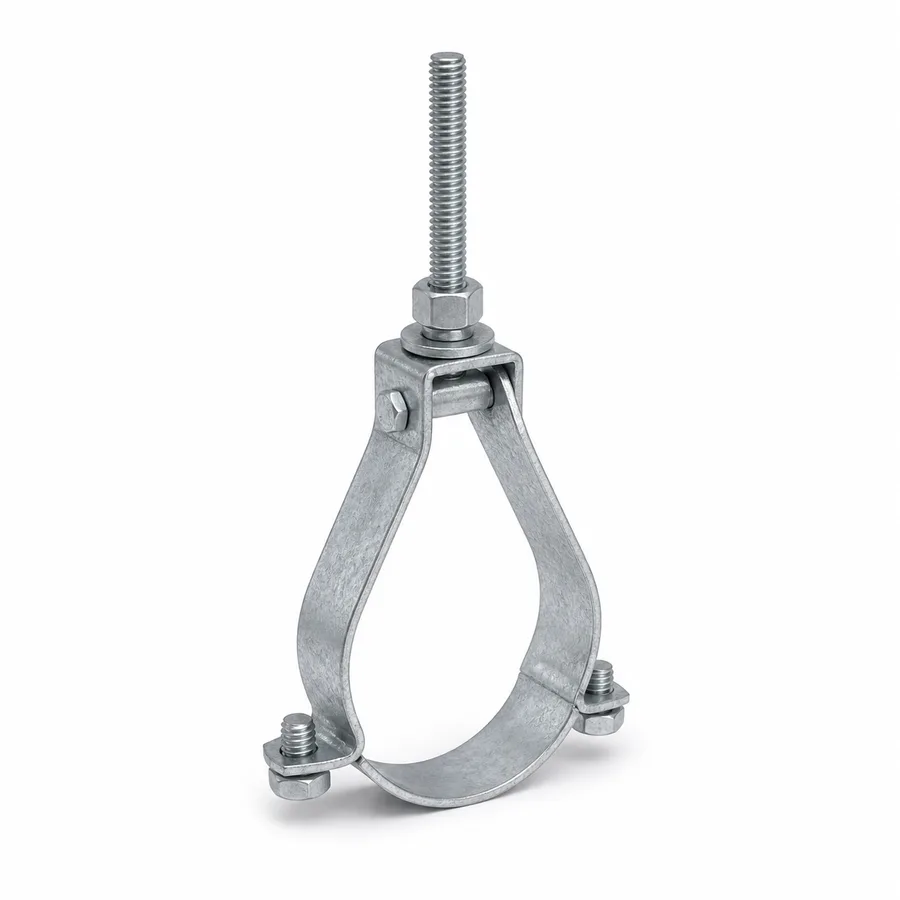
Hanger Support for Fire Protection Pipe is a product in the fire protection systems family for fluid conduction in galvanized steel, UL · NFPA 13. Available made to order, quoted via WhatsApp. Supplied on request.
| Family | Fire protection systems |
| Material | Acero galvanizado |
| Standard | UL · NFPA 13 |
| Connection | Other |
| Sales unit | Se vende por Unidades (Unid.) |
| Availability | Made to order |
The hanger support for fire protection pipe supports sprinkler lines, branches and suspended mains using threaded rod, anchor and a compatible fastening element. It is manufactured in galvanized steel and selected with reference to UL listed components and NFPA 13 installation criteria, according to the approved system design. Its function is not to replace common general-purpose clamps, but to keep fire protection piping level, accessible and reliably supported during operation, testing and maintenance. Compared with a conventional clevis hanger, this page focuses on supports intended for PCI networks and coordination with rod, anchor, pipe diameter and spacing defined by engineering. Correct selection reduces stress on grooved couplings, valves and fittings, and prevents installation from depending on site improvisation.
We dispatch to Bogotá, Medellín, Cali, Barranquilla and all of Colombia. Request a quote via WhatsApp for hanger supports for fire protection pipe with diameter, quantity and delivery city.
It depends on diameter, support type, finish, quantity and delivery city. TECTUL quotes per unit for PCI projects.
It may perform a similar suspension function, but here it is specified for fire protection pipe with NFPA 13 criteria and system compatibility.
It is fixed to the structure using an anchor and threaded rod, keeping the pipe level and without loading fittings or valves.
Spacing and location must be reviewed in NFPA 13 and in the approved drawings for the sprinkler system or fire protection network.
It can be used if the galvanized finish and environment are compatible. In aggressive environments, additional corrosion protection should be validated.
Pipe diameter, installation type, quantity, required finish, delivery city and whether the project requires a UL listed support.
Before using these data in engineering decisions — design, installation or systems with mechanical risk of pressure, rupture, fatigue, impact or water hammer — you must read the Technical notice and limitation of liability at the end of this page.
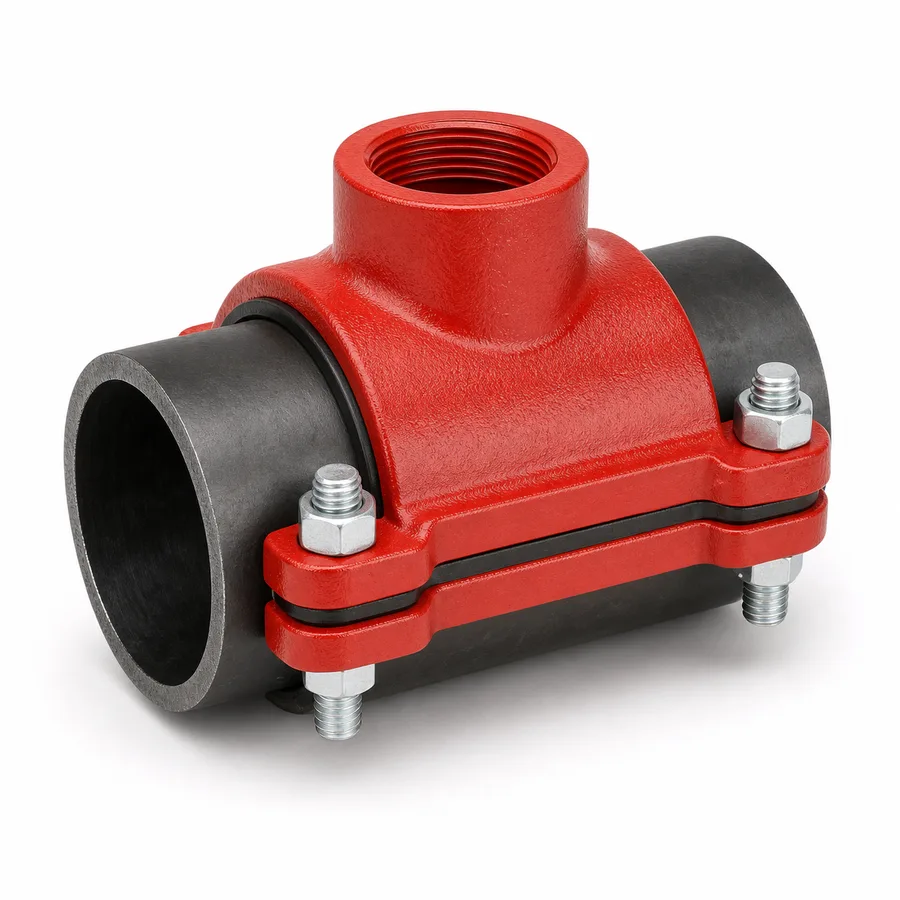 Grooved Mechanical Tee
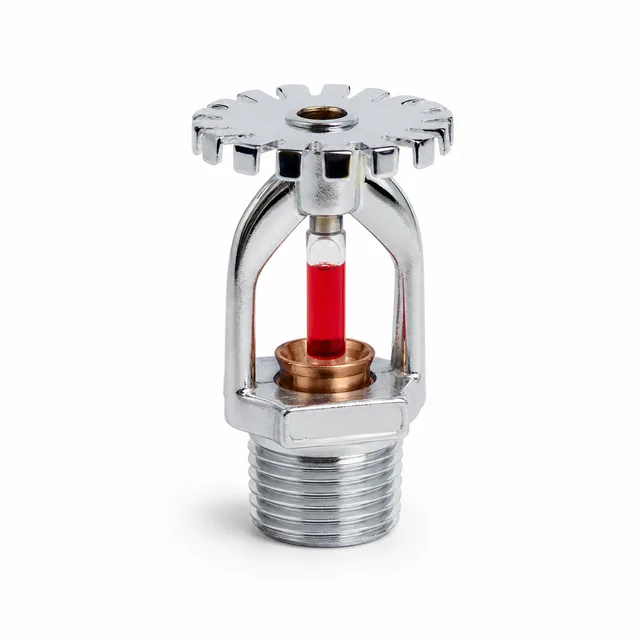 Low-Temperature Upright Fire Sprinkler
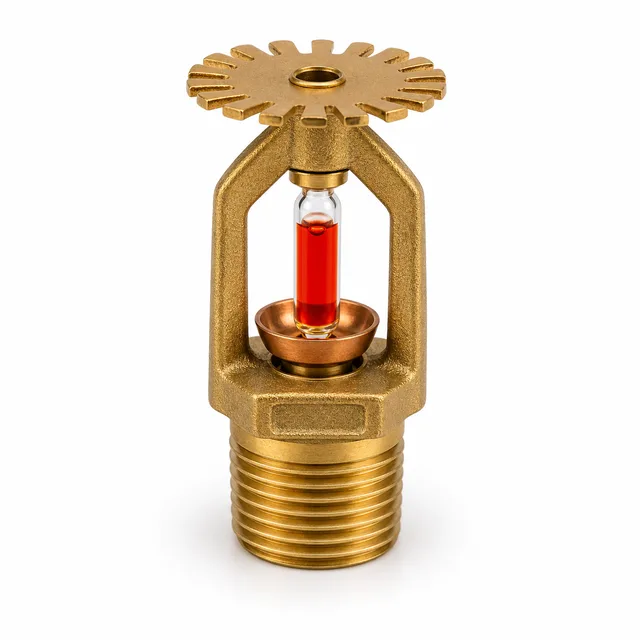 High-Temperature Upright Fire Sprinkler
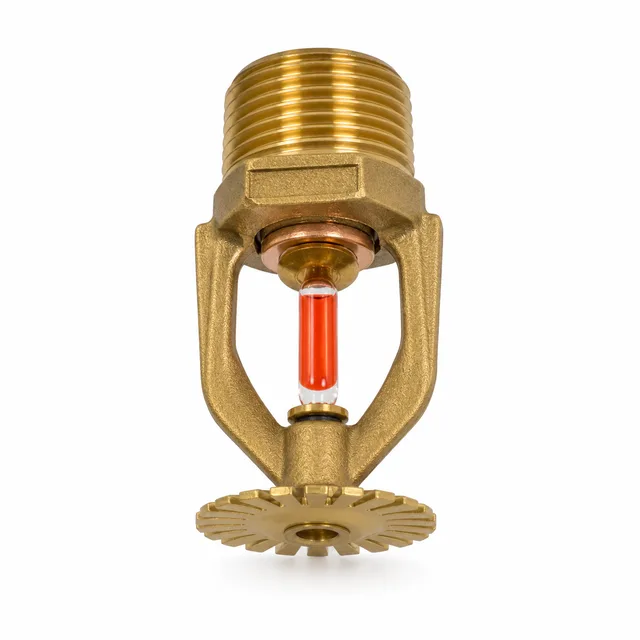 High Temperature Pendent Fire Sprinkler
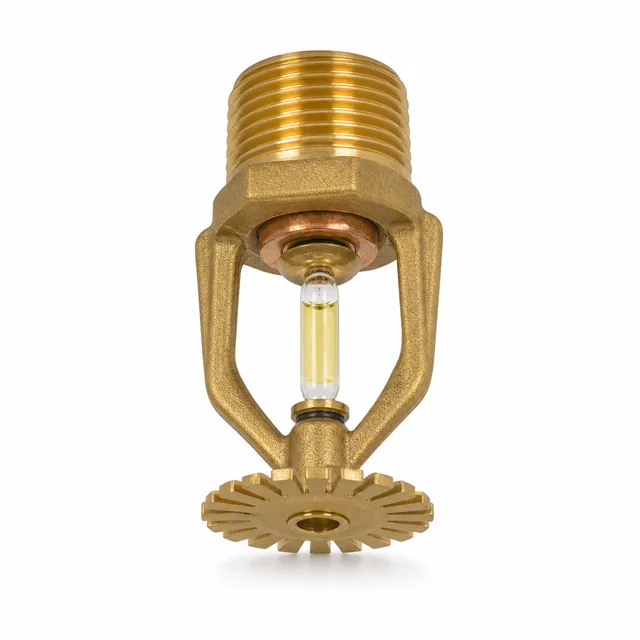 Low Response Pendent Fire Sprinkler
Updated: July 22, 2026
The dimensions, thicknesses, pressures, temperatures and other characteristics stated in this data sheet are theoretical nominal reference values, compiled from publicly available technical sources: international standards (ASME, ASTM, API, MSS, ISO and NTC, depending on the product) and published engineering literature. They are average approximations intended to guide selection, not a certificate of conformity for any given lot.
Actual values may vary due to conditions inherent to the manufacturing process — dimensional and wall-thickness tolerances (in pipe, typically ±12.5%), surface finish and residual stresses from forming or welding — and to factors inherent to the raw material — chemical composition variations within the ranges allowed by the standard, inclusions or heat-to-heat differences. They may also be affected by in-service events not foreseeable at design time: water hammer, vibration, thermal and mechanical fatigue, corrosion and operating overpressures, which can cause the element to fail before its estimated service life.
To know the certified behavior of a specific lot, TECTUL supplies upon request the manufacturer's mill test certificate (MTC) issued per the product standard; for critical applications, laboratory testing of the lot can also be arranged. In the absence of such certification, the data provided here must not be used as the sole criterion in critical or safety applications, or wherever the integrity of the line may compromise the lives of people or property; in such cases, consult our technical team first.