 TECTULby IMR
Anaerobic thread sealants — high strength and medium strength
TECTUL · Dispatch across Colombia · Exports to Central & South America
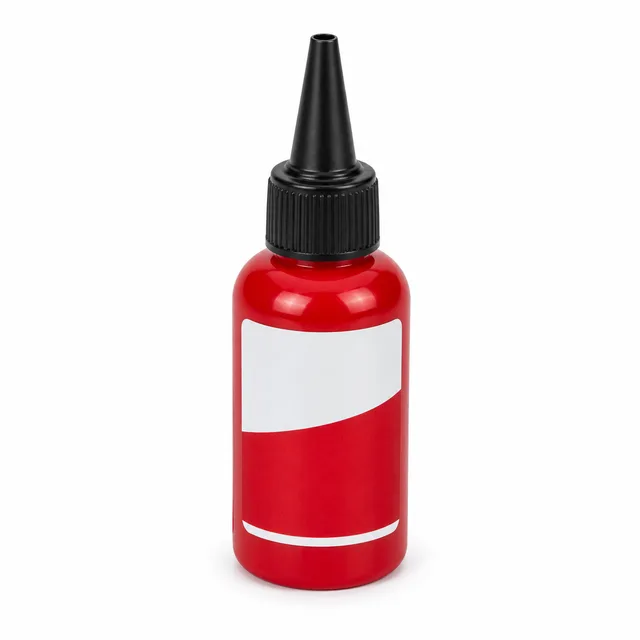
GASTOP is an anaerobic sealant for metal threaded joints: it cures without air, in contact with the metal. High strength (red) fixes semi-permanently — removed with heat and special tooling. Medium strength (blue) is removed with conventional tooling, for frequent maintenance. Both: −54 °C to +150 °C, full cure in 24 hours.
Important: Before using these data in engineering, design or installation decisions on systems exposed to mechanical, pressure, rupture, fatigue, impact or water-hammer risk, it is essential to read the technical notice and limitation of liability at the end of this sheet.
SKU VT-58699 (high strength) and VT-58700 (medium strength) · 2 grades in 10 ml and 36 ml presentations · sold by the jar
1. Technical specifications
Comparison: medium strength versus high strength
| Parameter | Medium strength (blue) · VT-58700 | High strength (red) · VT-58699 |
|---|---|---|
| Appearance, uncured | Blue viscous liquid | Red viscous liquid |
| Density at 25 °C | 1.08–1.14 g/ml | 1.08–1.14 g/ml |
| Viscosity at 25 °C | 4,000–6,000 cps | 5,000–7,000 cps |
| Maximum application gap | 0.15 mm | 0.45 mm |
| Fixture time | 15 min | 15 min |
| Full cure | 24 h | 24 h |
| Shelf life, unopened | 3 years | 3 years |
| Service temperature (cured) | −54 °C to +150 °C | −54 °C to +150 °C |
| Breakaway torque — 15 min | >20 lb·in = 2.2 Nm | >60 lb·in = 6.8 Nm |
| Breakaway torque — 1 h | >60 lb·in = 6.8 Nm | >160 lb·in = 18 Nm |
| Breakaway torque — 24 h | >80 lb·in = 9 Nm | >200 lb·in = 22.6 Nm |
| Residual torque (post-breakaway) | Not published in the manufacturer data sheet | >180 lb·in = 20.3 Nm |
| Declared chemical resistance | Natural gas, LPG, water | Natural gas, LPG, water |
| Disassembly | With adequate tooling — intended for short- to medium-term maintenance | With special tooling — intended as a permanent fixture; see FAQ for the heat method |
| When to specify it | Parts that will be disassembled again: drains, instrumentation, periodic maintenance | Joints that must not loosen: continuous vibration, set screws, studs, parts outside routine maintenance |
IMPORTANT
This data sheet is a reference guide to the properties of this product type. The measurements, dimensions and physical or geometric characteristics of the product actually supplied may vary by manufacturer and lot, and may even fall outside the cited standards. If any of these figures is critical to your design or build, it is essential to verify it with one of our advisors against the physical product, so you can be fully certain of what you are buying. · Original data sheet: tectul.com/en/conduccion-de-fluidos/sellado-y-union-de-tuberias/ficha-tecnica-sellador-fuerza-alta.html
General specifications
| Product | Single-component anaerobic acrylic thread sealant/locker for metal threaded joints |
| Supplier catalog reference | Gastop (Unifix) — commercial data taken from the manufacturer data sheet |
| Cure mechanism | Free-radical polymerization in the absence of air and in contact with metal ions — see section 2 |
| TECTUL references | High Strength Sealant (SKU VT-58699, red) · Medium Strength Sealant (SKU VT-58700, blue) |
| Factory presentations | 10 g blister · 36 ml no blister · 36 ml blister |
| Presentations published by TECTUL | 10 ml (high strength) · 36 ml (both grades) |
| Sale unit | By the jar |
| Manufacturer-declared intended use | Assembly of threaded joints in gas (natural and LPG) and water installations; sealing and locking of metal-to-metal threaded pipe |
| Substrate | Metal on metal — not suitable for thermoplastics nor, without an activator, for passive-layer metals; see section 2 |
| Breakaway torque test method | ISO 10964 principle (determination of torque strength of anaerobic adhesives on threaded fasteners); the table values are those published by the manufacturer, not a TECTUL in-house test |
The values in this table come from the factory data sheet of each reference (Gastop High Strength and Gastop Medium Strength, ITW Colombia/Unifix). The SKU, commercial sizes (10 ml and 36 ml) and sale unit come from the TECTUL catalog — not from the factory data sheet, which also offers a 10 g presentation TECTUL does not publish as its own reference.
⚠ Important: this technical data sheet is a reference guide to the product's properties; it is not a quality certificate for the product you are buying. Heats vary from one another and may differ from the values stated here, or even depart from the standards. If your application requires compliance with a standard, always check the quality certificate (mill certificate) of the lot you are buying. If in doubt, ask one of our technical advisors →
2. How an anaerobic sealant cures
No air and metal contact: the dual cure condition
An anaerobic sealant stays liquid inside the bottle because atmospheric oxygen acts as an inhibitor: as long as dissolved oxygen is present, the free-radical chain never starts. Once applied between two metal parts and assembled, the product is confined in an air-free space — the "anaerobic" condition that names the family. That absence of oxygen is necessary but not sufficient: the second trigger is contact with metal ions (typically iron or copper) present on the parts' surface, which break down the inhibitor and set off the acrylic's free-radical polymerization. The two conditions together — zero air, an active metal ion — explain why the product cures inside the assembled thread and not inside the bottle nor on the excess left exposed to air.
Why it does not cure on plastic
A thermoplastic substrate provides no catalyzing metal ions, so the reaction trigger never activates: the product can remain wet or uncured indefinitely. In addition, chemical contact with some anaerobic sealants can soften or stress-crack certain plastics. That is why this product family is specified exclusively for metal-to-metal joints; on a plastic threaded fitting (PVC, PP-R) thread sealing is solved with PTFE tape or paste, not an anaerobic sealant.
The limit that prevents returns: the maximum gap
Each grade has a manufacturer-published maximum application gap — 0.45 mm for high strength, 0.15 mm for medium strength — the maximum radial space between the two threaded surfaces for the product to cure fully. If the thread's actual gap exceeds that value, oxygen keeps diffusing into the product film and the reaction never completes: the result is a tacky joint, a lower breakaway torque than published, or a joint that never fully hardens. This is the most common cause of a "the sealant did not bond" complaint: it is not a lot defect, it is a thread with more gap than the applied grade can cure — in that case a grade with a higher allowable maximum gap should be evaluated, or the thread's mechanical fit reviewed.
Passive metals: why an activator is sometimes needed
Stainless steels, anodized aluminum, passivated titanium and some coatings (zinc, cadmium, black oxide) form a surface oxide layer that isolates the base metal and blocks the metal-ion mechanism described above. On those surfaces cure can remain incomplete or take much longer than normal even with a correct gap. Standard practice in the anaerobic fastener industry is to apply an activator/primer to at least one of the two surfaces before the sealant, which restores the chemical trigger. Gastop's factory data sheet does not declare its own activator for this line; if the project uses stainless fasteners or passive coatings, a compatible activator is confirmed on quotation.
3. Application
Preparation: cleaning beforehand
Both parts to be assembled are cleaned of dust, grease and oil on the thread before applying the product — residual oil is the most common reason a sealant fails to cure, because it separates the product from the metal and blocks the contact that triggers the reaction. Shake the bottle before each application.
Amount of product
The manufacturer recommends covering the first three threads with the bottle's applicator tip, applying to both parts to be assembled — filling the entire thread length is not necessary. Excess product does not improve sealing: the excess left exposed to air outside the joint does not cure, does not contaminate and is easily cleaned, but adds no extra strength.
Assembly and fixture time
The parts are assembled immediately after applying the product and must not be moved during the 15-minute fixture time. Cure keeps progressing after that point until it completes in 24 hours. The joint's service tightening torque (the system's operating torque, distinct from the sealant's breakaway torque reported in section 1) should only be demanded of the joint once the fixture time has elapsed, and to count on the full breakaway torque from the comparison table it is best to wait for the full 24-hour cure before putting the line into service at full load.
Handling and storage
- Metal particles must not be allowed into the bottle during use: they catalyze polymerization inside the container and render it unusable.
- The product must not be repackaged outside its original container.
- Store in a cool, dry place, below 25 °C, protected from direct sunlight, in the closed original container; once opened, storage time should be short.
- Apply in ventilated areas and use polyethylene, neoprene or latex gloves for prolonged skin contact; on eye contact, flush immediately with plenty of water.
4. Frequently asked questions
How do I remove a screw fixed with high-strength sealant?
With localized heat: the general practice in the high-strength anaerobic fastener industry is to heat the screw head or the joint area above 250 °C (with a heat gun or torch, for example) and unscrew it while the part is still hot, because the polymer's strength rises again as it cools. Gastop High Strength's factory data sheet confirms that "special tooling is required to disassemble the parts", but it does not publish its own removal temperature; the 250 °C figure is a general reference from high-strength anaerobic chemistry and should be confirmed before applying it to a specific part, especially one that is heat-sensitive.
Does it work on stainless steel fasteners?
Cure can remain incomplete without help: stainless steel forms a passive chromium oxide layer that blocks the metal-ion trigger the anaerobic sealant needs to cure (see section 2). On stainless, galvanized or passively coated fasteners a compatible activator/primer is recommended before applying the sealant. Gastop does not publish an activator of its own in its factory data sheet; the activator for a given project is confirmed on quotation.
How long does it take to cure?
15 minutes of fixture time —do not move the parts during that time— and 24 hours of full cure to reach the breakaway torque reported by the manufacturer, the same for both grades. Torque development is progressive: at 15 minutes there is already partial strength (2.2–6.8 Nm depending on grade), it rises at one hour (6.8–18 Nm), and reaches the full value from the comparison table at 24 hours.
Does it seal threaded pipe joints under pressure?
Yes, within the use the manufacturer declares: Gastop is designed for assembling threaded joints in gas (natural and LPG) and water installations, and acts as a thread sealant in addition to a locker. The factory data sheet does not publish a maximum service pressure for the sealed joint — actual performance depends on the thread's mechanical fit, on the gap not exceeding the applied grade's maximum (0.45 mm or 0.15 mm), and on the joint's tightening torque. For a specific design pressure, TECTUL confirms the application on quotation.
What is the difference between the high-strength and medium-strength sealant?
Breakaway torque and intended use: high strength develops more than double the 24-hour breakaway torque of medium strength (22.6 Nm versus 9 Nm) and is removed with special tooling — it is the semi-permanent fixture. Medium strength is removed with conventional tooling and is specified on parts that will receive maintenance or short- to medium-term disassembly. Both grades share service temperature, fixture and cure times, and declared chemical resistance.
Is the excess left outside the thread a problem?
No. The product left exposed to air, outside the threaded joint, does not cure —because it lacks the air-free condition— and does not contaminate; it is easily cleaned before or after the joint hardens. This behavior differs from inside the thread, where it is confined without air and does polymerize.
5. Application notes
Feasibility
GASTOP sealants are specified for metal-to-metal threaded joints in natural gas, LPG and water installations, on parts where the thread's actual gap does not exceed the chosen grade's maximum gap (0.45 mm for high strength, 0.15 mm for medium strength). They are not specified on thermoplastics (PVC, PP-R) nor, without an activator, on passive-layer metals (stainless steel, anodized aluminum, zinc or cadmium coatings). The choice between high and medium strength depends on the part's maintenance cycle: high strength for joints that must never loosen, medium strength for parts that will be disassembled again.
Installation
Clean dust, grease and oil off the thread before applying; shake the bottle; cover the first three threads with the applicator tip on both parts; assemble immediately and do not move the joint during the 15-minute fixture time. Allow the full 24-hour cure to elapse before demanding the service tightening torque of the joint. Do not let metal particles into the bottle during use, and do not repackage the product outside its original container.
Design
The breakaway torques and times in this sheet are values from the factory data sheet of each reference (Gastop High Strength and Medium Strength, ITW Colombia/Unifix), measured under the ISO 10964 principle; they are not a certificate of conformity for any lot nor a certified service pressure for the sealed joint. When a project requires stainless fasteners, passive coatings or a specific design pressure, TECTUL confirms the need for an activator and the real applicability of each grade on quotation. Final selection of the grade, chemical compatibility with the fluid and the joint's service tightening torque are the responsibility of the line engineer.
6. Technical notice and limitation of liability
The values in this sheet —density, viscosity, maximum gap, fixture and cure times, service temperature and breakaway torque— are data published in the factory data sheet of each reference (Gastop High Strength and Gastop Medium Strength, ITW Colombia/Unifix, factory revision Aug-2014) under the ISO 10964 test principle. They guide selection and are not a certificate of conformity for any lot nor a certified service pressure for the sealed joint.
Actual behavior may vary with application conditions —thread cleanliness, the joint's real gap, cure temperature, cure time before placing into service— and with product storage. To know the certified behavior of a specific lot, TECTUL supplies the safety data sheet and the reference's factory data sheet upon request. Final selection of the grade, the need for an activator on passive metals, and chemical compatibility with the service fluid are the responsibility of the line engineer.
Sources
- GASTOP FUERZA ALTA — Ficha técnica de producto, ITW Colombia (Illinois Tool Works) / Unifix, revisión ago-2014 (documento suministrado por el proveedor a TECTUL): aspecto, densidad, viscosidad, holgura máxima de aplicación, tiempos de fijación y curado total, vida útil, temperatura de trabajo, torque de quiebre a 15 min/1 h/24 h, torque residual, resistencia química, presentaciones, toxicidad, almacenamiento e instrucciones de uso.
- GASTOP FUERZA MEDIA — Ficha técnica de producto, ITW Colombia (Illinois Tool Works) / Unifix, revisión ago-2014 (documento suministrado por el proveedor a TECTUL): mismos parámetros que la referencia de fuerza alta.
- ISO 10964:1993 — Adhesives — Determination of torque strength of anaerobic adhesives on threaded fasteners (principio del ensayo de torque de quiebre reportado en las fichas de fábrica citadas).
- Petrie, E. M. — Handbook of Adhesives and Sealants, 2.ª ed. (McGraw-Hill): capítulo de adhesivos y selladores anaeróbicos — mecanismo de curado radicalario iniciado por iones metálicos en ausencia de oxígeno, necesidad de activador/primer en sustratos metálicos pasivos y remoción de fijadores de alta resistencia mediante calor localizado.
- TECTUL — páginas de producto Sellador Fuerza Alta (SKU VT-58699) y Sellador Fuerza Media (SKU VT-58700): medidas comerciales y unidad de venta publicadas en el catálogo.
This data sheet is the property of TECTUL, part of the Industrias IMR group. Reproduction without attribution is prohibited. Original document and updates: tectul.com/en/conduccion-de-fluidos/sellado-y-union-de-tuberias/ficha-tecnica-sellador-fuerza-alta.html.