 TECTULby IMR
PVC solvent-cement joining system: cement + cleaner-primer per ASTM D2564 / NTC 576 and ASTM F656
TECTUL · Dispatch across Colombia · Exports to Central & South America
Chemical joining system for PVC pipe and fittings: solvent cement (weld) plus cleaner-primer, one process, not two loose products. The cement welds by surface fusion under ASTM D2564-20(2024) and NTC 576:2021; the cleaner preps the surface under ASTM F656-25. Covers specifications, the cementing procedure and the full handling/cure time table by diameter, pressure and temperature.
Important: Before using these data in engineering, design or installation decisions on systems exposed to mechanical, pressure, rupture, fatigue, impact or water-hammer risk, it is essential to read the technical notice and limitation of liability at the end of this sheet.
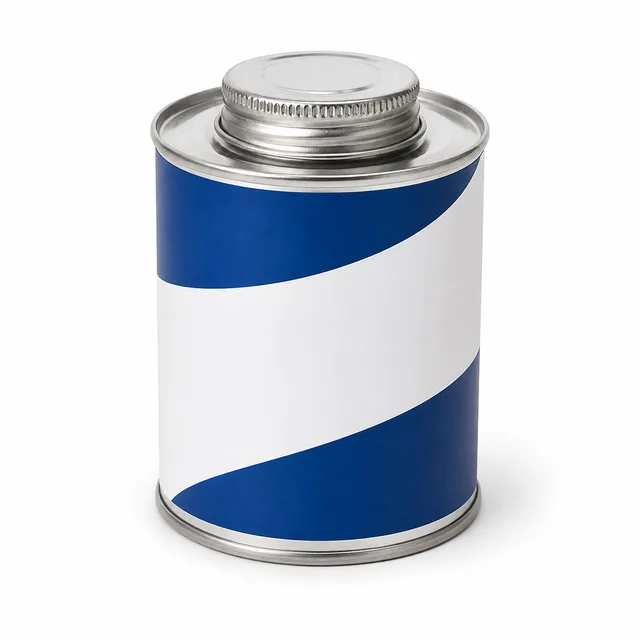
SKU VT-58701 (PVC solvent cement, 6 sizes 1/128–1/4 GAL) + SKU VT-58702 (PVC cleaner, 5 sizes 1/128–1/4 GAL) · complete system, sold by the can
1. Technical specifications
Composition and physical properties of each product
| Property | Solvent cement (PVC weld) | Cleaner / primer (PVC cleaner) |
|---|---|---|
| Reference manufacturer identifier | SOLDAMAX PAVCO LOW VOC | Limpia Max PAVCO |
| Declared composition (CAS) | Acetone (67-64-1) 20–40 % · Tetrahydrofuran — THF (109-99-9) 60–80 % | Ethyl acetate (141-78-6) 85–95 % · THF (109-99-9) 5–15 % |
| State, color, odor | Clear liquid, characteristic odor | Clear liquid, fruity odor |
| Dynamic viscosity at 20 °C | 0.48 mPa·s | 0.44 mPa·s |
| Relative density (water = 1) at 20 °C | 0.89 | 0.90 |
| Boiling point | 65–66 °C at 1013 hPa | 65–66 °C at 1013 hPa |
| Flash point | −21.5 °C | −4 °C |
| Hazard classification (GHS) | Flammable liquid Cat. 2 (H225) · carcinogenicity Cat. 2 from THF · skin/eye irritation | Flammable liquid Cat. 2 (H225) · carcinogenicity Cat. 2 from THF · serious eye irritation (H319) |
Composition and properties taken from the safety data sheets (SDS) of the reference formulation SOLDAMAX PAVCO LOW VOC (FDS-03, rev. 05/13/2021) and Limpia Max PAVCO (FDS-02, rev. 05/13/2021), Mexichem Colombia S.A.S. (Pavco Wavin). Cited as evidence of a typical low-VOC PVC cement-and-cleaner system; the real manufacturer of the lot TECTUL ships and its own SDS are confirmed on quotation.
TECTUL catalog references and sizes
| Product | SKU | Published sizes | Sale unit |
|---|---|---|---|
| PVC weld (solvent cement) | VT-58701 | 1/128 · 1/64 · 1/32 · 1/16 · 1/8 · 1/4 GAL (6 sizes) | Can |
| PVC cleaner (primer) | VT-58702 | 1/128 · 1/64 · 1/32 · 1/8 · 1/4 GAL (5 sizes — no 1/16 GAL) | Can |
The PVC cleaner's commercial page carries a catalog error: its "Material" field shows "Stainless steel 304", which does not apply to a liquid PVC cleaner. The correction is confirmed on quotation; that data point is not used in this sheet.
General system specifications
| System | Chemical joining of PVC pipe and fittings by cold cementing: solvent cement (weld) + cleaner/primer, applied as a single procedure |
| Function of each product | The cement dissolves and fuses the PVC surfaces in contact, creating a monolithic joint; the cleaner joins nothing — it removes grease and the surface sheen from extrusion and leaves the part ready for the cement to act evenly |
| Base material | PVC (also applies to CPVC per some manufacturer formulations — the lot's PVC/CPVC scope is confirmed on quotation) |
| Applicable standards | ASTM D2564-20(2024) (cement) · NTC 576:2021 (Icontec, cement) · ASTM F656-25 (cleaner/primer; F656-21 still active in catalog) |
| Typical use | PVC pressure, sanitary and vent networks; permanent, non-serviceable joint |
| Sale | By the can, per size |
⚠ Important: this technical data sheet is a reference guide to the product's properties; it is not a quality certificate for the product you are buying. Production lots vary from one another and may differ from the values stated here, or even depart from the standards. If your application requires compliance with a standard, always check the quality certificate (mill certificate) of the lot you are buying. If in doubt, ask one of our technical advisors →
2. The cementing process, step by step
The seven steps, in the order the procedure requires
- Cut and bevel. Cut the pipe square, deburr the cut and bevel the end (approx. 10–15°) so it enters without scraping the cement off the inside of the fitting.
- Dry fit. Check the pipe enters the fitting by interference — noticeable resistance, neither loose nor impossible to push in by hand. Without that fit, no amount of cement fixes a mis-sized joint.
- Clean with the cleaner/primer. Apply the PVC Cleaner to both surfaces (pipe and fitting socket) to remove grease, dust and the surface sheen from extrusion. The reference cement's safety data sheet states it explicitly: "Use the PVC or CPVC solvent cement after having used the PVC conditioner. Only make the joint when the pipe and fitting are dry" (SDS SOLDAMAX PAVCO LOW VOC, section 7.1).
- Apply the cement. Shake the can before use. Apply a uniform coat of cement to the pipe lengthwise and a thinner coat inside the fitting socket; avoid pooling and drips. The same SDS warns: "Never use solvents to lower the viscosity of the weld" — thinning it alters the certified formulation and voids the joint's performance.
- Assemble with a controlled twist (the "quarter-turn" technique). Insert the pipe into the fitting, pushing to the stop while turning it roughly a quarter turn; the twist spreads the cement evenly around the full circumference of the fit and prevents dry spots.
- Hold and check for a visible bead. Hold the joint firmly, without turning it, for at least 30 seconds. A continuous, visible bead of cement must appear all around the fitting's socket entrance: if the bead is missing anywhere, that spot did not seal and the joint must be remade with new pipe and fitting, not reinforced on top.
- Cure before handling and before pressurizing. Do not handle the joint before the initial handling time has passed, and do not pressurize it before the full cure time — both depend on diameter, design pressure and ambient temperature (full table in section 3).
This section covers the joining process. PVC pipe and fitting material properties (wall thickness, allowable pressure, the minimum 60% engagement rule) live in the PVC pressure fittings data sheet (FT-TC-ACC-PVCP) — not repeated here.
3. Handling and cure times — the full table
Initial handling time (before touching or moving the joint)
| Temperature range | 1/2″–1 1/4″ (20–40 mm) | 1 1/2″–2″ (50–63 mm) | 2 1/2″–8″ (75–200 mm) | 10″–15″ (250–380 mm) | 15″+ (380 mm+) |
|---|---|---|---|---|---|
| 60–100 °F / 16–38 °C | 2 min | 5 min | 30 min | 2 h | 4 h |
| 40–60 °F / 5–16 °C | 5 min | 10 min | 2 h | 8 h | 16 h |
| 0–40 °F / −18–5 °C | 10 min | 15 min | 12 h | 24 h | 48 h |
IMPORTANT
This data sheet is a reference guide to the properties of this product type. The measurements, dimensions and physical or geometric characteristics of the product actually supplied may vary by manufacturer and lot, and may even fall outside the cited standards. If any of these figures is critical to your design or build, it is essential to verify it with one of our advisors against the physical product, so you can be fully certain of what you are buying. · Original data sheet: tectul.com/en/conduccion-de-fluidos/sellado-y-union-de-tuberias/ficha-tecnica-soldadura-pvc.html
Set time = time needed before the joint can be handled carefully, without stress. In damp or rainy weather, add 50% more time. Source: IPS Corporation, Weld-On® Solvent Cement Average Set and Cure Times.
Cure time (before pressurizing the system)
| Temperature during assembly and cure | 1/2″–1 1/4″ (20–40 mm) | 1 1/2″–2″ (50–63 mm) | 2 1/2″–8″ (75–200 mm) | 10″–15″ up to 100 psi / 7 bar | 15″+ up to 100 psi / 7 bar | |||
|---|---|---|---|---|---|---|---|---|
| up to 160 psi / 11 bar | 160–370 psi / 11–26 bar | up to 160 psi / 11 bar | 160–315 psi / 11–22 bar | up to 160 psi / 11 bar | 160–315 psi / 11–22 bar | |||
| 60–100 °F / 16–38 °C | 15 min | 6 h | 30 min | 12 h | 1½ h | 24 h | 48 h | 72 h |
| 40–60 °F / 5–16 °C | 20 min | 12 h | 45 min | 24 h | 4 h | 48 h | 96 h | 6 days |
| 0–40 °F / −18–5 °C | 30 min | 48 h | 1 h | 96 h | 72 h | 8 days | 8 days | 14 days |
IMPORTANT
This data sheet is a reference guide to the properties of this product type. The measurements, dimensions and physical or geometric characteristics of the product actually supplied may vary by manufacturer and lot, and may even fall outside the cited standards. If any of these figures is critical to your design or build, it is essential to verify it with one of our advisors against the physical product, so you can be fully certain of what you are buying. · Original data sheet: tectul.com/en/conduccion-de-fluidos/sellado-y-union-de-tuberias/ficha-tecnica-soldadura-pvc.html
Cure time = time needed before pressurizing the system, applicable at 60% relative humidity or less; at higher humidity, add 50% more time. Never test PVC piping with compressed air or gas — hermeticity testing is done with water. Source: IPS Corporation, Weld-On® Solvent Cement Average Set and Cure Times (current table, published on weldon.com).
Cross-reference table from another manufacturer (Oatey, PVC and ABS)
| Diameter | Design pressure | 60–100 °F | 40–60 °F | 20–40 °F |
|---|---|---|---|---|
| 1/2″–1 1/4″ | up to 180 psi | 15 min | 20 min | 30 min |
| 1/2″–1 1/4″ | over 180 psi | 4 h | 8 h | 36 h |
| 1 1/2″–3″ | up to 180 psi | 30 min | 45 min | 60 min |
| 1 1/2″–3″ | over 180 psi | 8 h | 16 h | 3 days |
| 4″–5″ | up to 180 psi | 2 h | 4 h | 36 h |
| 4″–5″ | over 180 psi | 12 h | 24 h | 4 days |
| 6″–8″ | up to 180 psi | 8 h | 16 h | 3 days |
| 6″–8″ | over 180 psi | 24 h | 48 h | 9 days |
IMPORTANT
This data sheet is a reference guide to the properties of this product type. The measurements, dimensions and physical or geometric characteristics of the product actually supplied may vary by manufacturer and lot, and may even fall outside the cited standards. If any of these figures is critical to your design or build, it is essential to verify it with one of our advisors against the physical product, so you can be fully certain of what you are buying. · Original data sheet: tectul.com/en/conduccion-de-fluidos/sellado-y-union-de-tuberias/ficha-tecnica-soldadura-pvc.html
Source: Oatey Co., Solvent Weld Cure Times (LCS358G, web 11/2020). The pressure threshold that splits the columns (180 psi at Oatey, 160 psi at IPS Weld-On) is specific to each manufacturer's catalog — do not average or interpolate between the two tables: use the one matching the cement actually installed, per its data sheet or the supplier's confirmation.
4. Common errors
The ones that cause leaks months later
- Joining without cleaner. Skipping the PVC Cleaner saves seconds and costs a leak: without removing the extrusion sheen, the cement does not dissolve the surface evenly and the joint ends up with partial adhesion, invisible to the eye but real at the first pressurization.
- Excess cement on small diameters. On 1/2″–1″ the surplus cement has nowhere to go: it pools inside the pipe, reduces the internal bore, and on potable water systems can affect taste/odor for the first few days. Apply a uniform coat, not a bath.
- Pressurizing too early. Handling time (able to touch the joint) and cure time (able to pressurize the system) are not the same thing — pressurizing within the handling window, even if the joint "feels hard", is the most common cause of leaks on a new installation. See the full table in section 3.
- Wrong cement for the system. A "universal" cement does not exist: PVC cement does not work on CPVC (though some universal formulations do cover both — verify on the lot's data sheet), and pressure-grade cement is not interchangeable with heavy-bodied cement for large diameters.
- Assembling on a wet surface. Water interferes with the cement's dissolution of the PVC; the factory instruction is explicit: only join when the pipe and fitting are dry.
- Thinning the cement with extra solvent. Lowering its viscosity "to make it go further" is forbidden by the manufacturer itself: it alters the formulation certified under ASTM D2564 / NTC 576 and compromises the joint's strength.
5. Frequently asked questions
How long do I wait before pressurizing a PVC joint?
It depends on diameter, design pressure and temperature: from 15 minutes on a 1/2″–1 1/4″ joint under 160 psi at 60–100 °F, up to 8 days on 2 1/2″–8″ diameters over 160 psi below 40 °F. The full table is in section 3 — there is no single figure.
Is the cleaner mandatory?
Yes. The cleaner preps the surface by removing grease and the extrusion sheen; without it the cement does not dissolve the PVC evenly and the joint ends up with partial adhesion. The reference cement's own safety data sheet instructs using it before the cement, always.
Does PVC weld work on CPVC?
Generally no. PVC cement and CPVC cement are different formulations; although some low-viscosity universal products claim to cover both materials, that depends on the specific lot and is confirmed on its own data sheet, not assumed from the trade name.
How many joints does a 1/4-gallon can of cement yield?
Per the reference IPS Weld-On catalog, one quart yields on average 300 joints of 1/2″, 200 of 3/4″, 125 of 1″, 90 of 1 1/2″ or 60 of 2″ — yield drops sharply with diameter because each joint uses more cement. For the cleaner/primer, the same source states double the joints per quart versus the cement.
Can I pressurize early if the joint already "feels hard"?
No. The joint being handleable (handling time) does not mean it has cured enough to resist pressure (cure time); these are two different times on the same table, and the second is always equal to or longer than the first.
What is used to pressure-test a freshly cemented PVC network?
Water, never compressed air or gas: both reference manufacturers cited in this sheet warn against it explicitly, because a joint failure under compressed air releases energy suddenly and dangerously.
6. Application notes
Feasibility
The solvent cement + cleaner system is the standard solution for permanent joining of PVC pipe and fittings in pressure, sanitary and vent service. It is not specified for CPVC unless the specific lot declares compatibility, nor for polypropylene, HDPE, PEX or metallic materials — each requires its own joining system. It does not apply to pipe diameters or schedules outside the cited manufacturer's cure-time table without first checking its own curve.
Installation
Both products are Category 2 flammable liquids (H225): keep them away from ignition and heat sources, work in a ventilated area, do not smoke during application and do not use extra solvents to thin them. Always apply cleaner before cement, respect the handling time before moving the joint and the full cure time before pressurizing (section 3). Always pressure-test with water, never with compressed air or gas.
Design
The handling and cure times in this sheet come from reference manufacturer catalogs (IPS Weld-On, Oatey) under laboratory conditions; they do not certify the performance of the actual lot TECTUL ships. For diameters, pressures or temperatures outside the cited tables, or to certify a critical project, request the real lot manufacturer's own curve before specifying. Final selection of the joining system is the responsibility of the line designer per the project code (RAS, NTC 1500, ASME B31.3 or other) and its current edition.
7. Technical notice and limitation of liability
The chemical and physical properties in this sheet come from the safety data sheets (SDS) of a reference formulation (SOLDAMAX PAVCO LOW VOC and Limpia Max PAVCO, Mexichem Colombia S.A.S.) and from the handling and cure time tables published by IPS Corporation (Weld-On®) and Oatey Co.; they guide selection and procedure and are not a certificate of conformance for any lot shipped by TECTUL. The real manufacturer, its SDS and its own time table are confirmed on quotation.
Certifying a lot requires the quality certificate (MTC) and the real manufacturer's SDS conforming to ASTM D2564 / NTC 576 (cement) and ASTM F656 (cleaner/primer). Final selection of the joining system, the installation procedure and commissioning tests are the responsibility of the installer and the line designer per the project code and its current edition.
Sources
- ASTM D2564-20(2024) — Standard Specification for Solvent Cements for Poly(Vinyl Chloride) (PVC) Plastic Piping Systems
- ASTM F656-25 — Standard Specification for Primers for Use in Solvent Cement Joints of Poly(Vinyl Chloride) (PVC) and Chlorinated Poly(Vinyl Chloride) (CPVC) Plastic Pipe and Fittings (edición dic-2025; F656-21 aún activa en catálogo de fabricante)
- NTC 576:2021 (Icontec) — Cemento solvente para sistemas de tubos plásticos de policloruro de vinilo (PVC)
- IPS Corporation — Weld-On® Solvent Cement Average Set and Cure Times, weldon.com (tabla vigente, consultada ago-2026)
- Oatey Co. — Solvent Weld Cure Times, LCS358G WEB 11/20, oatey.com
- Ficha de datos de seguridad FDS-03, versión 02 (rev. 13/05/2021) — SOLDAMAX PAVCO LOW VOC, Mexichem Colombia S.A.S. (Pavco Wavin)
- Ficha de datos de seguridad FDS-02, versión 02 (rev. 13/05/2021) — Limpia Max PAVCO, Mexichem Colombia S.A.S. (Pavco Wavin)
- Página de producto TECTUL — soldadura-pvc.html (SKU VT-58701) y limpiador-pvc.html (SKU VT-58702), previews/conduccion-de-fluidos/juntas-empaques-y-sellos/
This data sheet is the property of TECTUL, part of the Industrias IMR group. Reproduction without attribution is prohibited. Original document and updates: tectul.com/en/conduccion-de-fluidos/sellado-y-union-de-tuberias/ficha-tecnica-soldadura-pvc.html.