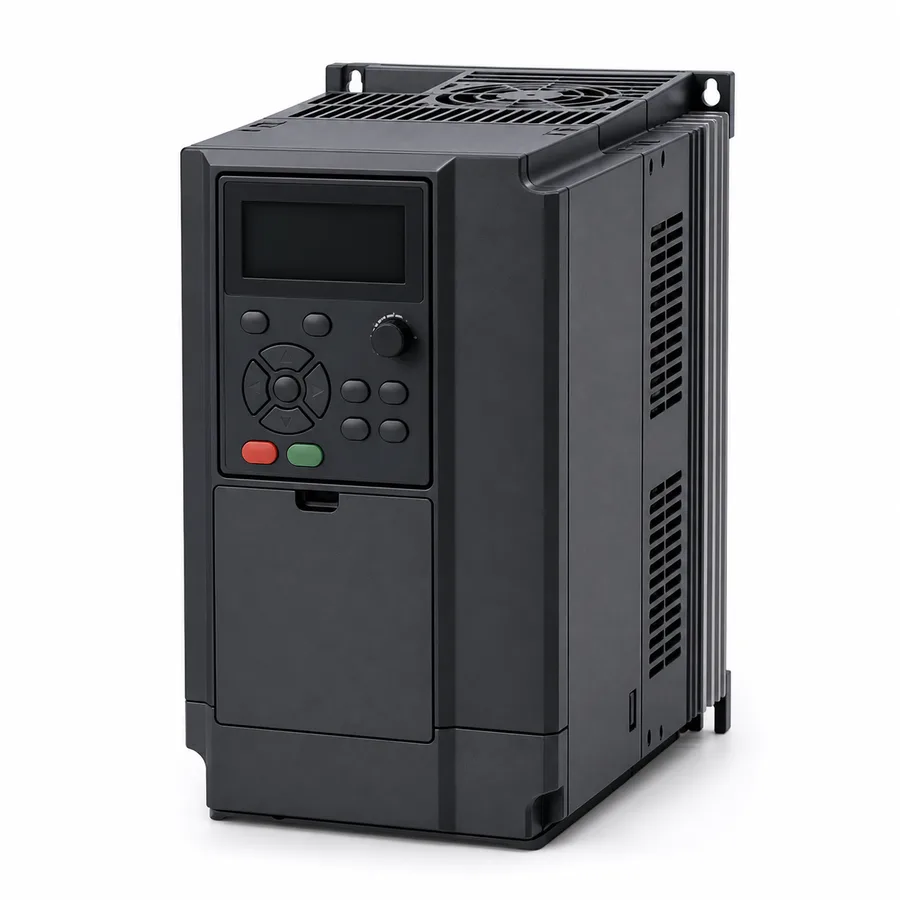
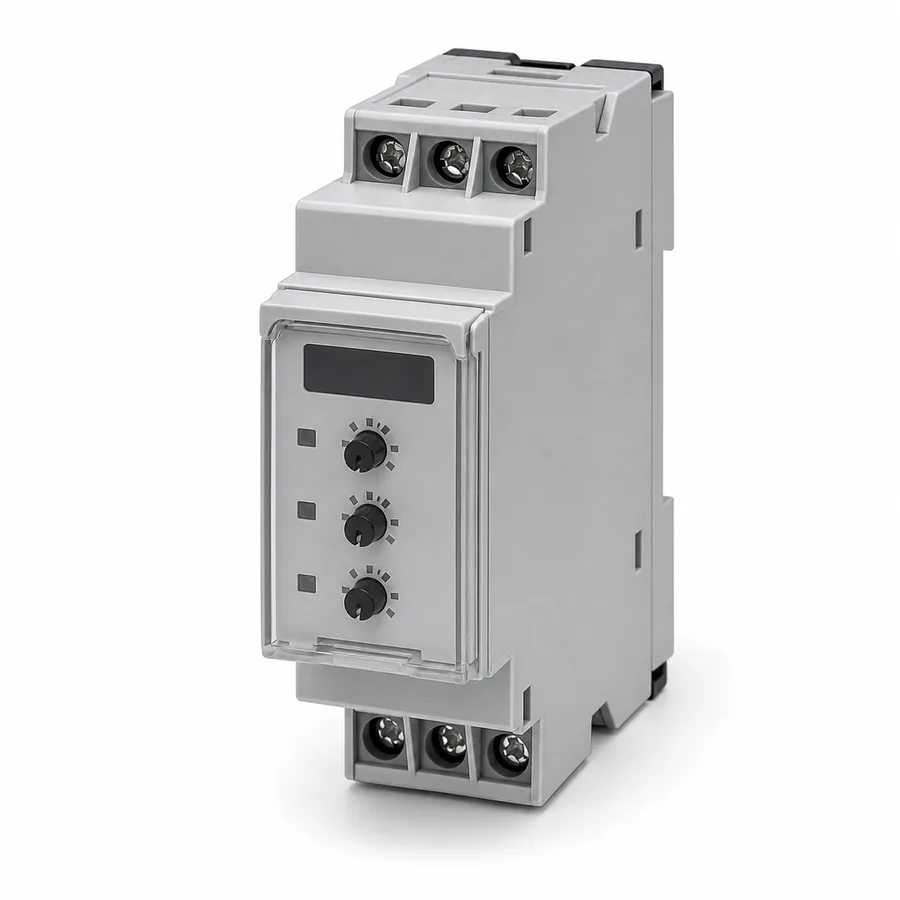
Electronic soft starter to reduce starting current in three-phase motors and protect the equipment mechanics. Quoted by power (HP/kW) and voltage.
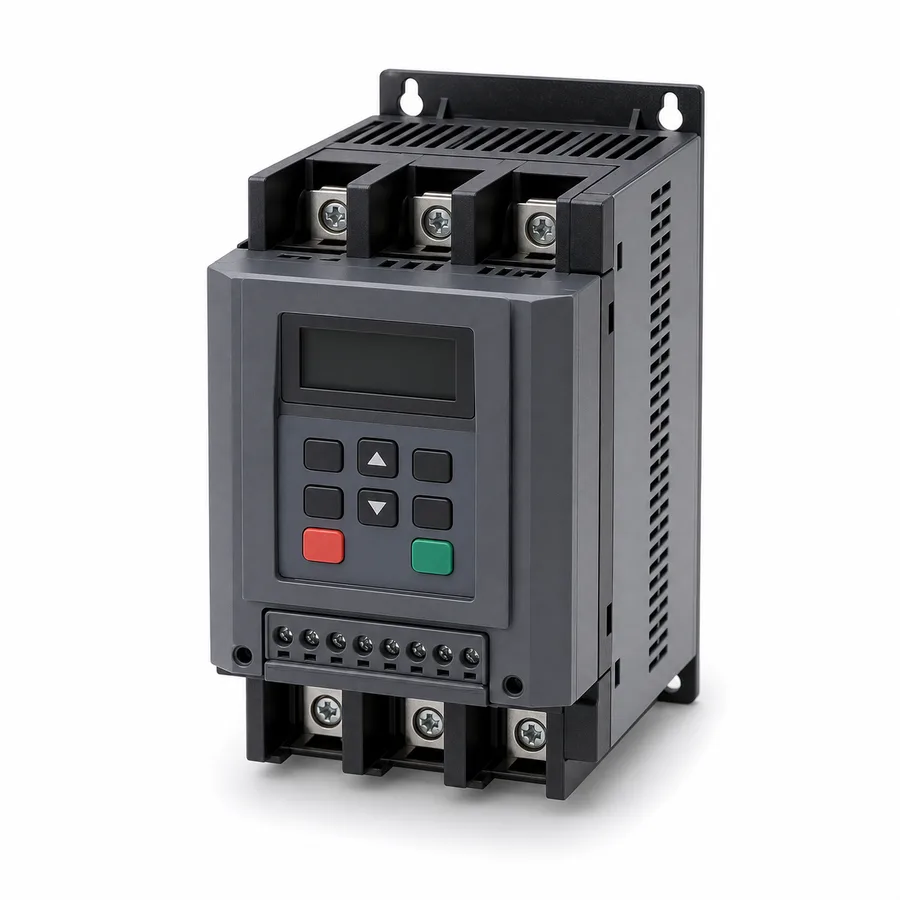
Tell us the reference or key specification (current, power, gauge, size), quantity and city — a technical advisor sends your quote the same business day.
A soft starter is a thyristor-based electronic device that applies voltage progressively to the three-phase motor, built to IEC 60947-4-2. It limits starting current to an adjustable value of typically 2 to 4 times rated, versus 6 to 8 times for direct-on-line, and removes the mechanical starting shock.
The soft starter is electronic equipment used to reduce electrical and mechanical stress during the starting and stopping of three-phase motors. At TECTUL it is quoted by power, voltage, rated current, load type and need for bypass or enclosure. The actual lot data indicates use to reduce starting current and protect equipment mechanics, with quotation by HP/kW and voltage. It differs from a three-phase variable frequency drive because the soft starter is not intended to control speed throughout the process; its main function is start and stop ramping. It also differs from an enclosed direct-on-line starter because it avoids applying full voltage immediately. IEC 60947-4-2 is used as a reference for semiconductor motor controllers and starters for AC motors.
We dispatch soft starters to Bogotá, Medellín, Cali, Barranquilla and all of Colombia. Request a quote via WhatsApp with motor power, voltage and application.
| Method | Starting current | Torque control |
|---|---|---|
| Direct-on-line (DOL) | 6 – 8 × FLC | None |
| Star-delta | ≈33 % of DOL (2 – 2.6 × FLC) | Stepped, with a transient at changeover |
| Soft starter | 2 – 4 × FLC (adjustable) | Voltage ramp on start and stop |
| Variable frequency drive | ≤1.5 × FLC | Full (torque and speed) |
Soft starters are built to IEC 60947-4-2 (AC semiconductor motor controllers and starters). The one-third current of star-delta follows directly from applying 1/√3 of the phase voltage.
Starting torque falls with the square of the applied voltage: starting at 60 % voltage delivers only 36 % of rated torque, which is why the ramp is tuned so the load accelerates without stalling. Typical commercial powers: 3 to 500 HP (manufacturer catalogs).
It depends on power, voltage, current, load type and accessories. TECTUL quotes via WhatsApp with the motor nameplate data.
The soft starter mainly controls starting and stopping. The VFD controls speed and torque during normal motor operation.
It is installed in a panel with suitable protection, line input, output to the motor and control signals. Ramps and limits are then programmed for the application.
Yes. In pumps it can help reduce mechanical shocks during starting and stopping, as long as it is correctly selected for the motor and process.
It depends on the model and scheme. It must be reviewed whether it includes overload protection or requires coordinated external protection.
When direct-on-line starting causes voltage drop, mechanical shock, transmission wear or process disturbances.
When the load cannot tolerate the changeover transient: star-delta disconnects and reconnects the motor when switching from star to delta, causing a second current peak; the soft starter ramps voltage continuously with no transients.
No. It only controls the voltage ramp during start and stop; at steady state the motor runs at rated speed. If the process needs variable speed, the correct equipment is a variable frequency drive.
Updated: July 22, 2026