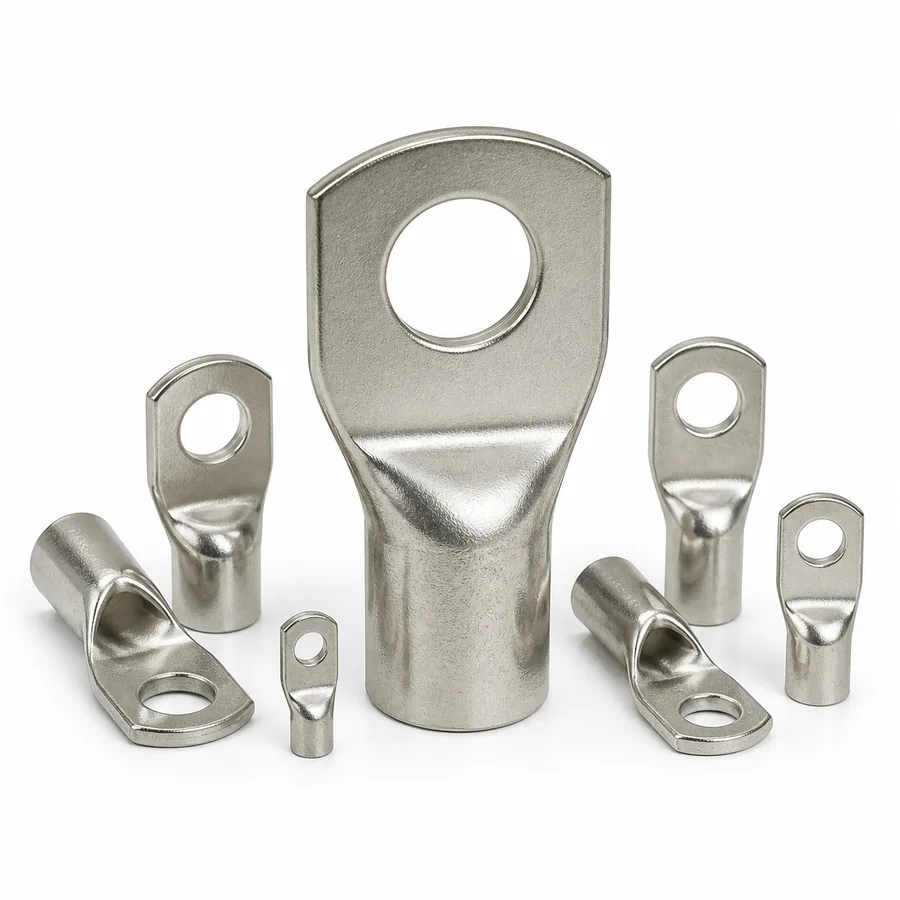
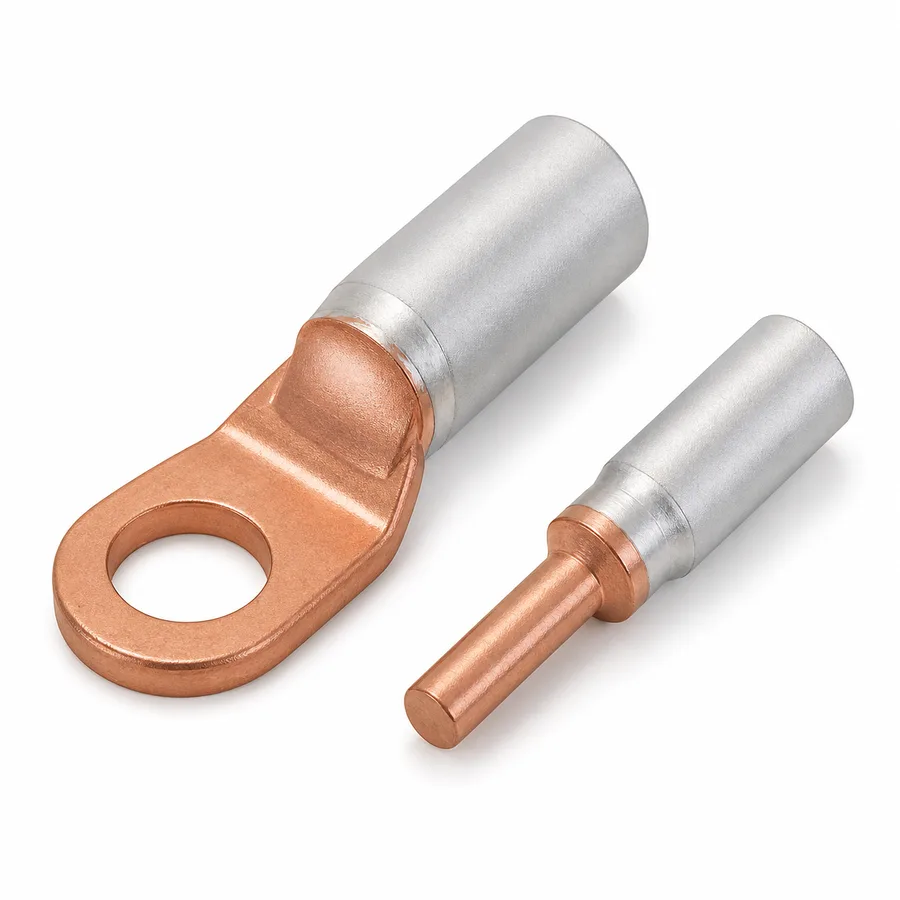
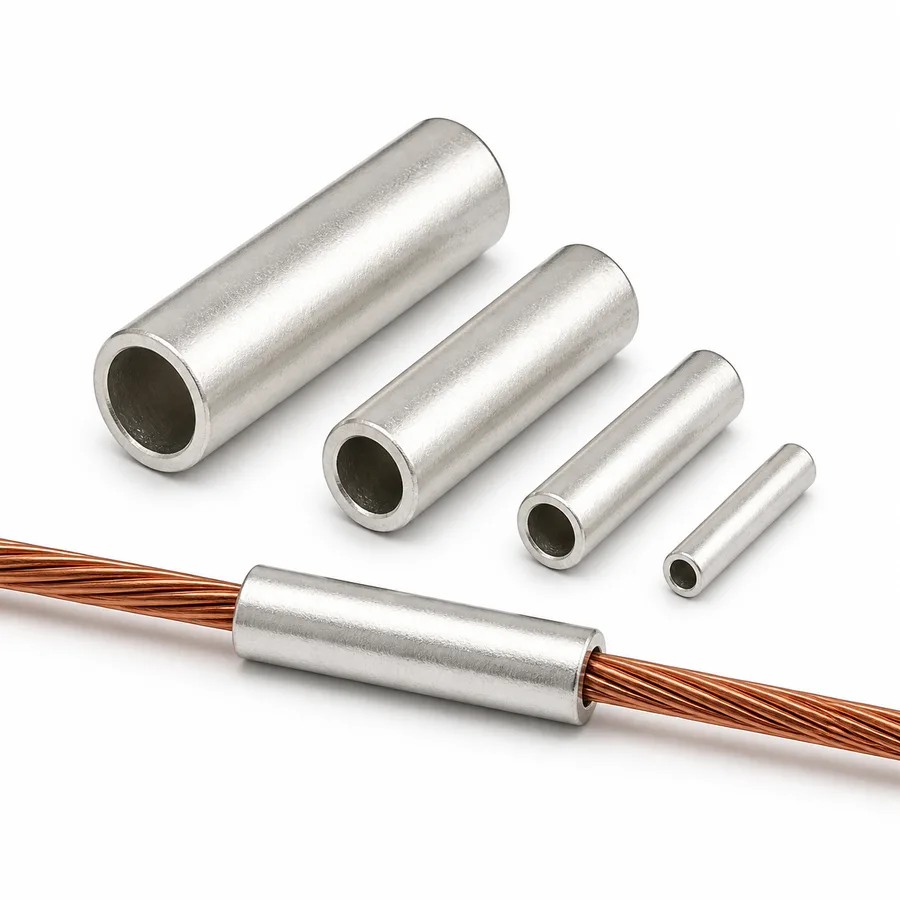
Manual or battery hydraulic crimping tool with interchangeable dies for compression lugs from 8 AWG to 500 kcmil.
Tell us the reference or key specification (current, power, gauge, size), quantity and city — a technical advisor sends your quote the same business day.
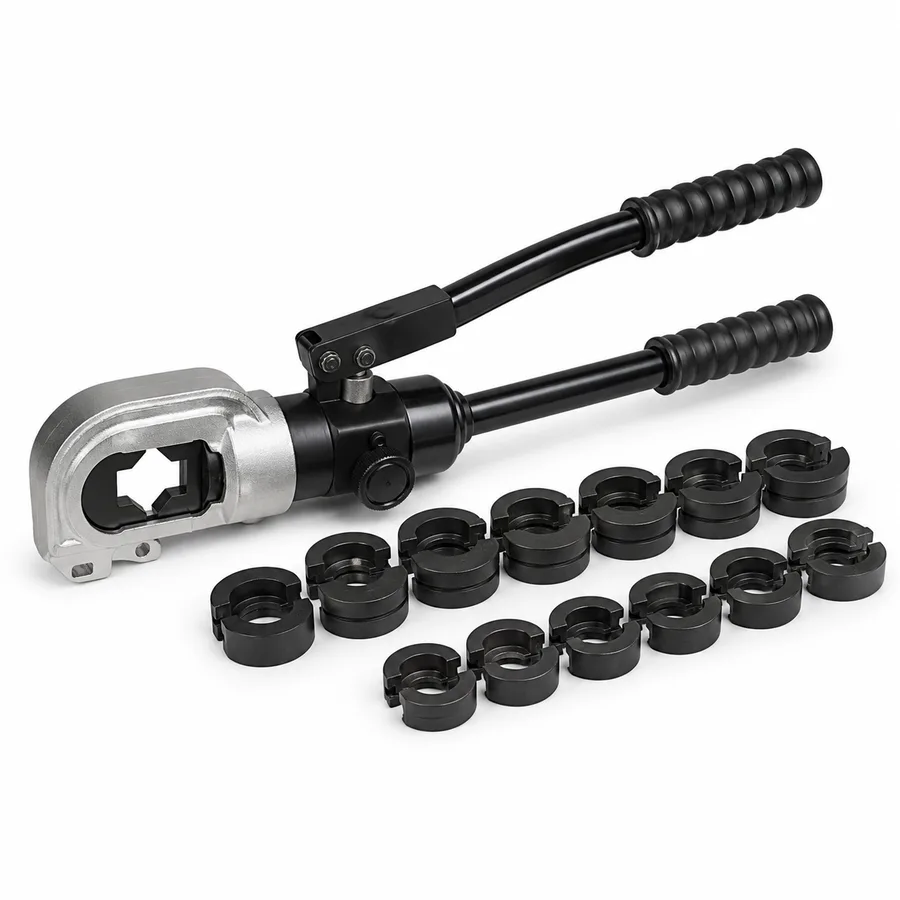
The hydraulic crimper compresses copper lugs and connectors with interchangeable dies calibrated per AWG size, delivering a typical 12 t of force in manual models for 8 AWG to 500 kcmil (manufacturer catalogs). UL 486A-486B requires using the specified lug-die-tool system for the joint to be certified.
The hydraulic crimping tool is the tool used to compress electrical lugs and connectors onto power conductors, achieving a firm mechanical joint and a stable electrical path when the correct die, gauge and terminal are selected. At TECTUL it is quoted for industrial use with copper compression lugs, bimetallic lugs and tubular splice connectors, according to the range indicated in the lot: from 8 AWG to 500 kcmil. Unlike a lug or connector, this page corresponds to the crimping tool; the consumable is selected separately according to conductor material, busbar, number of holes and splice type.
We dispatch to Bogotá, Medellín, Cali, Barranquilla and all of Colombia. Request a quote via WhatsApp for your hydraulic crimping tool indicating gauge, lug type and work volume.
| Type | Typical range | Force |
|---|---|---|
| Manual hydraulic | 8 AWG – 500 kcmil | ≈12 t |
| Battery-powered | 8 AWG – 500 kcmil | 6 – 12 t |
| Remote head + pump | Up to 750 kcmil and substation connectors | >12 t |
The hexagonal die embosses its code on the lug barrel after a complete cycle: that mark is the evidence the compression used the correct die, a condition of the UL 486A-486B certified system.
The price is quoted via WhatsApp according to actuation type, gauge range, included dies and availability. TECTUL does not publish fixed prices for this line.
Yes, provided the dies and tool range match the connector gauge and type. It must be validated before purchase.
The crimping tool is the tool that applies compression; the copper compression lug is the accessory that remains installed on the cable.
The correct die is selected, the stripped conductor is inserted into the lug, the barrel is placed in the die and the compression cycle is completed without moving the part.
Send cable gauge, conductor material, lug or splice type, frequency of use and whether you require specific dies.
That is the range indicated for the lot line, but exact compatibility depends on the model and available dies.
Because each lug-size combination demands an exact compression cavity: the die code stays embossed on the crimped barrel and lets you audit that the joint used the right tooling, as the UL 486A-486B system requires.
As many as the manufacturer's catalog states for the barrel length: usually 1 or 2 on lugs and 2 or more per side on splices, applied from the center outward.
Updated: July 22, 2026