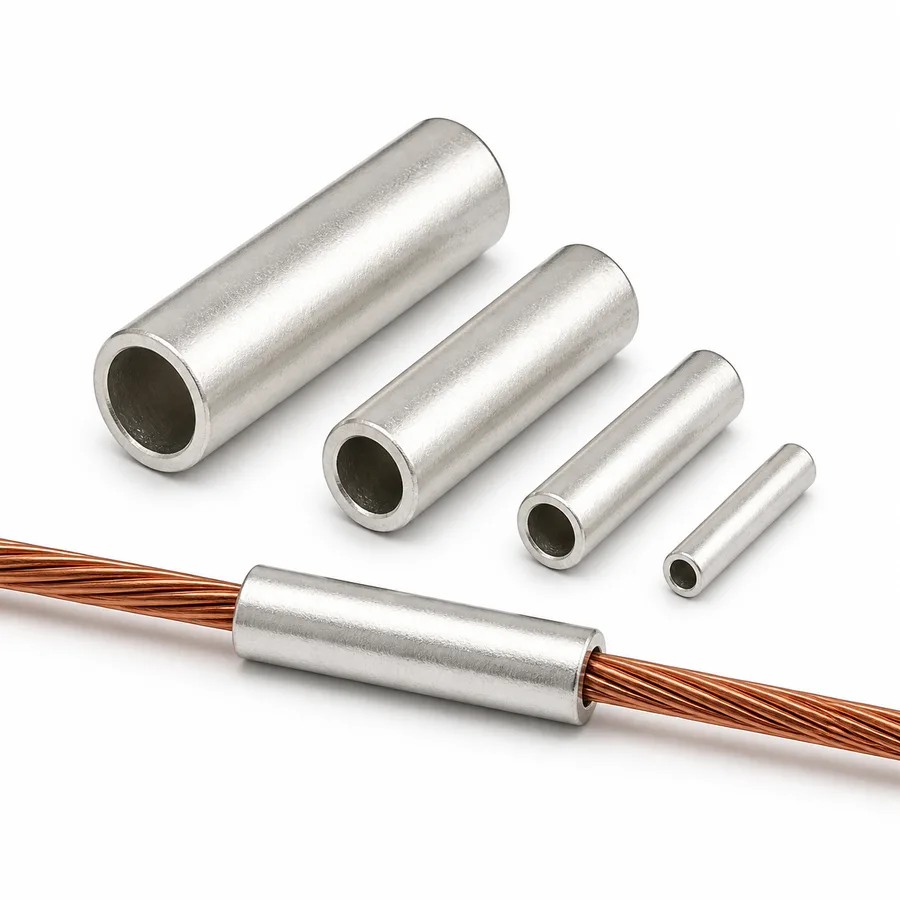
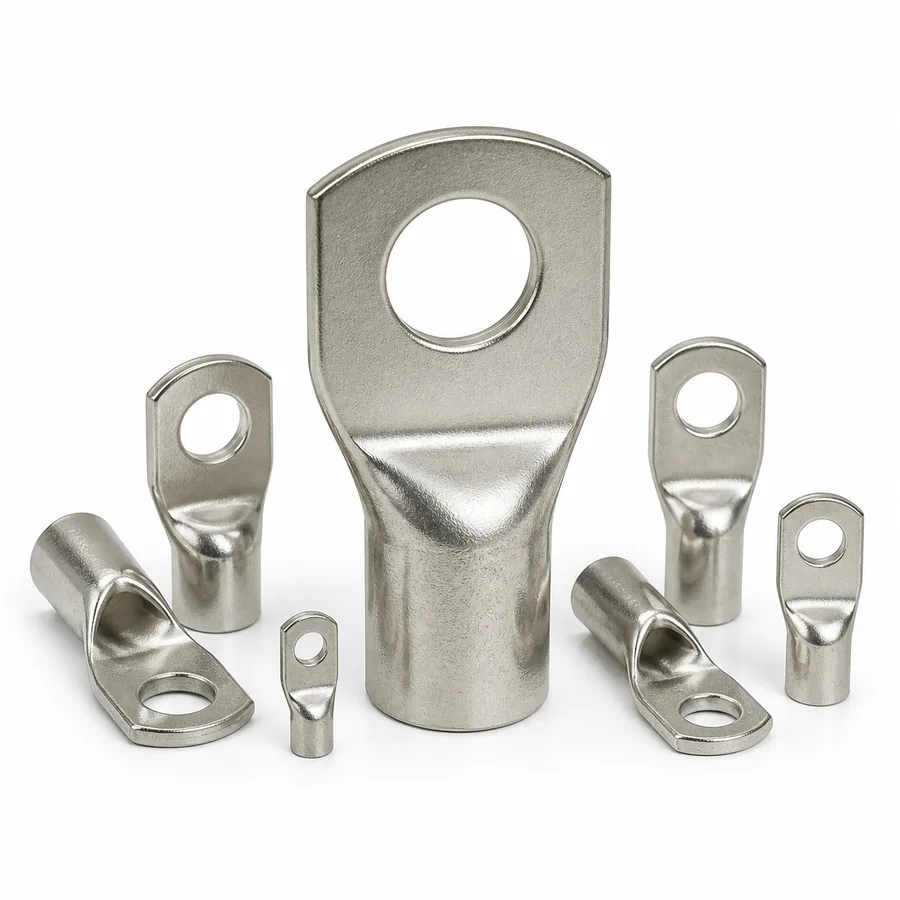
Tinned copper eye lug for crimping on power cables, from 8 AWG to 500 kcmil, one-hole or two-hole.
Tell us the reference or key specification (current, power, gauge, size), quantity and city — a technical advisor sends your quote the same business day.
The copper compression lug terminates power cables for bolting to bus bars: an electrolytic tinned-copper barrel crimped with a calibrated die, per UL 486A-486B, from 8 AWG to 500 kcmil, in one-hole or two-hole pads. Tinning prevents surface oxidation of the copper.
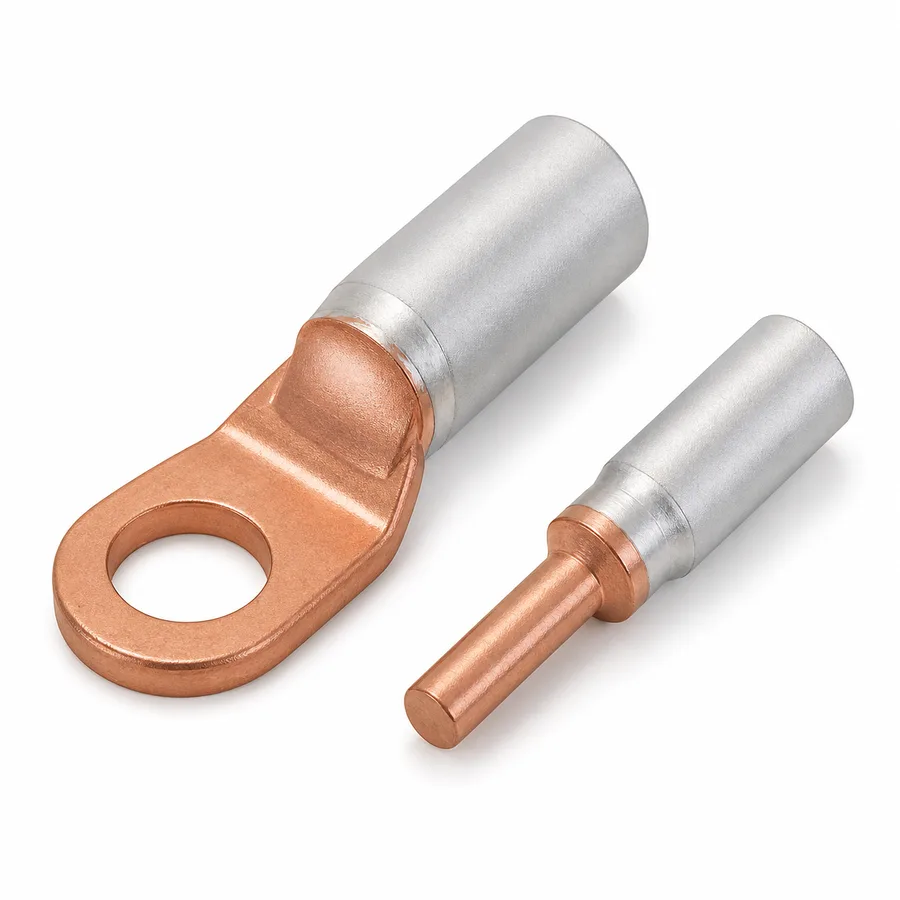
The copper compression lug is an eye connector used to terminate power cables on busbars, terminal blocks, circuit breakers, panels and electrical equipment. It is installed by crimping with a compatible tool and die, forming a permanent joint between the conductor and the lug barrel. In this TECTUL line, the actual available data indicates tinned copper, one-hole or two-hole options and use in gauges from 8 AWG to 500 kcmil. It differs from the bimetallic lug because it is intended for conductors and connection points compatible with copper; when there is an aluminum-copper transition, a bimetallic lug must be evaluated to reduce risks of galvanic incompatibility and heating due to poor contact.
We dispatch to Bogotá, Medellín, Cali, Barranquilla and all of Colombia. Request a quote via WhatsApp for your copper compression lugs indicating gauge, number of holes and bolt diameter.
| Size | Section |
|---|---|
| 8 AWG | 8.4 mm² |
| 6 AWG | 13.3 mm² |
| 4 AWG | 21.2 mm² |
| 2 AWG | 33.6 mm² |
| 1/0 AWG | 53.5 mm² |
| 2/0 AWG | 67.4 mm² |
| 4/0 AWG | 107.2 mm² |
| 250 kcmil | 127 mm² |
| 500 kcmil | 253 mm² |
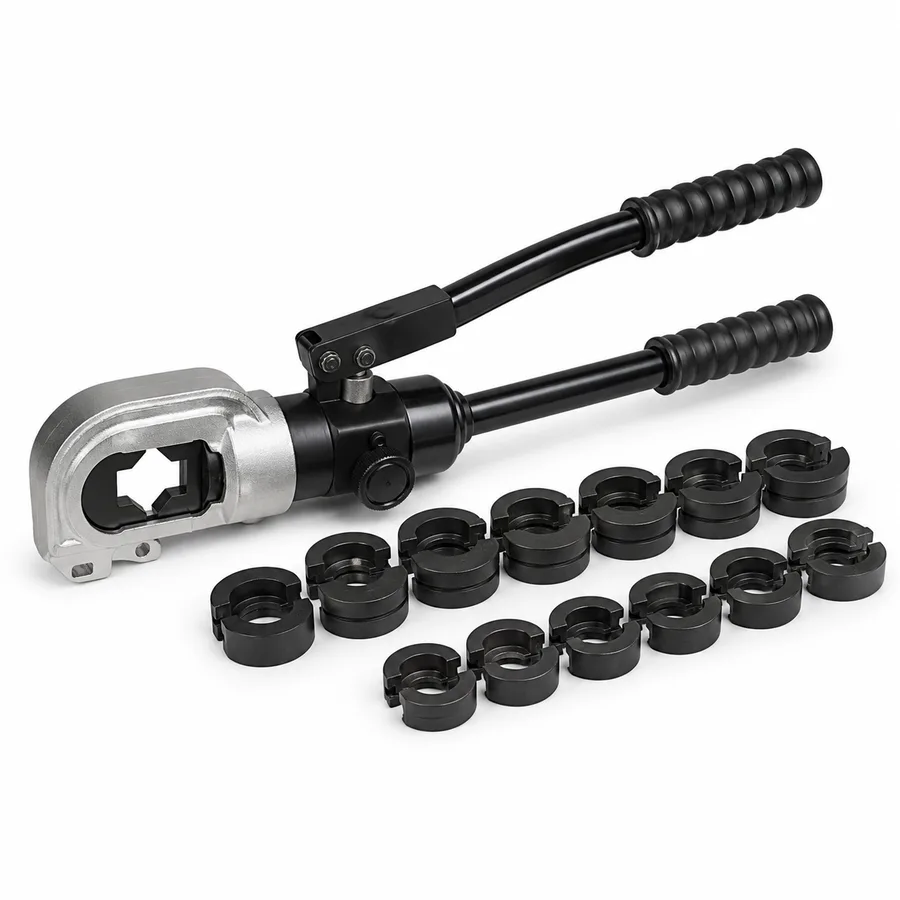
Lugs certifiable under UL 486A-486B (wire connectors): certification applies to the lug + die + tool system, so crimping must use the die marked for the size and the number of compressions in the catalog.
It is quoted via WhatsApp according to gauge, eye type, quantity, finish and availability. We do not invent prices because this line has no published price.
It should not be assumed. For transition with aluminum, a bimetallic lug is usually required, validating conductor, busbar and project conditions.
The copper compression lug is used in copper-compatible connections; the bimetallic lug combines aluminum and copper for transitions between those materials.
The conductor is stripped, inserted fully into the barrel, crimped with the correct die and then the eye is fastened to the busbar or equipment.
Yes. The lot indicates one-hole or two-hole options; selection depends on the fastening point and space in the panel.
Cable gauge, conductor material, bolt diameter, one-hole or two-hole, quantity and delivery city.
Two-hole when the bus allows it and there is vibration or a substation specification: the two bolts prevent lug rotation and share the stress; one hole suffices in standard panel connections.
Because UL 486A-486B certifies the lug-die-tool set: a wrong-size die leaves under-compression (overheating) or over-compression (damaged conductor), and the embossed die code is the quality-control evidence.
Updated: July 22, 2026