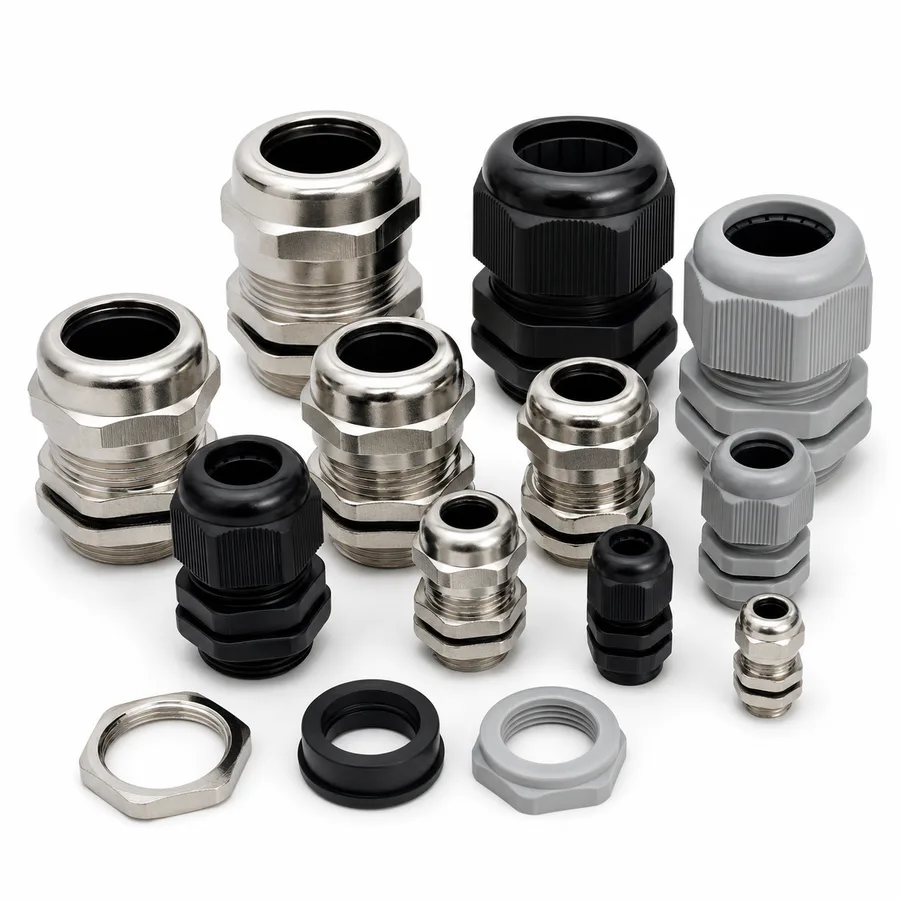
Nylon and nickel-plated brass cable glands, metric and NPT threads, IP68 rated, for sealed cable entry into boxes and enclosures.
Tell us the reference or key specification (current, power, gauge, size), quantity and city — a technical advisor sends your quote the same business day.
The cable gland seals cable entries into boxes and enclosures by compressing an elastomeric packing, per IEC 62444, reaching IP68 (IEC 60529): dust-tight and protected against continuous immersion. Available in PA66 nylon and nickel-plated brass, metric threads M12 to M63 and NPT 3/8" to 2".
A cable gland is the accessory that allows cables to enter enclosures, junction boxes, panels and electrical equipment while maintaining mechanical retention and sealing at the entry point. At TECTUL, nylon plastic cable glands and nickel-plated brass metal cable glands are quoted, with metric and NPT thread options, for industrial applications where control of dust, moisture and cable strain matters. The actual data for this line indicates IP68 rating, a classification associated with IEC 60529 for protection against ingress of solids and water under conditions defined by the manufacturer. It differs from flexible conduit because it does not route the cable along a run: its function is to seal and secure the point cable entry into the enclosure. For correct selection, review cable outside diameter, enclosure material, environment, available thread type and need for mechanical or chemical resistance. In industrial panels, a poorly selected cable gland can leave leaks, loosen the cable or compromise equipment service life.
We dispatch to Bogotá, Medellín, Cali, Barranquilla and all of Colombia. Request a quote via WhatsApp for your cable glands indicating material, thread, cable diameter, quantity and enclosure type.
| Rating | Protection |
|---|---|
| IP54 | Dust-protected, splash-protected |
| IP65 | Dust-tight; water jets |
| IP66 | Dust-tight; powerful jets |
| IP67 | Temporary immersion (30 min at 1 m) |
| IP68 | Continuous immersion per manufacturer conditions |
Glands per IEC 62444 (cable glands for electrical installations) sealing on the cable jacket. Thread is chosen by the enclosure knockout: ISO metric on IEC equipment, NPT on North American-tradition equipment.
Metric gland threads use a 1.5 mm fine pitch (M16×1.5, M20×1.5, M25×1.5); as a catalog reference, a standard M20 seals cables of 6 to 12 mm outer diameter.
The price depends on material, thread, size and quantity. TECTUL does not publish fixed prices; we quote via WhatsApp with cable and enclosure data.
IP68 is a protection rating against dust and water according to IEC 60529 under conditions defined by the manufacturer. It must be validated with the complete installation.
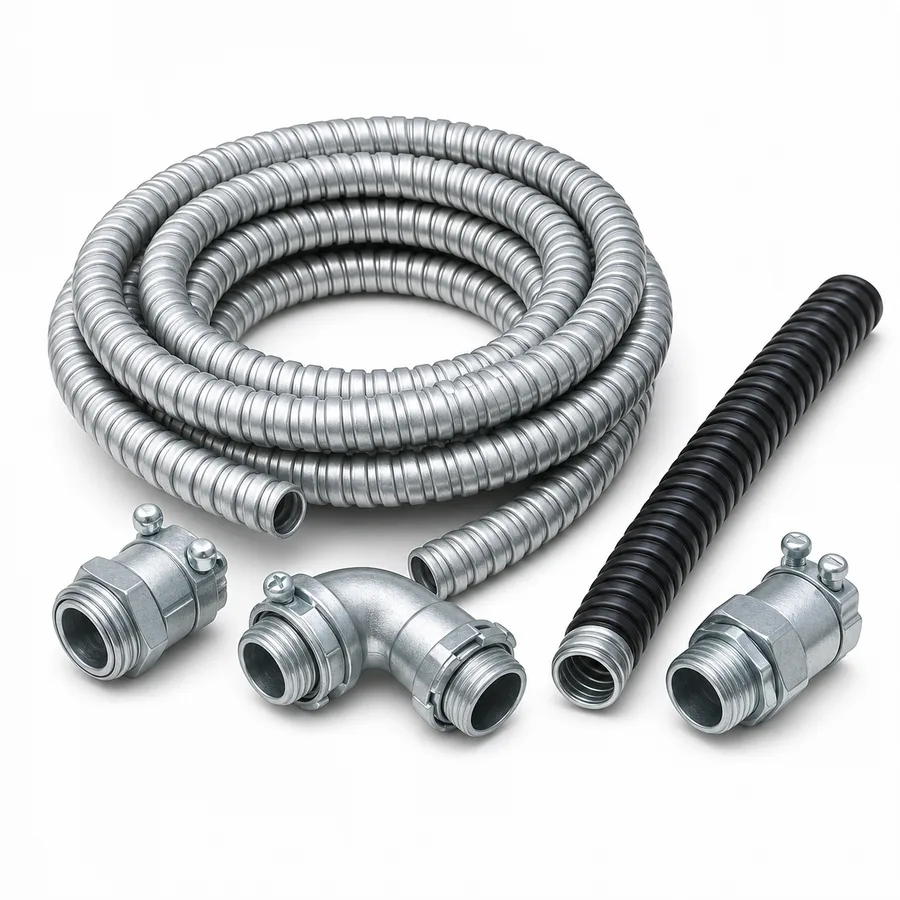
The cable gland seals the point entry of a cable into a box or panel. Flexible conduit protects a section of conductors between equipment or raceways.
It depends on the environment. Nylon works well in many panels and provides insulation; nickel-plated brass provides greater mechanical strength and good performance in metal enclosures.
The enclosure is drilled, the body is installed with its gasket, the cable is passed through, the compression nut is tightened and it is checked for play or deformation.
Send cable outside diameter, thread type if known, preferred material, quantity, delivery city and panel application.
PA66 nylon for general use, chemicals and minimum weight; nickel-plated brass where temperature, mechanical stress or shield continuity on screened cables (EMC versions) is required.
By the cable-diameter range each thread accepts (a catalog datum for each manufacturer) and the enclosure hole: the packing must compress on the jacket, neither loose nor forced.
Updated: July 22, 2026